Investors evaluating properties on realestatemoses.com know that the moment a residential estate transitions into an active commercial hospitality venue, standard residential valuation metrics no longer apply. In the Cape Winelands, specifically within the rural agricultural belt of Wellington along the Berg River, properties must be assessed on infrastructure longevity, operational vulnerabilities, and corporate compliance structures.
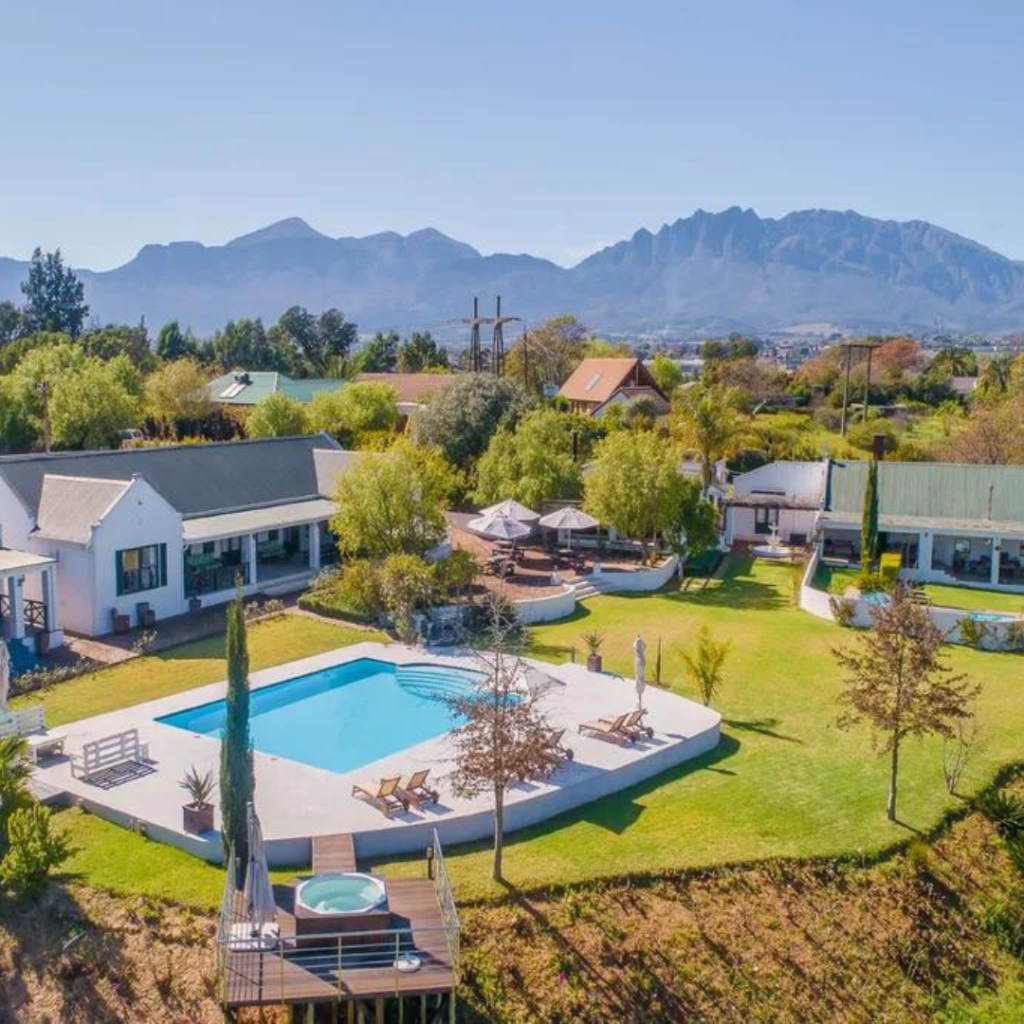
This analysis takes a practical look at an established 1.9-hectare smallholding and hospitality asset in Wellington, currently priced at R17,500,000 ZAR (approximately $1,050,000 USD). Known locally within elite asset circles near Lady Loch, this turnkey compound features a 13-bedroom structural footprint divided into an owner’s residence, a 7-bedroom guest house, and a separate 3-bedroom self-catering cottage.
================================================================================
ASSET OPERATIONAL PROFILE & COMPLIANCE MATRIX
================================================================================
Asset Type Classification............. Commercial Hospitality Smallholding / Guest House
Total Land Apportionment.............. 1.9 Hectares (19,063 m² Contiguous Riverfront)
Geographic Boundary Vector............ Berg River Corridor, Wellington Rural, Western Cape
Total Bedroom Component Assembly...... 13 Bedrooms, 12 Bathrooms, 3 Independent Kitchens
Spatial Division Components........... Main Manager Residence, 7-Bed En-Suite Wing, 3-Bed Cottage
Primary Utility Defection Core........ 18-Panel Primary Solar Array, Victron Inverter, 15kW Battery
Secondary Utility Support Core........ 9-Panel Cottage Solar Array, Dedicated 8kW Inverter
Hydrological Asset Baseline........... Berg River Riparian Access, Sub-Surface Irrigation Pumps
Fiscal Acquisition Framework.......... Sold as Going Concern, VAT-Registered Entity Structure
================================================================================
1. Commercial Utility Defection: The Dual-Zone Solar Infrastructure Math
The primary challenge of operating a guest house or boutique wellness retreat in South Africa is managing national grid load-shedding while protecting guest comfort. Unlike properties that rely solely on loud diesel generators, this Wellington compound utilizes a decentralized, dual-zone solar and inverter network.
                    [ 1.9-Hectare Turnkey Structural Footprint ]
                                         │
         ┌───────────────────────────────┴───────────────────────────────┐
         ▼                                                               ▼
[ Primary Hospitality Core System ]                         [ Cottage Infrastructure Loop ]
18 Solar Panels + Victron Inverter + 15kW Battery           9 Solar Panels + Independent 8kW Inverter
powers the 7-bed guest house and manager wing.               isolates the 3-bed self-catering cottage.
Operating thirteen bedrooms, twelve bathrooms, multiple pools, a hot tub, and a commercial kitchen requires balancing considerable starting and running electrical loads. The estate divides this load across two separate systems:
The Main Hospitality Core: An 18-panel solar array backed by a Victron inverter and 15kW of lithium battery storage handles the main family residence and the 7-bedroom guest house wing. This configuration protects essential services, security cameras, Wi-Fi routers, and lighting networks from grid interruptions.
The Cottage Isolation Loop: The separate 3-bedroom self-catering cottage runs on its own independent 9-panel solar array and 8kW inverter. This isolation ensures that guest power consumption in the cottage does not draw down the battery reserves of the main hospitality wing during evening grid drops.
The Operational Reality: While solar power lowers your monthly Eskom bill, a 15kW battery bank cannot continuously run high-draw appliances like multiple air conditioners, pool heat pumps, and a Falcon stove at the same time during a prolonged night outage. To maintain 5-star service standards during peak winter seasons, the property needs a backup generator integrated into the inverter panels to handle heavy starting loads when the batteries run low.
2. Riparian Hydrology: Managing Berg River Frontage Risks
The defining feature of this 1.9-hectare smallholding is its direct frontage along the Berg River, with manicured lawns and entertainment decks extending right to the water’s edge. Brokerage listings highlight this as a peaceful retreat that offers water security and an idyllic setting for intimate weddings and corporate events.
From a civil engineering and legal perspective, owning riverfront property in the Western Cape requires balancing water use benefits against seasonal environmental forces:
+-----------------------------------+-----------------------------------+
| Standard Dry-Lot Smallholding     | Frontline Berg Riverfront Parcel  |
+-----------------------------------+-----------------------------------+
| Rely on municipal water pipelines;| Direct riparian access, but faced |
| low environmental exposure and    | with seasonal winter flooding and |
| simple boundary maintenance.      | strict environmental zoning codes.|
+-----------------------------------+-----------------------------------+
The Winter Flood Hydrology Risk: The Berg River catchment area experiences heavy rain during the Western Cape’s winter months, which can cause sudden increases in water volume and flow rates. The riverfront entertainment spaces, lawn terraces, and pump stations must be structurally reinforced to resist bank erosion. Your on-site maintenance team must clear debris from the riverbanks every autumn to protect the lower boundary lines from washouts during high-flow winter storms.
The Legal Boundaries of Riparian Rights: Under South Africa’s National Water Act, having a property line that touches a river does not grant unrestricted rights to pump water for commercial use. The smallholding must hold documented water use registrations to pull water from the Berg River for irrigating its large gardens and landscaping. If you plan to expand the boutique event venue to host up to 120 guests, your legal team must confirm that your greywater drainage and septic soakaways sit well outside the statutory 100-year flood line to prevent municipal compliance issues.
3. Spatial Configuration Economics: Hospitality Layout vs. Private Use Balance
The property’s architectural plan split the 13-bedroom footprint into three independent structural zones: a central family residence for the owner-manager, a 7-bedroom en-suite guest wing with a communal pool and hot tub, and a standalone 3-bedroom cottage.
================================================================================
EQUITY MASSE AND FOOTPRINT PROPERTY SPLIT
================================================================================
[███████████████] 7-Bedroom Commercial Guest Enclosure (~55% Footprint Volume)
- Thriving Guest Suite Pool, Conference Rooms, Spa Zones, Communal Pool Area.
[████████] 3-Bedroom Self-Catering Cottage (~25% Footprint Volume)
- Independent Extended-Stay Rental Unit, Dedicated Solar Inverter Loop.
[██████] Private Owner-Manager Residence (~20% Footprint Volume)
- Homestead Core, Private Family Office, Independent Swimming Pool Deck.
================================================================================
This decentralized layout works well for an on-site owner-operator. The main homestead provides a private retreat with its own dedicated pool, separating the manager’s personal space from the active guest areas.
However, running a mixed-use commercial smallholding means your home budget is directly tied to the property’s hospitality performance. The common areas, the wellness spa, the conference rooms, and the grounds require permanent care, uniform climate control, and daily landscaping, turning property upkeep into a fixed operational cost that requires steady occupancy to maintain profitability.
4. Fiscal Design: Navigating VAT-Registered Corporate Transfers
The transaction dynamics of buying a $1,050,000 USD (R17,500,000 ZAR) commercial asset in the Western Cape require careful tax structuring to protect your investment capital from unnecessary friction.
[ Purchase of Wellington Going Concern: R17,500,000 ]
                          │
         (South African Revenue Service Tax Protocols)
                          │
 ┌────────────────────────┴────────────────────────┐
 ▼                                                 ▼
[ Zero-Rated VAT Going Concern ]           [ Financial Records Audit Path ]
The transaction can be zero-rated for VAT  Audited financial books allow immediate review
if structured as an active business buy.   of guest occupancy and historical yields.
The Zero-Rated VAT Going Concern Advantage: The property is registered for VAT and sold as an active going concern with an established client base and audited financial statements. In South Africa, when a real estate asset is sold as an operational business that generates income, the transaction can qualify for a Zero-Rated VAT designation under Section 11(1)(e) of the VAT Act. This structure allows a corporate buyer to avoid an immediate 15% cash VAT outlay at closing, preserving cash reserves for operational capital.
The Factura Compliance for Capital Gains Deductions: To claim deductions against South Africa’s Capital Gains Tax (CGT) framework upon future resale, all capital improvements—such as expanding the solar arrays or upgrading the spa units—must be backed by official tax invoices matching local corporate regulations. Standard receipts or international wire confirmations are insufficient to adjust your tax basis with SARS.
5. THE CAPITAL EVALUATION MATRIX: BROKER VS. PRINCIPAL REALITY
| The Luxury Feature | The Standard Marketing Presentation | The Operational & Underwriting Fact |
| R17,500,000 Valuation | A premium hospitality investment entry point into the lucrative Cape Winelands market. | Capital lockup within a specialized, seasonal rural hospitality smallholding property class. |
| Berg Riverfront Access | A tranquil river setting with lawns extending directly down to the water’s edge. | Exposure to winter flood water level shifts and strict environmental regulations regarding riverbanks. |
| Turnkey Going Concern | An active business with an established guest base and ready financial records. | Requires continuous management oversight, guest acquisition marketing, and staff payroll funding. |
| Decentralized Solar Setup | Complete off-grid capability that keeps the entire property running through power outages. | Protects essential services, but requires a backup generator for heavy climate control loads. |
| Boutique Event Venue | An upscale venue space equipped to host intimate weddings and retreats for 120 guests. | Demands strict noise management, local zoning compliance, and adequate septic system capacity. |
| 13-Bedroom Operational Grid | A versatile layout providing a main family residence alongside ten guest bedrooms. | Large footprint that requires permanent maintenance, chemical pool treatments, and staff care. |
Portfolio Verdict & Actionable Directives
The Secondary Market Exit Horizon
While residential properties inside standard gated golf estates across the Western Cape maintain fluid trading velocity, a 1.9-hectare mixed-use hospitality smallholding positioned along the rural banks of the Berg River sits in a highly specialized, illiquid asset layer. The pool of active buyers with the capital and operational capacity to take on a 13-bedroom commercial guest house, manage localized solar microgrids, and navigate riparian water law is small. This asset class frequently requires a sales window of twelve to twenty-four months on specialized international registries to discover an investor whose operational background aligns with the property’s layout. If changing economic conditions require a rapid portfolio exit, you must anticipate an aggressive capital markdown to secure a fast, un-leveraged cash closing.
Opportunity Cost Analysis
Deploying R17,500,000 ZAR into a single, high-overhead hospitality property removes that capital from liquid global financial networks where it could produce predictable, compounding cash flows. At a conservative 6% annual compounding yield in liquid market instruments, this block of wealth generates over $63,000 USD (approximately R1,050,000 ZAR) in passive income every year with zero operational liabilities or human management friction. Over a five-year investment holding window, a diversified market portfolio produces over R5,700,000 ZAR in compounding profit while preserving absolute capital mobility. Conversely, this Wellington smallholding requires continuous operational attention, and your net returns remain entirely dependent on seasonal occupancy rates, tourism trends, and ongoing infrastructure maintenance costs.
Pre-Acquisition Mandate
Prior to signing formal acquisition contracts or transferring escrow capital for this Wellington hospitality asset, you must complete three essential due diligence checks:
Audited Financial Statement and VAT Audit: Deploy an independent corporate accountant to conduct a thorough forensic review of the property’s past three years of audited financials, verifying historical guest occupancy rates, corporate expense lines, and current VAT standing.
Riparian Water Rights and Floodline Evaluation: Retain a certified civil engineer to verify the estate’s legal water extraction permits under the National Water Act and map the structural safety of the riverfront installations against maximum winter flood history.
Solar Battery and Inverter Load Analysis: Engage an industrial electrical technician to run full load testing across both independent solar frameworks, mapping battery health metrics and defining the remaining life cycles of the component arrays before replacement lines are required.
To request the comprehensive architectural layout blueprints, to review official building zoning compliance data summaries, or to arrange an independent private tour of the estate grounds, contact REM. Approach the negotiation table with a completely clear, realistic perspective on the long-term operational and financial realities of ultra-luxury hospitality asset ownership.

Moses Oyong is a Real Estate Growth Marketing Manager and PropTech specialist with over a decade of closing residential and commercial deals worth over 200 million across Nigeria and international markets. Known for engineering AI-driven workflows that delivered a 69% uplift in sales targets and cut lead response times by 85%, Moses bridges the gap between high-performance marketing, land law, and technology to help investors, developers, and first-time buyers make confident, informed property decisions in an increasingly digital world.