================================================================================
AUDIT PARAMETERS & ASSET PROFILE
================================================================================
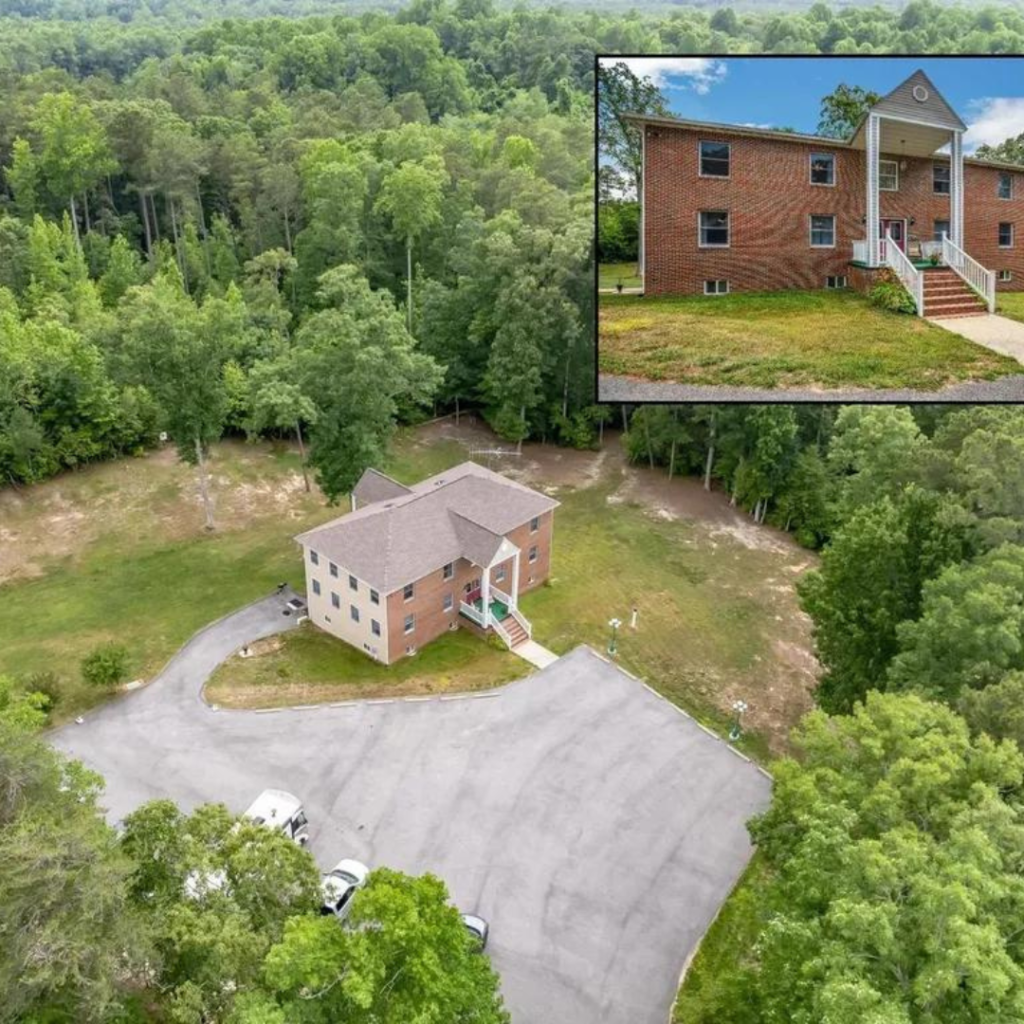
Asset Classification.................. Multi-Dwelling Detached Estate / Acreage Core
Total Interior Footprint.............. 8,640 Gross Square Feet (3 Finished Levels)
Land Allocation Area.................. 20.60 Contiguous Wooded Acres
Geographic Coordination Matrix........ California, St. Mary's County, Southern Maryland
Structural Engineering Vintage........ 1989 Built / 6-Inch Insulation-Packed Framing
Zoning Framework Designation.......... Residential Low Density (RL) / Subdivision Eligible
Primary Interior Blueprint............ 5+ Bedrooms | 7 Full Bathrooms | Shared Laundry
Decentralized Utility Grid............ Private On-Site Well Water & Septic Fields
================================================================================
The residential real estate market in St. Mary’s County, Maryland, carries a distinct valuation premium driven by large lot sizes, proximity to key military/aerospace employment hubs like Naval Air Station Patuxent River (PAX River NAS), and scarcity of flexible zoning layouts. When a multi-unit compound like 44605 Old St. Andrews Church Road enters the regional market layer carrying an entry valuation framework of approximately $995,000, consumer-facing retail real estate portals immediately activate a standard emotional narrative. They deploy enthusiastic marketing prose detailing wooded sanctuaries, multi-generational havens, and peaceful blank canvases, inviting buyers to view a highly complex piece of decentralized, rural infrastructure as a simple, passive single-family home.
This institutional risk assessment and property technology report completely strips away that lifestyle marketing veneer. By evaluating this property through the unvarnished mechanics of St. Mary’s County low-density zoning codes, severe 20-acre forestry maintenance liabilities, decentralized multi-unit tenant acoustics, private sub-surface utility lifecycles, and alternative asset opportunity costs, it establishes that this California, MD estate carries notable operational overheads. Under a standard holding model, this large-scale property features hidden structural and fiscal inefficiencies that can act as a persistent drain on your liquid wealth.
1. The Zoning and Subdivision Matrix: Navigating St. Mary’s County RL Parameters
The primary investment leverage point highlighted for this 20.6-acre California, MD property is its classification under the Residential Low Density (RL) zoning designation, which permits the potential subdivision of the land into additional independent single-family lots. Real estate brokerages frame this as a low-risk strategy to recoup a massive percentage of your initial capital investment by selling off acreage slices to local regional developers.
From a municipal land-use and civil engineering standpoint, transforming raw, wooded acreage in Southern Maryland into legal, record-plat building lots introduces high-friction regulatory and infrastructure costs:
[ Proposed Wooded Lot Subdivision Project ]
                    │
   (St. Mary's County Planning Commission Review)
                    │
┌───────────────────┴───────────────────┐
▼                                       ▼
[ Forest Conservation Act Mandates ]   [ Critical Area Hydrographic Studies ]
Requires expensive environmental       Demands complex surface-water runoff
mitigation to clear mature timber.     mapping to protect local watersheds.
The Maryland Forest Conservation Act Roadblock: Because the property backs up to continuous mature timberland and parkland, any attempt to subdivide and clear separate building pads triggers the strict parameters of the Maryland Forest Conservation Act. This legislation mandates that developers execute exhaustive forest stand delineations and preserve or replant specific percentages of the tree canopy. The costs of environmental consulting, land surveying, and mitigation fees can easily exceed tens of thousands of dollars before a single shovel touches the soil.
The Ingress and Access Infrastructure Surcharge: The property currently interfaces with public corridors via Old St. Andrews Church Road along a gravel road surface type. If you divide the land into multiple plots, municipal infrastructure codes require building proper, county-standard asphalt ingress turnarounds or private right-of-way access paths capable of supporting heavy emergency vehicles. This structural infrastructure requirement completely eliminates low-cost, high-margin land subdivision paths.
2. The Multi-Unit Residential Footprint Paradox: Tenant Privacy and Acoustic Isolation
The main residence features a massive 8,640 square foot interior footprint distributed across three finished stories and an English-style basement. The architectural blueprint is configured with five or more bedrooms, seven full bathrooms, multiple dens, and separate apartment-style living units sharing central vertical circulation paths. Real estate brochures pitch this as an ideal setup for high-margin short-term Airbnb hosting, room rentals, or multi-generational family living.
While a multi-unit configuration presents an excellent opportunity to generate passive rental income to offset your carrying costs, an experienced property manager must evaluate the structural limitations of a building framework originally engineered in 1989:
+-----------------------------------+-----------------------------------+
| Purpose-Built Multi-Family Complex| Retrofitted Multi-Wing Residence  |
+-----------------------------------+-----------------------------------+
| Continuous structural concrete    | Shared floor joists, localized    |
| floor decks, independent utility  | electrical panels, and common     |
| mains, and absolute fire wall     | plumbing drops that telegraph    |
| soundproofing boundaries.         | dynamic noise across units.       |
+-----------------------------------+-----------------------------------+
The Structural Acoustic telegraphing Effect: Traditional residential construction from the late 1980s utilizes standard timber floor joist networks underneath wood subfloors. Unless the floors underwent full acoustic remodeling with specialized decoupling channels and dense soundproof insulation during renovation, impact noise—such as footsteps or running mechanical appliances—will travel directly between the separate units. This acoustic telegraphing can lead to persistent tenant friction if you are running short-term rentals simultaneously.
The Utility Distribution Complexity: Many single-family homes adapted for multi-unit use run off a single, centralized electric meter and a unified heating and cooling grid. If the property lacks independent sub-meters for each apartment-style wing, the master owner must absorb the financial volatility of individual tenant utility use, exposing your monthly cash flow to unpredictable utility spikes.
3. Decentralized Sub-Surface Utilities: The Private Septic and Well Maintenance Burden
Because this 20-acre compound sits within a rural low-density pocket outside the core municipal utility grids of California, MD, it relies entirely on an on-site private well water source and a decentralized sub-surface septic system field. Real estate listings emphasize that this independence frees you completely from municipal water and sewer utility bills, casting it as a net financial benefit.
In the lexicon of institutional civil engineering, running a high-occupancy multi-unit residential property over private sub-surface utilities transfers 100% of the operational risk and asset replacement liabilities straight to your personal balance sheet:
[ 5+ Bedrooms & Multi-Unit Tenants ] ──► [ Intense Daily Wastewater Load ] ──► [ Septic Drainfield Saturation ]
                                                                                               │
[ $35K+ Complete System Renewal ] ◄── [ Biomats Clog Underdrain Soil Layers ] ◄── [ Hydraulic Overload ]
With five or more active bedrooms and seven bathrooms split across multiple rental or family units, the absolute volume of daily graywater and solid waste discharged into the septic tank is substantial. If multiple tenants run washing machines and showers simultaneously, the system can experience continuous hydraulic overload. This intense water volume pushes solid particles past the primary settling tank directly into the absorption drainfield lines.
Over time, this wastewater load forms a clogging mat of organic bacteria that seals the soil layers, resulting in complete septic drainfield failure. Replacing a large-scale, deep-trench septic system or drilling a replacement deep-well line in St. Mary’s County requires extensive health department testing and heavy machinery intervention, running up significant asset replacement invoices.
4. The 20.6-Acre Wooded Landholding: The Persistent Maintenance and Forestry Tax
When real estate buyers review listings like California MD homes for sale or look at sprawling multi-acre acreages, they often mistake a vast land mass for a passive asset preservation vehicle. The subject estate reigns over 20.60 contiguous acres of raw, heavily wooded land that backs directly to local parkland and natural water features.
While owning an expansive private forest provides unmatched privacy, managing a large-scale rural land parcel in the Mid-Atlantic climate zone introduces significant, non-yielding operational liabilities:
                      [ Total Estate Acreage Footprint ]
                                      │
         ┌────────────────────────────┴────────────────────────────┐
         ▼                                                         ▼
[ High-Frequency Active Zones ]                           [ Low-Frequency Wilderness Zones ]
Primary Home Footprint, Paved Parking Lot,                 20 Acres of Dense Timberland, Well
Three Covered Porches, Circular Driveway.                  Lines, and Septic Absorption Fields.
(Occupies ~5% of Total Space & Land)                      (Occupies ~95% of Total Space & Land)
The Severe Storm Clearing Burden: Southern Maryland is regularly exposed to high-wind summer thunderstorms, intense autumn remnants of Atlantic tropical systems, and heavy winter ice storms. Across twenty acres of mature trees, these weather events generate a continuous supply of fallen timber, blocked drainage paths, and broken branches. To prevent deadwood from threatening the structural integrity of your three covered porches, your private well heads, or your gravel driveway, you must fund a regular program of professional tree management and tractor clearing.
The Hidden Pest and Vegetation Inversion: Managing multiple open acres without an HOA means you are solely responsible for preventing noxious weeds and invasive insect species (such as the emerald ash borer or spotted lanternfly) from destroying your timber assets. If a disease spreads across your wooded perimeter, removing infected trees along sloped or dense terrain requires specialized forestry teams, turning your peaceful view into an ongoing operational expense.
5. The 1989 Mechanical Obsolescence Curve vs. 6-Inch Wall Efficiency
The main structure features high-quality engineering choices for its era, constructed with 6-inch, insulation-packed exterior walls rather than standard 4-inch frames. This dense structural framing delivers superior thermal resistance values, lowering the energy required to heat and cool the 8,640 square foot interior during peak winter and summer months.
While the 6-inch wall profile represents an excellent structural foundation, an investor must look at the age of the property’s primary mechanical connections, which are crossing a major operational curve:
[ 1989 Baseline Infrastructure ] ──► [ 37 Years of Continuous Wear ] ──► [ Mechanical System Degradation ]
                                                                                   │
[ High Capital Replacement Invoices ] ◄── [ Outdated System Profiles ] ◄── [ Electrical & Zoned Pump Failure ]
The home relies on multi-zone electric heat pumps and central air handlers to route conditioned air across four vertical floor levels (including the finished basement). If these multi-zone compressors, zoned damper systems, or underground electric lines date to older installation eras, their operational efficiency drops severely.
Replacing multiple commercial-grade residential heat pump systems to work in tandem with the 6-inch insulated framing requires immediate, multi-thousand-dollar capital replacement plans to ensure the multi-unit spaces remain safe and comfortable for long-term multi-generational use.
6. Comprehensive Structural Matrix: The Sales Presentation vs. Valuation Reality
To ensure your real estate acquisitions are guided by cold investment logic rather than romantic storytelling, carefully evaluate this direct contrast between what the broker’s marketing brochure promises and the real-world operational reality of 44605 Old St. Andrews Church Road:
| The Property Feature | The Broker’s Glamorous Presentation | The Real-World Operational & Financial Reality |
| $995,000 Capital Valuation | A premium investment entry indicator for an elite multi-acre country estate footprint. | Capital lockup within a highly localized, specialized rural property sub-market asset class. |
| 8,640 Finished Square Feet | Three stories of meticulously finished living space designed to accommodate massive groups. | Substantial capital allocated to dead space that requires continuous heating, cooling, and monitoring. |
| 20.60 Contiguous Wooded Acres | A pristine wooded sanctuary offering unmatched personal privacy and natural tranquility. | Significant landscape center requiring heavy equipment clearing and storm damage management. |
| Multi-Unit Room Rental Plan | An income-producing layout ideal for room rentals or immediate passive Airbnb cash flow. | High risk of acoustic telegraphing and shared utility volatility due to structural frame limitations. |
| Residential Low Density Zoning | Excellent zoning framework providing flexibility for lot subdivisions or alternate uses. | Subject to strict Maryland Forest Conservation Act review processes and high road expansion costs. |
| On-Site Well and Septic Grid | Complete utility independence with zero ongoing municipal water or sewer utility bills. | Absolute personal liability for managing septic saturation limits and deep-well water purity. |
7. The Sub-Market Liquidity Trap: The Long Resale Horizon of Southern Maryland Megaparcels
While the general residential real estate market across the metropolitan centers of Maryland shows steady transaction speed and high capital liquidity for standard single-family homes and suburban townhouses, those dynamic trading rules apply exclusively to mass-market properties. The exact millisecond a single residential property crosses the 8,000 square foot threshold on a 20+ acre wooded lot in St. Mary’s County, it exits the fluid real estate market completely and enters an incredibly sticky, frozen asset layer.
▲ [ $900K+ Apex Acreage Stratum: 44605 Old St. Andrews ] ──► Buyer Pool: Handful of Multi-Gen Families & Niche Investors (Months/Years)
■ [ $350K - $550K Mid-Tier Stratum: Standard California Subdivisions ] ──► Buyer Pool: Affluent Defense Contractors & Base Families (Moderate Speed)
● [ Under $250K Mass-Market Stratum: Regional Condos & Towns ] ──► Buyer Pool: General Public & General Retail Investors (High Velocity Trading)
If your primary business operations, international ventures, or global equity portfolios encounter an unexpected requirement for rapid liquidity, you cannot easily or quickly convert a custom 20-acre multi-unit country compound into liquid cash. The absolute pool of active buyers possessing the un-leveraged capacity to finalize an asset transaction of this magnitude within this rural sub-market—while willingly taking on private septic infrastructure and massive land clearing duties—is exceptionally small.
A unique property of this scale frequently sits on the regional multiple listing services for many months or even years before discovering a buyer whose personal lifestyle matches the building’s specific vertical configuration. If shifting economic conditions force you to execute a rapid exit from the asset, you will be systematically forced to accept an aggressive capital markdown just to attract an opportunistic cash buyer capable of closing a complex real estate transaction quickly.
8. The Staggering Financial Opportunity Cost of One Million Dollars of Dead Capital
The final, and most compelling economic argument against deploying your liquid wealth into this California, MD estate is the profound opportunity cost of capital. When you lock away one million dollars of liquid wealth into a single, non-income-generating primary residential asset or an underutilized legacy parcel, you are permanently removing that capital from the global financial landscape where it could be working to produce highly secure, compounding yields.
Let us run a highly objective, conservative financial comparison of how that exact block of wealth behaves over a standard five-year investment holding window when deployed into active, liquid market instruments versus sitting inside a dead luxury country asset:
+-----------------------------------+-----------------------------------+
| $1M Capital Sunk in Country Land  | $1M Capital Deployed in Markets   |
+-----------------------------------+-----------------------------------+
| Generates $0 in passive cash flow.| At a conservative 6% compounding  |
| Accumulates massive annual bills  | annual yield, generates over      |
| for land clearing, HVAC, & septic.| $60,000 in cash *every year*.     |
+-----------------------------------+-----------------------------------+
Over a five-year investment window, a professional, diversified corporate portfolio worth one million dollars will effortlessly produce over three hundred thousand dollars in clean, highly liquid compounding profit while maintaining absolute capital mobility. Conversely, the California, MD acreage will have actively drained tens of thousands of additional dollars out of your pocket to cover county real estate property taxes, substantial electrical utility bills to heat a massive 8,640 square foot structure, ongoing private utility pump maintenance, gravel driveway grading, and forestry clearing, while its final secondary market resale value remains completely dependent on the unpredictable luxury property cycles of Southern Maryland. From a standpoint of raw wealth optimization and asset protection, spending this scale of money on a single home is an inefficient use of capital.
Is This California, MD Acreage Built for Anyone?
Despite this extensive structural, logistical, and financial critique, this property remains a unique monument to high-capacity residential architecture. The critical step to avoiding severe investor remorse is recognizing whether your personal balance sheet and global wealth infrastructure are vast enough to absorb the severe inefficiencies of this property class.
You are completely wasting your money on this property if,
You expect your assets to remain liquid and agile: If your investment strategy relies on rapid capital mobility and the ability to exit positions within a short calendar window.
You analyze real estate through net-yield return: If you judge your asset allocations through the strict math of opportunity cost and capital efficiency.
You value complete, uncompromised multi-family privacy: If you find sharing floor plates, vertical circulation stairs, and common plumbing drops with tenants or extended family operationally frustrating.
You want a low-maintenance home: If you find managing automated multi-acre forest perimeters, private septic absorption drainfields, and complex zoning subdivision permit lines technically annoying.
This estate represents a justifiable acquisition only if,
Your net worth matches an active, multi-layered real estate fund footprint: Meaning a million-dollar capital lockdown in Southern Maryland represents a minor fraction of your overall global wealth index.
You are an active multi-generational family head or short-term rental operator: Who derives immense personal or commercial utility from running a localized multi-unit rental pool and possesses the active management infrastructure to fund it.
You maintain an established, long-term professional connection to PAX River NAS or the region: And intend to utilize the property as a permanent family foundation for decades, neutralizing short-term liquidity concerns.
The personal value of absolute natural isolation and multi-acre scarcity completely outweighs economic logic: And you possess the financial liquidity to effortlessly maintain the physical landscape and private utility grids.
The Verdict: Before You Issue an Inquiry to REM
If you are currently browsing high-end search results for California MD homes for sale or analyzing this unique entry at 44605 Old St. Andrews Church Road, the final conclusion requires looking past the glamorous real estate presentation.
This multi-level residence is an architectural and spatial triumph, but as a financial investment vehicle, it carries heavy operational and regulatory liabilities. It demands a significant lifestyle and operational sacrifice from its custodian. It forces you to manage high-maintenance landscape and private utility infrastructure, navigate complex Maryland environmental and zoning subdivision codes, combat East Coast climate elements, and accept a massive capital lockup within an illiquid price bracket.
Before you take any steps toward requesting private viewings, formal contract reviews, or structured financial terms, protect your global wealth. Work alongside an independent luxury asset advisory office to run a comprehensive multi-year operational cost projection. Physically audit the structural integrity of the private septic drainfield against high-occupancy saturation limits, and deeply calculate the true opportunity cost of moving a million dollars out of the global financial markets.
For more information on the exact architectural layout blueprints, to review official county zoning compliance data summaries, or to arrange an independent private tour of the estate grounds, contact REM. Ensure you approach the negotiation table with a completely clear, realistic perspective on the long-term operational and financial realities of ultra-luxury asset ownership.
Vertical Infrastructure Reference
To visualize how large-scale residential frames, complex multi-level layouts, and premium structural materials are managed within elite acreage and estate portfolios, review this comprehensive structural walkthrough of an architectural landmark compound. This showcase highlights the high-value physical infrastructure that modern property managers must actively secure, maintain, and monitor to protect long-term capital investments.

Moses Oyong is a Real Estate Growth Marketing Manager and PropTech specialist with over a decade of closing residential and commercial deals worth over 200 million across Nigeria and international markets. Known for engineering AI-driven workflows that delivered a 69% uplift in sales targets and cut lead response times by 85%, Moses bridges the gap between high-performance marketing, land law, and technology to help investors, developers, and first-time buyers make confident, informed property decisions in an increasingly digital world.