Why You Will Regret Buying a Studio or Apartment at Coventry Gardens 2 in DLRC, Unless You Read This Critical Investment Review First
The Dubai real estate market operates on a highly predictable, beautifully engineered psychological playbook. When a new residential launch drops, the marketing narrative shifts instantly into overdrive. Brokers fill your feeds with promises of astronomical rental yields, effortless capital appreciation, and hyper-flexible payment options designed to make property ownership feel cheaper than renting.
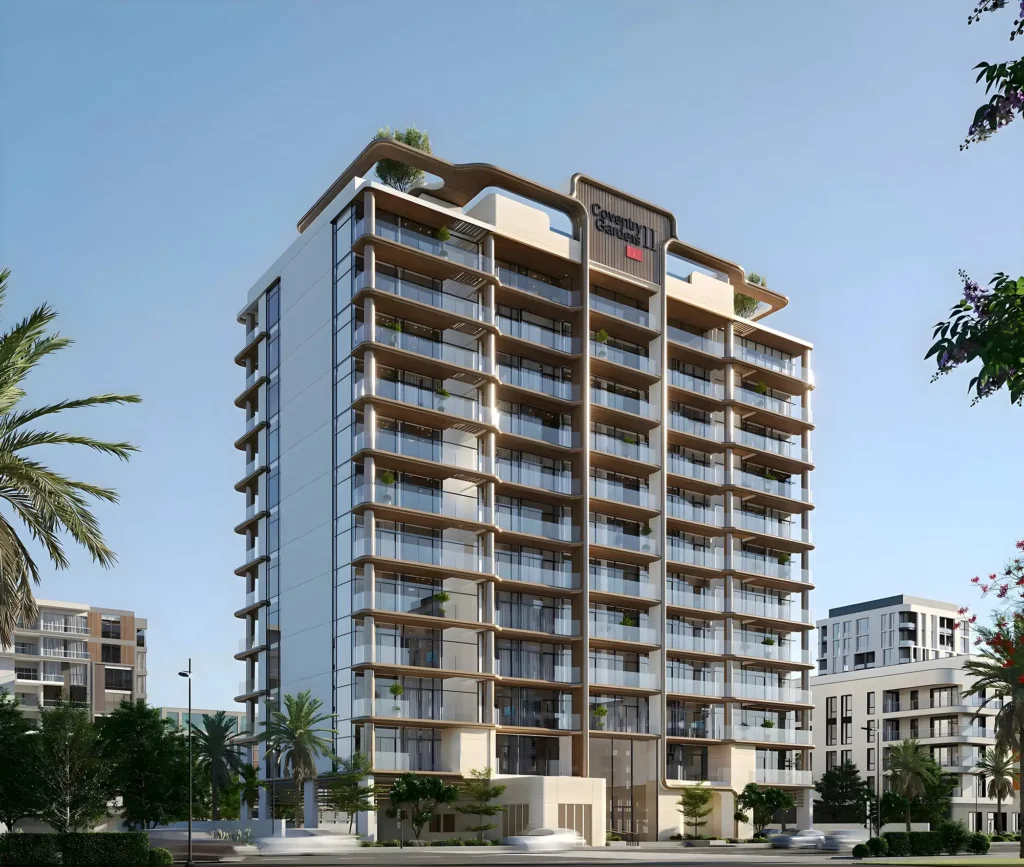
Right now, a major focus of this mass-marketing machine is Coventry Gardens 2, an off-plan mid-rise residential development located in the Dubailand Residence Complex, widely known as DLRC. Developed by GFS Builders & Developers, also operating as GFS Real Estate LLC, a firm highlighting over 25 years of regional experience, this G+11-story project is being heavily pushed to budget-conscious end-users and international first-time investors.
With entry prices for a studio starting at approximately AED 622,000 and a highly competitive, interest-free post-handover payment plan structured to drop to just 1% monthly, it looks like a foolproof financial masterstroke. The glossy brochures present a picture of contemporary urban sophistication, featuring floor-to-ceiling windows, integrated smart home systems, premium European-branded sanitary ware, a double-height grand lobby, separate wellness centers for men and women, and a spectacular rooftop infinity pool offering 360-degree views of the Silicon Oasis skyline.
But before you click a button to wire a 5% booking deposit or sign an off-plan sales agreement, you need to strip away the slick renders and evaluate the raw, unvarnished truth.
Super-affordable off-plan assets in emerging sub-markets come with significant structural, logistical, and macroeconomic realities that sales agents carefully omit from their pitches. If you buy a unit here based solely on the standard promotional copy, you risk facing deep buyer remorse.
This exhaustive, counterintuitive analysis takes a look behind the curtain of Coventry Gardens 2. We explore exactly why a substantial segment of experienced Dubai property buyers completely avoid this specific location, the hidden operational trap of high-volume studio clusters, and the blunt geographic realities of life on the outer edges of Dubailand.
1. The DLRC Location Reality: Why Buyers Frequently Distrust the Dubailand Residence Complex
The promotional material for Coventry Gardens 2 paints a picture of seamless, effortless connectivity. The marketing text states that because the development sits near major highway intersections like the Al Ain Road, E66, and the Emirates Road, E611, you enjoy swift access to key landmarks, placing Downtown Dubai, the Burj Khalifa, Dubai International Airport, Global Village, Dubai Outlet Mall, and Miracle Garden within a 5 to 20-minute drive.
While those drive times might look clean on an open Sunday morning map, the practical, daily experience of living in DLRC tells a completely different story,
                   [ The Daily Commute Bottleneck ]
                                  │
         (Peak Hour Congestion via E66 & E611 Intersections)
                                  │
       [ Your Commute: Expected 15 Mins vs. Actual 35+ Mins ]
The Highway Oasis Isolation: DLRC is fundamentally an inland, desert-fringe master community. While it does sit near vital arterial highways, navigating out of the uncompleted internal community road networks to merge onto the E66 or E611 during peak morning rush hour can be a test of pure patience. The local infrastructure is continuously trying to catch up with the rapid pace of plot construction, resulting in ongoing dust, temporary road detours, and frustrating traffic bottlenecks.
The Construction Horizon Delusion: When sales agents pitch DLRC properties for sale, they point to Dubai Vision 2040 and promise a lush, fully integrated smart community filled with green corridors, pedestrian walkways, and public parks. The reality on the ground is that DLRC has been an active, fragmented construction zone for years, and it will remain one well into the next decade. When you move into Coventry Gardens 2 in late 2027 or early 2028, you will not be stepping into a completed, tranquil sanctuary, you will be living directly in the middle of an active building site, surrounded by dust, noise from neighboring cranes, and unpaved empty sand plots.
The Missing Lifestyle Infrastructure: While major entertainment hubs like Global Village or Dubai Outlet Mall are geographically nearby, daily life requires immediate, localized convenience. Walking out of your building to grab a quick coffee, visit a premium supermarket, or dine at a high-end restaurant is simply not an option in many sectors of DLRC without getting into a car and driving out of the community. It lacks the immediate, established, pedestrian-friendly lifestyle density found in Jumeirah Village Circle, JVC, or Dubai Marina.
2. The Studio and One-Bedroom Oversupply Trap: The Enemy of Capital Appreciation
When you look at the master layout of Coventry Gardens 2, the building houses 134 units across its 11 residential floors, consisting entirely of studios, one-bedroom, and two-bedroom apartments. This specific product mix represents the classic high-density investment model that populates the buy studio in Dubai under 700k search results.
While an entry price of AED 622,000 for a studio appears highly accessible, the sheer density of identical units across DLRC creates a massive financial obstacle for your exit strategy,
+-----------------------------------+-----------------------------------+
| High-Scarcity Premium Real Estate | High-Density Commodity Investment |
+-----------------------------------+-----------------------------------+
| Unique waterfront villas or prime | Thousands of identical studios    |
| Downtown penthouses with limited  | across dozens of mid-rise towers  |
| future supply availability.       | launching simultaneously in DLRC. |
+-----------------------------------+-----------------------------------+
If you buy an apartment here with the primary intention of flipping it on the secondary market in three to four years for a quick capital profit, you are playing a highly dangerous game. Because DLRC is packed with dozens of developers building almost identical mid-rise towers offering highly similar studio and one-bedroom layouts with premium European finishes and smart home automation, your property is fundamentally a commodity.
When you eventually decide to list your unit for sale, you will not just be competing with owners in Coventry Gardens Phase 1 or Phase 2, you will be competing with thousands of identical off-plan and recently handed-over studios across the entire Dubailand belt. Because buyers have an overwhelming abundance of choices, you hold absolutely zero pricing power. The market forces of extreme oversupply cap your capital appreciation potential, making it incredibly difficult to exit the asset without dropping your price to compete with the next developer’s newest payment scheme.
3. The 1% Monthly Post-Handover Payment Plan: A Financial Double-Edged Sword
One of the most appealing features of the Coventry Gardens 2 payment plan is its highly attractive 60:40 or 50/50 structure, which includes a prolonged post-completion handover timeline. Buyers are told they can book with just 5%, pay 45% during the active construction phase, 10% upon structural handover in Q3 2027, and then smoothly clear the final 40% balance over 40 interest-free monthly installments of just 1%.
Brokers use a compelling mathematical pitch here, they tell you that the 1% monthly post-handover payment can be entirely covered by the rental income generated by the tenant moving into the unit after completion. It sounds like an effortless, self-funding cash-flow machine.
However, this strategy relies on an incredibly risky economic assumption,
The Seamless Tenancy Myth: The theory of a self-funding property completely falls apart the exact moment you encounter a tenant default, an extended vacancy period, or a sharp localized correction in rental prices.
                      [ Post-Handover Monthly Obligation ]
                                       │
                ┌──────────────────────┴──────────────────────┐
                ▼                                             ▼
  [ Scenario A: Optimistic Pitch ]             [ Scenario B: Landlord Reality ]
  Tenant pays top-tier rent on time,           Unit sits vacant for 3 months, or
  fully covering your 1% monthly               market rent drops, forcing you to
  developer obligation.                        pay the balance out of pocket.
If the building hands over during a phase where multiple adjacent towers are completing simultaneously, the sudden influx of hundreds of new rental units will trigger an immediate race to the bottom for rental rates. If you are forced to lower your asking rent to secure a tenant, or if your apartment sits completely vacant for three to four months as the community stabilizes, that 1% monthly developer payment does not pause.
You remain legally obligated to pay those monthly installments directly to GFS Developers out of your own personal pocket, regardless of whether the unit is generating a single dirham of cash flow. For an international investor or a first-time buyer with tight monthly liquidity, this can rapidly turn an easy investment into a highly stressful cash-drain scenario.
4. The Short-Term Tourist Rental Delusion: Looking at the False Proximity Pitch
Because Coventry Gardens 2 is located near major tourist and leisure destinations like Global Village, IMG Worlds of Adventure, and the Dubai Outlet Mall, many buyers mistakenly assume the property is a prime candidate for the high-yield short-term holiday home market via platforms like Airbnb.
This is a fundamental misunderstanding of the holiday home demographic in Dubai,
The Tourist Demand Geography: The vast majority of international tourists visiting Dubai want to be positioned directly on the beach at Jumeirah, within walking distance to the metro and shopping hubs of Downtown Dubai, or overlooking the lifestyle marina of Dubai Marina. They do not want to vacation deep inland on the desert fringe of the Dubailand Residence Complex.
The Global Village Seasonal Trap: While proximity to Global Village sounds impressive, it is vital to remember that Global Village is a highly seasonal attraction, operating only during the cooler winter months and shutting down entirely for the long summer period. Relying on seasonal tourist demand means your short-term occupancy rates will completely collapse during the grueling summer months, forcing you back into the highly competitive, price-sensitive annual rental market just to keep the unit occupied.
The Car Dependency Expense: Short-term guests staying at an inland community like DLRC are completely isolated without a rental car or an extensive daily budget for Uber and taxi fares. When tourists realize that getting to the beach or central business districts requires a costly, lengthy highway commute, they leave negative reviews, dragging down your property’s digital visibility and destroying your long-term short-term rental yields.
5. The Hidden Friction of High-Density Community Living: Managing 134 Neighbors
While the marketing copy highlights the sophisticated urban lifestyle and a comprehensive array of world-class features, let’s look at the real-world friction that occurs inside an 11-story mid-rise tower that is packed primarily with compact studios and one-bedroom apartments.
High-density buildings dominated by smaller units naturally attract a highly transient, fast-moving population, primarily young professionals, students commuting to nearby Academic City, and short-term corporate renters. This brings distinct lifestyle challenges,
The Shared Amenity Inundation: Coventry Gardens 2 features beautifully designed rooftop spaces, including a temperature-controlled infinity swimming pool, a lounging deck, and dedicated co-working areas. However, when a building is densely populated with studios and one-beds, the absolute volume of individual residents sharing those communal amenities is significantly higher than in a luxury building composed of large three and four-bedroom homes. On weekends, the rooftop pool, wellness centers, and co-working zones can quickly become overcrowded, turning a tranquil sanctuary into a loud, high-traffic environment.
Elevator and Infrastructure Strain: In a mid-rise residential tower with over 130 apartments, daily delivery drivers, moving crews, and residents create heavy, continuous traffic. During peak morning departure hours, waiting for elevators can become a daily annoyance. Furthermore, the constant turnover of transient tenants moving in and out means that service corridors, elevators, and common spaces experience accelerated wear and tear, putting heavy pressure on the building’s maintenance budgets.
The Service Charge Risk: To maintain the premium European finishes, smart automation systems, separate gyms, and a rooftop pool in pristine condition, the building requires continuous operational funding. In high-density buildings with a high percentage of off-shore, hands-off investors, tracking and collecting community service charges can sometimes become problematic. If a segment of owners falls behind on their community payments, the overall maintenance budget shrinks, which can directly affect the up-keep of the pools, landscaping, and security systems, accelerating the physical deterioration of the property.
6. The “Smart Home” and “Premium Finish” Marketing vs. Long-Term Durability
Every modern developer in Dubai uses the exact same vocabulary in their sales material, contemporary design ethos, floor-to-ceiling windows for abundant natural light, premium finishes, and integrated smart home technology. Coventry Gardens 2 promises precisely this level of curated elegance.
But experienced property investors understand that the true test of a building’s quality is not how it looks on handover day, but how it holds up three to five years down the line under the unique environmental pressures of the Middle East,
+-----------------------------------+-----------------------------------+
| Off-Plan Handover Promise         | Long-Term Desert Climate Reality  |
+-----------------------------------+-----------------------------------+
| Sleek integrated smart automation | High ambient temperatures and     |
| and vast floor-to-ceiling glass   | blowing dust stress electronics and|
| panels framing urban views.       | require heavy AC cooling outputs. |
+-----------------------------------+-----------------------------------+
The Smart Automation Life Cycle: Integrated smart home systems for climate and lighting control look spectacular when demonstrated in a pristine showroom. However, proprietary electronic systems require ongoing software updates and specialized technical support. If a budget-friendly developer utilizes mid-tier automation components to keep construction costs low, owners may find themselves dealing with frequent system glitches, broken sensors, or high out-of-warranty repair costs a few years post-handover.
The Thermal Load of Floor-to-Ceiling Windows: Expansive glass facades are excellent for maximizing natural light, but they also create a massive greenhouse effect. In the middle of a Dubai summer, when temperatures routinely climb past 45°C, those large glass panels absorb immense amounts of radiant heat. If the structural glass does not feature top-tier, high-performance thermal insulation coatings, your apartment’s air conditioning system will be forced to run at absolute maximum capacity around the clock. This significantly drives up your monthly utility bills and puts extreme mechanical stress on the building’s central chiller plants.
Detailed Project Comparison: The Broker’s Pitch vs. Reality
To help you look past the standard real estate presentation and protect your capital from localized market risks, review this direct, balanced breakdown of the marketing expectations versus the long-term operational realities of buying in this sector of DLRC,
| The Optimistic Broker Pitch | The Real-World Operational Reality | The Potential Source of Investor Regret |
| Accessible Entry Pricing from AED 622,000 | Highly competitive pricing that indicates an area saturated with mass-market supply options. | Zero product scarcity, making future capital appreciation exceptionally slow. |
| 1% Monthly Post-Handover Payment Plan | Prolonged debt structure that continues regardless of your actual occupancy status. | Financial strain if the unit experiences vacancy periods or localized rental drops. |
| Minutes Away from Downtown and Airports | Geographically close via highway lines, but highly dependent on clearing local bottleneck entry points. | Lengthy, frustrating daily commutes during peak morning and evening traffic hours. |
| Rooftop Infinity Pool & Co-Working Spaces | Premium communal features shared across a high-density footprint of smaller units. | High potential for weekend overcrowding and accelerated wear on shared assets. |
| Integrated Smart Home Technology | Complex electronic networks controlling essential lighting, security, and climate functions. | Risk of premature system component failures and expensive post-warranty maintenance. |
| Tranquil Sanctuary in Emerging DLRC Hub | A rapidly growing community that remains a highly active construction zone. | Living alongside persistent dust, noise from cranes, and unpaved sand plots for years. |
Who is Coventry Gardens 2 Actually Built For?
Despite the clear geographic and oversupply challenges outlined in this review, it would be incorrect to label Coventry Gardens 2 as an inherently bad project. It is a well-designed, highly functional piece of modern urban architecture. The key to a successful real estate transaction is ensuring that the asset’s structural realities align perfectly with your investment timeline and personal lifestyle requirements.
You will likely regret buying a unit here if,
You are looking for a high-velocity capital flipping asset that you can sell for a massive premium within 24 to 36 months of booking.
You want a quiet, pedestrian-friendly neighborhood where you can walk to luxury retail, fine-dining restaurants, and active beachfronts.
You are an international investor expecting a passive, automated holiday home asset that can generate consistent short-term tourist income year-round.
You have zero tolerance for ongoing local construction infrastructure noise, dust, and temporary road networks.
The development represents a solid opportunity only if,
You are a conservative, income-focused buy-and-hold investor looking to lock away capital for 7 to 10+ years to collect steady, long-term rental income from price-sensitive tenants.
You are an end-user or student working or studying in the adjacent Dubai Silicon Oasis or Academic City hubs, making the location highly functional for your daily life.
You want to leverage an interest-free post-handover payment structure to build equity over time without taking on a traditional bank mortgage.
You understand and accept the multi-year development timeline required for emerging master communities like DLRC to reach full maturity.
The Verdict: Before You Move Forward with REM
If you are currently evaluating whether to step forward and buy a studio or apartment at Coventry Gardens 2, the final decision should never be made based on a beautiful brochure or the urgency of a sales floor.
The project itself offers a highly competitive entry point into the Dubai real estate landscape, backed by a developer with a deep, multi-decade history. However, the location within the Dubailand Residence Complex carries unique structural demands. It is a long-term play that requires patience, realistic rental expectations, and the financial capacity to comfortably manage a post-handover payment obligation without relying blindly on immediate, uninterrupted tenant cash flow.
Before you make a definitive financial commitment, protect your portfolio. Take the time to physically drive through the internal road networks of DLRC during peak morning commute hours. Evaluate the historical rental data of handed-over towers in the immediate vicinity, and map out your cash-flow security for the entire duration of the post-completion payment window.
For more information on the precise breakdown of the available floor plans, to analyze construction milestones, or to schedule an independent, private site viewing of the project, contact REM. Ensure you enter every real estate transaction with a completely clear, realistic perspective of the local market dynamics.

Moses Oyong is a Real Estate Growth Marketing Manager and PropTech specialist with over a decade of closing residential and commercial deals worth over 200 million across Nigeria and international markets. Known for engineering AI-driven workflows that delivered a 69% uplift in sales targets and cut lead response times by 85%, Moses bridges the gap between high-performance marketing, land law, and technology to help investors, developers, and first-time buyers make confident, informed property decisions in an increasingly digital world.