The international ultra-luxury residential market thrives on a carefully engineered narrative of heritage preservation, architectural scale, and neighborhood prestige. When a property listing emerges within the legendary borders of The Bridle Path, Toronto, carrying a massive price tag of $20,400,000 USD (approximately $28,000,000 CAD), the real estate marketing machine shifts instantly into hyperdrive. Brokers across North American wealth hubs deploy highly emotional, aspirational vocabulary. They speak of passing down historic legacies, owning a masterpiece of Canadian architecture, and living in an unassailable capital fortress that shields your wealth from global financial volatility while providing a personal multi-acre resort footprint.
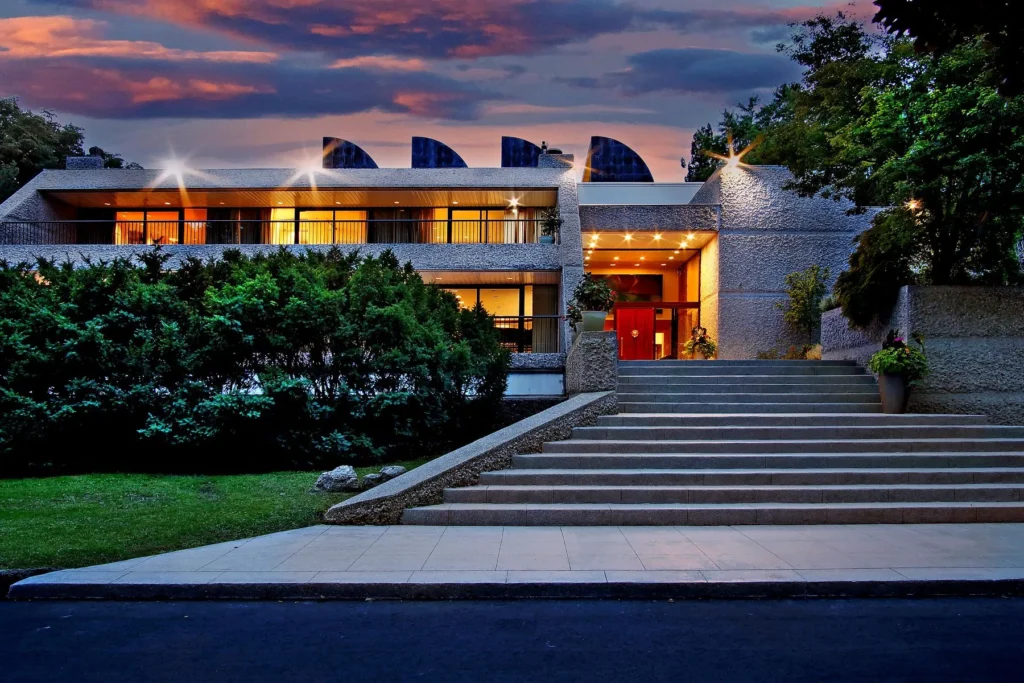
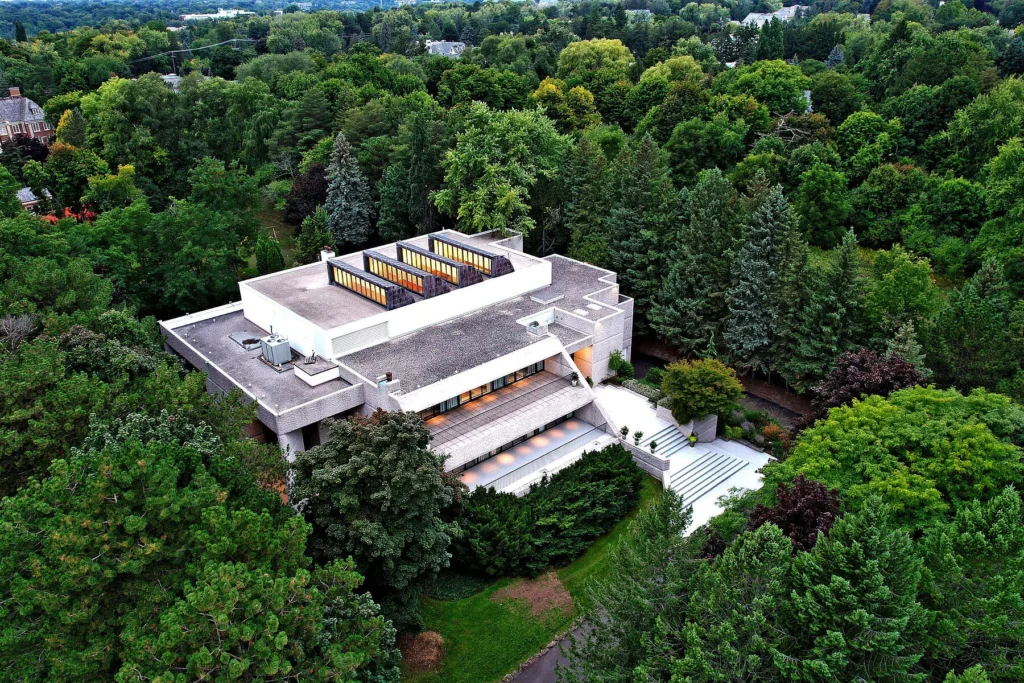
The physical property currently commanding this significant high-tier marketing focus is a staggering 26,000 square foot mega-mansion positioned on a sprawling 2.12-acre private estate in Toronto’s most exclusive enclave. This property is a monumental example of Canadian mid-century modernist and brutalist-influenced architecture, designed by the legendary Pritzker-era master architect John C. Parkin. The estate features a soaring central atrium glass pavilion designed to flood the home with natural light, a formal Zen meditation garden, expansive multi-wing hosting galleries built to accommodate hundreds of guests, a backyard golf putting green, and rolling manicured lawns framed by mature, towering trees.
On a premium marketing layout or an exclusive digital house tour, this property presents an image of complete lifestyle victory.
However, if you step past the polished grand atrium, look beyond the emotional romance of the Parkin pedigree, and analyze this development through the cold, calculated metrics of cold-climate structural degradation, massive spatial redundancy, localized Canadian anti-speculation taxation, and alternative capital opportunity costs, a completely different reality emerges. Deploying over twenty million dollars of liquid capital into this specific Toronto acreage represents a substantial waste of your personal time, emotional energy, and financial resources. Far from being a strategic asset allocation, it is a highly demanding holding liability that will steadily erode your wealth.
Here is an unvarnished, deep-dive analysis of the structural, logistical, and economic realities that turn this trophy acreage into a profound financial burden, detailing the top reasons why experienced ultra-high-net-worth investors view this property as a dangerous capital trap.
1. The 26,000 Square Foot Spatial Redundancy Trap: Funding Dead Square Footage
The primary marketing column for this Bridle Path estate is its gargantuan scale. The layout features a 26,000 square foot residential footprint. Renders and walk-through presentations highlight this massive interior volume as a playground for indulgence, boasting an architecture that allows you to host a small army in complete style.
From a practical, daily lifestyle and wealth-management standpoint, an over-scaled residential footprint of this magnitude creates an immense spatial efficiency deficit,
                      [ Total Residential Square Footage ]
                                       │
         ┌─────────────────────────────┴─────────────────────────────┐
         ▼                                                           ▼
[ High-Frequency Active Zones ]                             [ Low-Frequency Dead Space ]
Primary Suite, Family Kitchen,                              Multiple Guest Wings, Atrium Corridors,
Main Living Room, Home Office.                              Formal Hosting Galleries, Basements.
(Occupies ~15% of Total Space)                              (Occupies ~85% of Total Space)
In day-to-day operations, even the most socially active families utilize less than fifteen percent of the available interior square footage. The secondary guest wings, the vast circulation corridors looping around the atrium, the formal hosting galleries, and the deep subterranean utility levels sit entirely silent for months at a time.
Yet, because the building features soaring ceilings and vast architectural volumes, the entire 100% of the structure must be actively heated, ventilated, humidified, and monitored twenty-four hours a day, seven days a week.
Ontario’s extreme climate variations—ranging from humid summers to freezing, sub-zero winter temperatures—require continuous HVAC activity. You must maintain strict climate equilibrium to prevent condensation from settling into the walls, custom millwork, and high-value artwork collections. You are essentially funding the operational overhead of a luxury commercial hotel lodge while only deriving personal utility from a tiny sliver of the space, resulting in an ongoing drain on your liquid wealth with zero practical utility.
2. The Freezing Canadian Climate Assault: The High-Maintenance Reality of Modernist Glass Roofs
The defining architectural feature of this John C. Parkin masterpiece is its soaring central atrium, a structural glass pavilion engineered to flood the core of the 26,000 square foot palace with natural sunlight. While this looks breathtaking in architectural photography during a clear summer afternoon, maintaining a large-scale steel-and-glass roof infrastructure within the harsh winter profile of Toronto is an engineering nightmare.
The climate of Ontario features intense winter snowstorms, freezing rain, and rapid freeze-thaw cycles that place extreme structural strain on large expanses of architectural glass and horizontal roof joints,
The combination of heavy snow loads, ice damming, and extreme thermal expansion causes structural stress on modernist glass-and-steel skylight frameworks.
[ Heavy Ontario Snow Accumulation ] ──► [ Ice Damming along Roof Seals ] ──► [ Microscopic Gasket Contraction ]
                                                                                                │
[ High-Cost Artisanal Structural Repairs ] ◄── [ Infiltration of Moisture & Water Ingress ] ◄── [ Seal Failures ]
During a typical Toronto winter, hundreds of pounds of snow accumulate on horizontal glass surfaces. As heat naturally rises through the central atrium, the bottom layer of snow melts, creating water runoff that traps itself against cold perimeter ice barriers—a process known as ice damming. This standing water finds any microscopic vulnerability in the structural caulking, rubber gaskets, and sealant lines.
When the outdoor temperature drops sharply at night, this trapped moisture freezes and expands, widening hairline fractures in the seals. Once spring arrives, this leads to persistent moisture ingress and water leaks that can damage the premium interior finishes below.
To prevent your luxury asset from physically deteriorating, you must employ specialized structural glazing contractors for regular safety inspections and seal retrofits, transforming your serene glass sanctuary into a continuous source of maintenance invoices.
3. Canadian Fiscal Barriers: Navigating the Wealth-Erosion Taxation Framework
The financial reality of deploying twenty million dollars into Ontario’s premium real estate sector requires navigating an aggressive, multi-layered regulatory taxation framework specifically engineered by Canadian authorities to penalize high-end property allocations and foreign capital injections.
Upon entry, and throughout your holding window, your capital is subject to non-refundable fiscal drains that strip away potential profit margins before you even begin to calculate market growth,
The Ontario Non-Resident Speculation Tax (NRST): If you are an international investor, an off-shore family office, or a non-citizen corporate entity looking to buy Bridle Path Toronto houses for sale, you face Canada’s sweeping foreign buyer ban and Ontario’s aggressive 25% Non-Resident Speculation Tax. On a $20,400,000 purchase, you must write an immediate, non-refundable check for over $5,100,000 USD directly to the provincial revenue authority as a pure entry penalty. This tax adds zero value to the physical asset, putting your capital deeply in the red on day one.
The Toronto Municipal and Provincial Land Transfer Taxes: Independent of foreign buyer taxes, Toronto enforces a dual-layered land transfer tax system that scales progressively with property value. For ultra-luxury estates crossing the multi-million-dollar mark, the combined provincial and municipal transfer fees create a significant upfront cash drain that must be settled upon closing.
Substantial Annual Property Taxes: The municipal property taxes for a two-acre estate in The Bridle Path represent a significant, non-negotiable annual expense. These funds are extracted by the city regardless of your personal liquidity, broader financial market corrections, or whether the home sits empty as a seasonal legacy property.
4. The John C. Parkin Heritage Preservation Trap: Zero Remodeling Flexibility
This exceptional penthouse-scale mansion is celebrated as a modernist masterpiece designed by the renowned architect John C. Parkin, a pioneer of Canadian mid-century design. While architectural purists view this pedigree as a vital historical asset, from an institutional investment and customization standpoint, owning a property with historical significance in Toronto is an administrative trap.
Because the home is recognized as a premier example of mid-century architectural genius, it faces a high probability of being designated under the Ontario Heritage Act,
[ Proposed Custom Remodeling Plan ] ──► [ Submission to Heritage Toronto Board ] ──► [ Comprehensive Design Review ]
                                                                                                  │
[ Lengthy Construction Delays ] ◄── [ Total Project Rejection / Material Veto ] ◄── [ Strict Historic Mandates ]
Once a residential structure falls under historical heritage designation, you completely lose your autonomous ownership rights regarding structural remodeling, exterior alterations, and layout changes,
The Veto Power of Heritage Boards: If you wish to update the brutalist or modernist facade, replace original window frames with newer low-emissivity glass panels, or modify the layout of the soaring atrium to optimize energy efficiency, you must clear your architectural plans with the local heritage preservation boards. These committees possess the legal power to veto any design choice that they feel compromises Parkin’s original aesthetic vision.
The Artisanal Cost Multiplier: If the historical guidelines require you to preserve or replicate original construction materials, standard building practices are completely barred. You are forced to track down specialized heritage craftsmen to restore aging architectural elements using low-volume, historic fabrication techniques, transforming simple home updates into lengthy, multi-million-dollar construction projects.
5. The Multi-Acre Landscaping Abyss: The Relentless Upkeep of a 2.12-Acre Oasis
The property description highlights the sprawling 2.12-acre footprint of meticulously landscaped grounds, featuring rolling lawns, a dedicated putting green, and towering mature trees. While the marketing text frames this as a private oasis that offers ultimate natural isolation from the city’s hustle and bustle, managing multiple acres of curated greenery in Toronto is an immense operational liability.
The climate of Ontario features intense, fast-moving seasonal transitions that place unique biological and physical stress on a large estate lot,
+-----------------------------------+-----------------------------------+
| Expected Luxury Garden Experience | Real-World Ontario Climate Fact   |
+-----------------------------------+-----------------------------------+
| Relaxing strolls through pristine,| Intense autumn leaf drops and     |
| manicured grounds and a private   | freezing winter snow packing that |
| green space.                      | smothers premium putting turf.    |
+-----------------------------------+-----------------------------------+
The Putting Green Maintenance Burden: Maintaining a professional-grade golf putting green requires specialized horticultural care. The turf varieties used for putting surfaces are highly delicate and prone to disease, ice scalding, and moisture rot during the long Canadian winter freeze. To keep the green functional for the brief summer window, you must deploy specialized daily cutting, continuous aeration schedules, and expensive chemical treatments.
Autumn Clearance and Winterization Costs: With over two acres populated by mature, towering trees, the arrival of the autumn cycle triggers an immense volume of leaf drop that must be manually cleared every week to prevent smothering the lawns. Furthermore, before the first winter frost arrives, the entire automated irrigation system across the 2.12 acres must be blown out with compressed air to prevent frozen pipes from bursting underground, representing a recurring logistical chore.
6. The Apex Illiquidity Trap: The Frozen Secondary Market of Ontario’s Luxury Stratum
While the general residential real estate market across the Greater Toronto Area (GTA) is globally famous for its intense demand, constant bidding wars, and rapid capital liquidity, those dynamic market rules apply exclusively to standard townhouses, suburban family homes, and mid-tier condos. The exact millisecond a single residential asset crosses the twenty million dollar threshold in The Bridle Path, it exits the fluid real estate market completely and enters an incredibly sticky, frozen asset layer.
▲ [ $20M+ Apex Layer: Bridle Path Mega-Mansion ] ──► Buyer Pool: Handful of Canadian & Global Billionaires (Years to Exit)
■ [ $2M - $5M Layer: Standard GTA Detached Homes ] ──► Buyer Pool: Affluent Domestic Corporate Elite (Moderate Speed)
● [ Under $1M Layer: Mass Market Condos & Towns ] ──► Buyer Pool: General Public & Retail Investors (High Velocity Trading)
If your primary business operations, international ventures, or global equity portfolios encounter an unexpected requirement for rapid liquidity, you cannot easily or quickly convert a custom 26,000 square foot modernist estate into liquid cash. The absolute pool of active buyers possessing the un-leveraged capacity to finalize a twenty-million-dollar residential cash transaction—while willingly absorbing Canada’s modern anti-flipping and foreign ownership restrictions—is exceptionally small.
A trophy property of this magnitude frequently sits on the private luxury registry for twelve, twenty-four, or thirty-six months before discovering a buyer whose personal aesthetic taste matches Parkin’s mid-century brutalist design configuration. If you must exit the asset quickly due to shifting economic conditions, you will be systematically forced to accept an aggressive capital markdown just to attract an opportunistic cash buyer capable of closing a complex real estate transaction.
7. The Permanent Domestic Workforce Management Burden
You cannot comfortably operate an estate that contains a 26,000 square foot residence, a soaring glass atrium pavilion, an interior Zen meditation garden, a private putting green, and a multi-acre landscaped park with a standard domestic cleaning template.
By purchasing this property, you are effectively appointing yourself as the managing director of a highly active, specialized domestic workforce corporation,
The Dedicated Workforce Footprint: This massive property requires an active, permanent, multi-person staff ecosystem to remain in showcase condition. You will need a full-time professional estate manager, multiple specialized housekeepers trained to handle historic preservation materials, a dedicated HVAC technician to manage the complex multi-zone climate control infrastructure, a professional greenkeeper for the putting green, and round-the-clock private security personnel to monitor the 2.12-acre perimeter.
The Absolute End of Privacy: True luxury is fundamentally rooted in quiet isolation, personal freedom, and absolute boundary control. However, because this massive Bridle Path mansion requires non-stop technical maintenance, landscape grooming, and structural monitoring, your home will permanently have staff members and external technical contractors moving through the service corridors, gardens, and atrium walkways, completely eliminating the intimate family dynamic of a traditional home.
The Administrative Oversight Strain: Tracking payroll, managing employee health insurances, coordinating service contracts, and handling internal staff scheduling turns your private residence into a continuous operational administrative center, consuming your highly valuable personal time and mental bandwidth.
8. The Staggering Financial Opportunity Cost of Twenty Million Dollars of Dead Capital
The final, and most compelling economic argument against deploying your liquid wealth into this Bridle Path mansion is the profound opportunity cost of capital. When you lock away twenty million dollars of liquid wealth into a single, non-income-generating primary residential asset, you are permanently removing that capital from the global financial landscape where it could be working to produce highly secure, compounding cash flows.
Let us run a highly objective, conservative financial comparison of how that exact block of wealth behaves over a standard five-year investment holding window when deployed into active, liquid market instruments versus sitting inside a dead luxury residential asset,
+-----------------------------------+-----------------------------------+
| $20M Capital Sunk in Toronto Home | $20M Capital Deployed in Markets  |
+-----------------------------------+-----------------------------------+
| Generates $0 in passive cash flow.| At a conservative 6% compounding  |
| Accumulates massive annual bills  | annual yield, generates over      |
| for heating, cooling, & taxes.    | $1,200,000 in cash *every year*.  |
+-----------------------------------+-----------------------------------+
Over a five-year investment window, a professional, diversified corporate portfolio worth twenty million dollars will effortlessly produce over six million dollars in clean, highly liquid compounding profit while maintaining absolute capital mobility. Conversely, the Bridle Path multi-acre estate will have actively drained millions of additional dollars out of your pocket to cover high municipal property taxes, substantial electrical and gas utility bills to heat a massive 26,000 square foot structure through Canadian winters, ongoing heritage restoration fees, and landscape maintenance, while its final secondary market resale value remains completely dependent on the unpredictable high-end property cycles of Ontario. From a standpoint of raw wealth optimization and asset protection, spending this scale of money on a single vertical home is an inefficient use of capital.
Comprehensive Structural Matrix: The Broker’s Pitch vs. Reality
To ensure your luxury property acquisitions are guided by cold investment logic rather than romantic real estate storytelling, carefully evaluate this direct contrast between what the broker’s marketing brochure promises and the real-world operational reality of this Bridle Path estate,
| The Hyper-Luxury Feature | The Broker’s Glamorous Pitch | The Real-World Operational & Financial Reality |
| $20,400,000 Purchase Price | An elite trophy property indicating the absolute peak of Canadian success, wealth, and prestige. | Extreme capital lockup with heavy asset illiquidity and high annual fixed holding costs. |
| John C. Parkin Design Pedigree | A rare architectural masterpiece painted with the strokes of a renowned Canadian genius. | High risk of strict Ontario Heritage Act designations that eliminate your remodeling autonomy. |
| Soaring Glass Atrium Pavilion | A show-stopping interior space bathed in natural light, perfect for lavish parties. | Extreme vulnerability to winter ice damming, snow load strain, and high-cost gasket leaks. |
| 2.12-Acre Private Oasis Lot | Absolute freedom to roam your private lawns away from the city’s noise and bustle. | Significant landscaping liability requiring a permanent greenkeeper to manage the golf turf. |
| 26,000 Square Foot Palace | A massive residential canvas built to express your refined taste and success. | Significant capital allocated to dead space that requires continuous heating and climate management. |
| Prime Bridle Path Address | Positioned proudly within Toronto’s most coveted, world-famous luxury neighborhood. | Saturated luxury asset stratum facing immediate exit liquidity challenges upon resale. |
Is This Bridle Path Mega-Mansion Built for Anyone?
Despite this extensive structural, logistical, and financial critique, this property remains a unique monument to Canadian architectural history. The critical step to avoiding severe investor remorse is recognizing whether your personal balance sheet and global wealth infrastructure are vast enough to absorb the severe inefficiencies of this property class.
You are completely wasting your money on this mansion if,
You expect your assets to remain liquid and agile: If your investment strategy relies on rapid capital mobility and the ability to exit positions within a short calendar window.
You analyze real estate through net-yield return: If you judge your asset allocations through the strict math of opportunity cost and capital efficiency.
You value complete family privacy: If your lifestyle demands absolute seclusion without a permanent, multi-person staff workforce operating within your daily environment.
You want a low-maintenance home: If you find managing century-old modern glass roof structures, specialized heritage restoration boards, and delicate golf green turf annoying.
This estate represents a justifiable acquisition only if,
Your net worth exceeds several hundred million dollars: Meaning a twenty-million-dollar capital lockdown represents a minor fraction of your overall global wealth footprint.
You are an absolute collector of rare architectural art: And view living inside an uncompromised John C. Parkin modernist structure as a vital legacy milestone.
You maintain an established, long-term footprint in Toronto: And intend to utilize the property as a permanent family foundation for decades, neutralizing short-term liquidity concerns.
The personal prestige of the address completely outweighs economic logic: And you possess the financial infrastructure to effortlessly support an active, live-in property management team to run a complex residential structure.
The Verdict: Before You Issue an Inquiry to REM
If you are currently browsing high-end search results for buy luxury mansion Toronto or analyzing this spectacular entry at The Bridle Path, the final conclusion requires looking past the glamorous real estate presentation.
This 26,000 square foot residence is an architectural triumph, but as a financial investment vehicle, it carries heavy operational and regulatory liabilities. It demands an immense lifestyle and operational sacrifice from its custodian. It forces you to manage high-maintenance glass roof infrastructure, absorb punitive entry tax structures, combat aggressive Canadian winter elements, and accept a massive capital lockup within an illiquid price bracket.
Before you take any steps toward requesting private viewings, formal contract reviews, or structured financial terms, protect your global wealth. Work alongside an independent luxury asset advisory office to run a comprehensive multi-year operational cost projection. Physically audit the structural performance of the central atrium glass gaskets against ice damage, and deeply calculate the true opportunity cost of moving twenty million dollars out of the global financial markets.
For more information on the exact architectural layout files, to review construction compliance documentation, or to arrange an independent private tour of the Bridle Path sector, contact REM. Ensure you approach the negotiation table with a completely clear, realistic perspective on the long-term realities of ultra-luxury asset ownership.

Moses Oyong is a Real Estate Growth Marketing Manager and PropTech specialist with over a decade of closing residential and commercial deals worth over 200 million across Nigeria and international markets. Known for engineering AI-driven workflows that delivered a 69% uplift in sales targets and cut lead response times by 85%, Moses bridges the gap between high-performance marketing, land law, and technology to help investors, developers, and first-time buyers make confident, informed property decisions in an increasingly digital world.