Technical Specifications & Regional Data Matrix
================================================================================
PROPERTY ASSET MATRIX & DECENTRALIZED INFRASTRUCTURE PROFILE
================================================================================
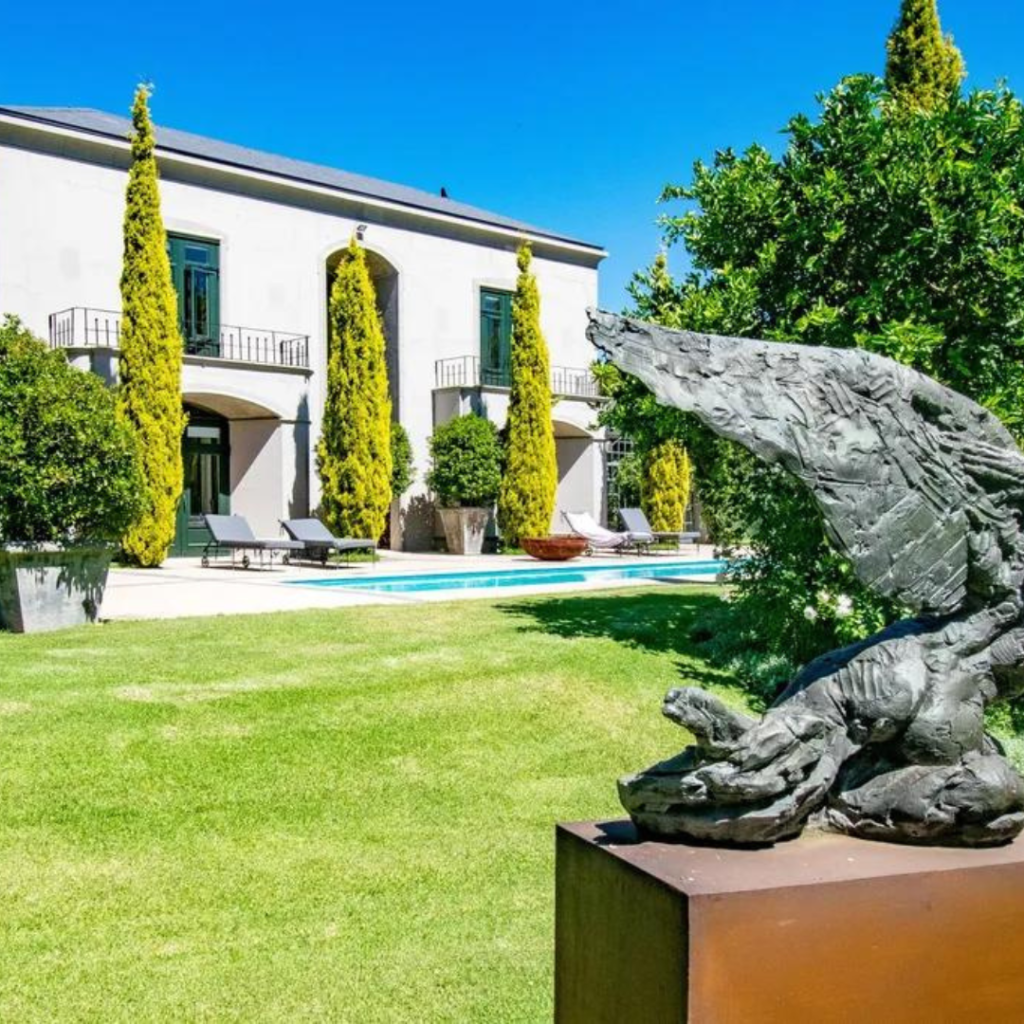
Asset Classification.................. Sovereign-Tier Agrarian-Residential Compound (Gentleman's Farm)
Total Land Allocation Area............ 2.0+ Hectares (Contiguous Mountain-Facing Plots)
Geographic Coordination Matrix........ Franschhoek Valley, Cape Winelands, Western Cape, South Africa
Primary Structural Core............... Stately Classical Villa (5 En-Suite Bedrooms | 6.5 Bathrooms)
Vertical Volumetric Alignment......... Triple-Volume Entrance Core & Soaring Vaulted Ceiling Frameworks
Agrarian Asset Core Infrastructure.... Private Merlot Vineyard Array & 150 Productive Olive Trees
Agrarian Yield Capacity............... ~4,000 Standard Bottles (750ml) Estate Merlot Per Annum
Hydrological Infrastructure Grid...... High-Yield Borehole Network, Sub-Surface Irrigation Filtration
Energy Grid Defection System.......... High-Capacity Automated Industrial Diesel Generator Array
Recreational Infrastructure........... Floodlit Championship Tennis Court, 3 Swimming Pools, Rose Garden
Transit & Storage Core................ Internal Garaging Bays for Up to 7 High-Value Motor Vehicles
Independent Logistics Support......... Multi-Unit Private Staff Quarters & Secure Operations Wing
================================================================================
The ultra-prime residential and agrarian lifestyle market within the Cape Winelands of South Africa, specifically tracking the elite valley enclaves of Franschhoek and Stellenbosch, operates on a specific valuation model. This asset-pricing structure is heavily driven by absolute geographical boundaries, micro-climate agricultural productivity, structural scale, and a growing demand among international buyers for energy and water independence from municipal networks.
When an expansive gentleman’s farm like Sandstone House enters the transaction pipeline carrying an entry asset valuation framework of $5,000,000 USD (approximately R92,000,000 ZAR), consumer-facing real estate platforms immediately activate a highly emotional sales narrative. They focus heavily on sun-dappled mountain terraces, morning coffee amidst blooming rose gardens, and the romantic dream of pouring your own estate-grown Merlot. This invites high-net-worth buyers to view a highly complex piece of decentralized agricultural and structural infrastructure as a simple, passive secondary lifestyle property.
As a real estate principal with over a decade of frontline investment underwriting and transactional experience across international luxury markets, I look straight past that romantic framing. An estate of this scale, spanning over two hectares of productive valley soil, is explicitly not a simple plug-and-play holiday home. It is a live, commercial-grade residential campus integrated with a boutique agricultural manufacturing facility. It is exposed to the unique physical pressures of the Western Cape’s climate and bound to the strict regulatory frameworks of South African property, water, and agricultural export laws.
By evaluating this asset through the unvarnished mechanics of sovereign utility grid defection, deep-water aquifer management, boutique viticultural compliance, high-volume structural thermodynamics, localized transfer duties, and alternative asset opportunity costs, this audit establishes the real-world operational and capital liabilities hidden behind the classical stone walls of Sandstone House.
1. Systemic Infrastructure Forensics: The Reality of Sovereign Grid Defection
The primary operational constraint confronting any investor deploying multi-million dollar capital into the luxury real estate Western Cape sector is the structural instability of national utility networks. Sandstone House addresses this risk by incorporating an automated backup generator system and a high-yield borehole water network. Brokerage promotional materials present these features as a seamless path to complete peace of mind, implying that off-grid living requires no more than routine oversight.
Evaluating these systems through the lens of industrial facility management reveals a significant, non-yielding operational overhead:
                  [ National Grid Instability / Eskom Curtailments ]
                                         │
               (Continuous Automated Mechanical Switch-Over Loads)
                                         │
         ┌───────────────────────────────┴───────────────────────────────┐
         ▼                                                               ▼
[ Diesel Consumptive Expense Burn ]                       [ Inverter System Cycling Wear ]
Extended blackouts drive massive fuel consumption rates  Rapid battery charging and heat generation shorten
to heat three pools and run central HVAC systems.         the lifespan of delicate power management components.
The Financial Realities of Generator Dependency: Running an estate with a triple-volume entrance hall, multi-zone HVAC arrays, separate staff quarters, and three distinct swimming pool filtration pumps demands an immense electrical base load. During extended periods of national power grid load-shedding, an automated diesel generator must run for hours at a time. This constant operation turns backup equipment into a primary power source, leading to high fuel consumption and shortened service intervals for oil, filters, and mechanical components. A sophisticated buyer should evaluate updating the property to a hybrid solar-inverter microgrid to lock in predictable long-term utility costs.
The Mechanical Thermal Load Balance: When a property switches between municipal grid power and on-site generator backup, its sensitive computerized systems—such as its home automation lines, security cameras, and intelligent lighting networks—experience continuous electrical switching cycles. Without industrial-grade surge protectors, stable voltage regulators, and high-capacity uninterruptible power supplies (UPS) inline, the home’s electronics face accelerated component wear. This requires regular maintenance interventions from specialized technicians traveling from Cape Town.
2. Sub-Surface Hydrological Forensics: Borehole Aquifer Management and Filtration Math
To sustain its 4,950 square meters of formal gardens, landscaped terraces, productive vineyards, and 150 olive trees, Sandstone House relies on a high-yield sub-surface borehole system. Real estate listings highlight this private water source as an uncompromised asset that ensures a green, flourishing paradise year-round, completely insulated from regional water restrictions.
From a civil engineering and agricultural perspective, relying on a private groundwater well in the Cape Winelands requires a deep understanding of water quality chemistry and statutory allocation rules:
[ Raw Sub-Surface Aquifer Water ] ──► [ Iron & Manganese Heavy Loads ] ──► [ Mineral Clogging of Drip Lines ]
                                                                                               │
[ Continuous Automated Back-Washing ] ◄── [ High-Output Reverse Osmosis ] ◄── [ High Soil Acidity Stacking ]
The Chemical Filtration Surcharge: Groundwater in the Western Cape’s mountain valleys often contains high levels of dissolved iron, manganese, and sulfur compounds, along with varying pH levels. If you pump this raw water directly into your vineyards or the automated irrigation systems of your formal rose garden, the mineral scaling will quickly clog the drip lines, stain your outdoor stone paths, and alter the soil chemistry around your olive trees. To protect your landscape, the estate must run a multi-stage filtration plant that includes iron-oxidizing filters, water softeners, and automated back-wash tanks. This infrastructure introduces a fixed, non-negotiable operational cost onto your monthly property ledger.
The Legal Restrictions of the National Water Act: Under South Africa’s National Water Act, owning land does not grant unlimited rights to extract groundwater for commercial or agricultural use. The borehole must be officially registered, and your extraction rates must stay within the statutory limits for general authorization or hold a valid Water Use License (WULA) issued by the Department of Water and Sanitation. If regional groundwater tables drop during a dry summer season, authorities can audit your well meters, meaning water management remains a strict compliance line item for your estate management team.
3. Agrarian Economics and Compliance: Managing a Boutique Vineyard and Olive Grove
The most distinctive feature of Sandstone House is its productive agricultural asset layout, which features 150 mature olive trees and a private vineyard that produces approximately 4,000 bottles of estate Merlot every year. Brokerage portfolios pitch this as a perfect setup for a gentleman farmer, offering an upscale country lifestyle where you can share your own vintage with friends and family.
When you cross the line from a standard residential home into active viticulture and olive oil production, you are taking on a small-scale commercial agricultural operation that requires specialized labor and strict regulatory compliance:
================================================================================
AGRARIAN PRODUCTION REVENUE VS OPERATIONAL COST INVERSION
================================================================================
[██████] Fixed Agricultural Overhead (~80% Asset Footprint)
       - Vineyard Pruning, Pest Control, Bottling, SAWIS Registration, Labor.
[███] Realized Portfolio Financial Yield (~20% Net Return Matrix)
       - 4,000 Bottles of Merlot and Olive Extracts Managed Primarily for Personal Use.
================================================================================
The High Operational Cost of Boutique Viticulture: Producing a premium estate Merlot requires continuous, hands-on vineyard management through every season. Your team must handle winter pruning, trellis repairs, spring pest control, and precise canopy adjustments to protect the fruit under the hot Western Cape sun. Because a 4,000-bottle yield is too small to justify building an industrial, multi-million dollar destemming and fermentation facility on site, the estate must partner with an independent custom-crush cellar in the Franschhoek Valley. This arrangement requires paying fixed contract-winemaking, bottling, and labeling fees, which creates an unrecoverable cash expense before your wine ever reaches a glass.
The Complex Regulatory Compliance Shield: To legally harvest, transport, process, and bottle wine in South Africa, the estate’s vineyard blocks must be officially registered with the South African Wine Industry Information and Systems (SAWIS). Every single harvest must comply with the strict rules of the Wine of Origin (WO) scheme, which requires formal cellar audits, volume tracking, and certification numbers before you can legally display the Franschhoek designation on your labels. Similarly, your 150 olive trees require annual mechanical pressing and filtration checks to prevent olive oil acidification, making agricultural labor management a permanent feature of your property operations.
4. High-Volume Thermodynamics: The Structural Maintenance of Grand Volumetric Layouts
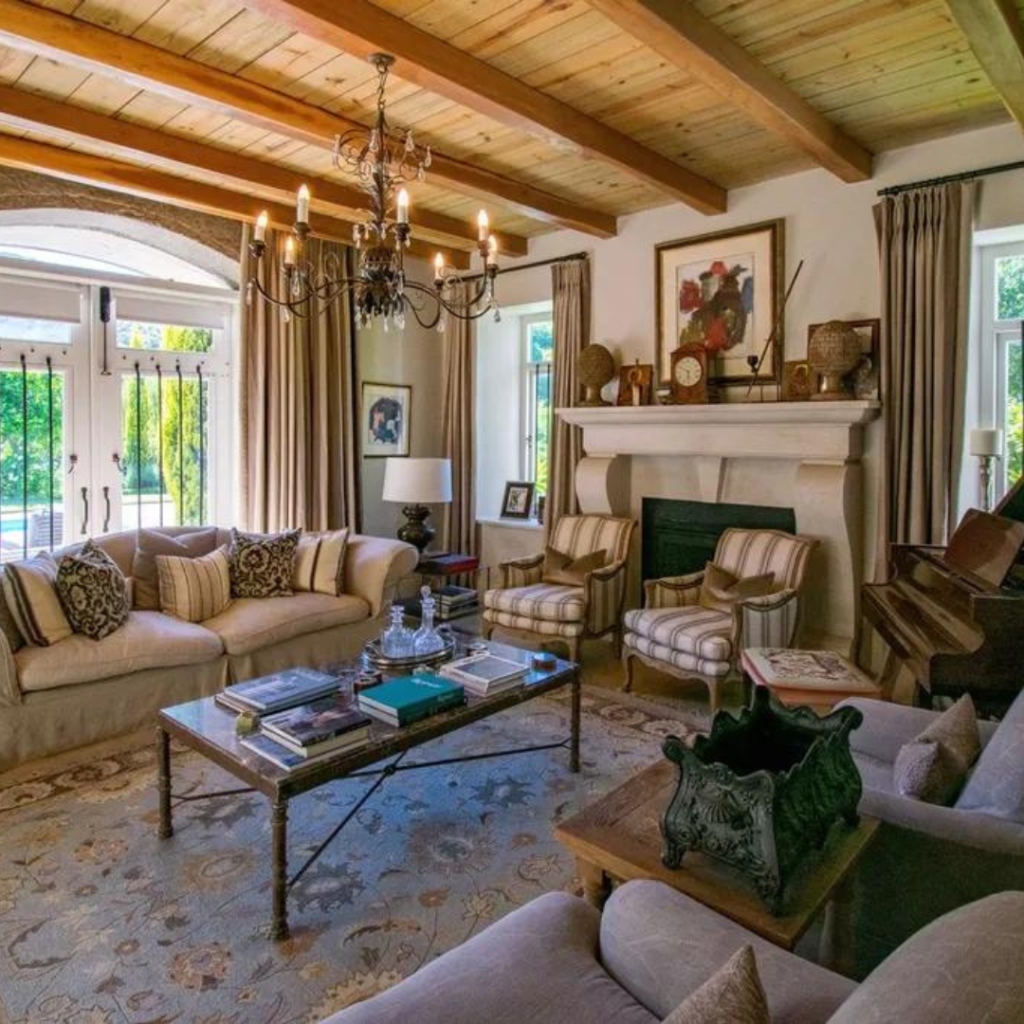
The architectural blueprint of the main villa features grand, classical design elements, including a dramatic triple-volume entrance hall, soaring vaulted ceilings, large multi-tier windows, and multiple monumental fireplaces. Real estate brochures describe this grand layout as an open canvas that creates an unmatched sense of light and space, perfect for hosting elegant open-air dinner parties.
From a building forensices and thermal engineering perspective, conditioning a high-volume vertical footprint exposed to the Western Cape’s sharp seasonal climate shifts introduces significant mechanical balancing tasks:
+-----------------------------------+-----------------------------------+
| Standard Flat Ceiling Blueprint   | Triple-Volume Classical Core Frame|
+-----------------------------------+-----------------------------------+
| Uniform indoor air distributions; | Extreme vertical air stacking;    |
| low climate stratification and    | warm air rises to the roof peak,  |
| predictable mechanical energy load| leaving the floor zones cool.     |
+-----------------------------------+-----------------------------------+
The Vaulted Ceiling Heat Inversion Loop: The Franschhoek Valley experiences intense climate variations, where hot summer days above 35°C shift into cold, damp winter nights driven by Atlantic weather fronts. Because warm air naturally rises (the stack effect), the heat generated by your ground-floor fireplaces and heating loops quickly moves upward into the high ceiling peaks, leaving the main living spaces and dining nooks cooler. To keep the active family areas comfortable, your zoned climate networks must operate at high capacity, increasing wear on your heat pumps.
The Maintenance Burden of Bespoke Exterior Ironmongery: The property incorporates custom wrought-iron detailing across all exterior door frames, window balances, and security perimeters. Exposing handcrafted ironwork to the Western Cape’s winter rains and high summer UV loads can trigger localized oxidation and surface rust if the metal is not regularly treated. To preserve these historic design accents, your maintenance team must run a continuous cycle of wire-brushing, zinc-priming, and marine-grade painting along the entire exterior trim.
5. South African Fiscal Architecture: Navigating Transfer Duties and Non-Resident Capital Rules
Deploying five million dollars into the Cape Winelands lifestyle farms for sale sector requires a clear financial calculation regarding South African property transfer taxes, corporate structures, and capital repatriation rules maintained by the South African Revenue Service (SARS).
Upon entry, and throughout your holding window, your investment capital is subject to non-reimbursable fiscal drains that affect your portfolio’s overall velocity:
The High Progressive Transfer Duty Penalty: Purchasing real estate in South Africa in a personal name triggers a progressive transfer duty collected by SARS. For a luxury property valued at $5,000,000 USD (roughly R92,000,000 ZAR), the transfer duty scales into a major upfront tax expense. The current statutory calculation applies a flat 13% rate on any value clearing the upper tier of the luxury tax roll. This transfer tax requires an immediate upfront cash deployment at the notary closing table, adding zero direct physical value to the estate infrastructure.
The Advantage of Corporate Entity Structures: To streamline this asset transfer, sophisticated international buyers often structure the acquisition by buying the shares of the specific South African private company (Pty Ltd) that holds the underlying land title. While this structure alters your tax alignment from a standard transfer duty to a corporate securities transfer tax (STT), it requires keeping the corporate entity fully tax-compliant with SARS, including running annual corporate audits and paying fixed company registration fees.
The Exchange Control Inward Investment Tracking Rule: South Africa operates under a strict exchange control framework managed by the South African Reserve Bank (SARB). When you transfer foreign currency into the country to fund an estate acquisition, your banking team must secure a formal Deal Receipt officially stamped as an “Inward Investment.” This documentation is essential because it establishes your legal right to repatriate your full capital and any realized profits back out of the country when you eventually exit the asset on the global market.
6. Comprehensive Structural Matrix: Marketing Claims vs. Valuation Realities
To ensure your real estate acquisitions are guided by cold investment logic rather than romantic storytelling, carefully evaluate this direct contrast between what the broker’s marketing brochure promises and the real-world operational reality of Sandstone House:
| The Property Asset | The Broker’s Glamorous Presentation | The Real-World Operational & Financial Reality |
| $5,000,000 Market Value | An elite trophy estate indicating the absolute peak of success within South Africa’s premier valley enclave. | Capital lockup within a highly localized, seasonal countryside luxury property sub-market layer. |
| 2-Hectare Farm Footprint | A spectacular private gentleman’s farm offering absolute natural tranquility and security. | High operational liability regarding private borehole water chemistry, filtration upgrades, and weed care. |
| Boutique Merlot Vineyard | An exquisite personal vineyard producing 4,000 bottles of full-bodied estate wine every year. | Small-scale commercial operation bound to strict SAWIS registrations and fixed custom-crush cellar fees. |
| Triple-Volume Entrance Core | Grand architectural open volumes designed to create a breathtaking sense of timeless elegance. | High thermal stratification zone; heat stacks heavily at the building’s apex, increasing climate control loads. |
| Off-Grid Generator Network | Complete utility independence, allowing you to bypass municipal network load-shedding safely. | High mechanical liability requiring continuous diesel fuel fuel burn and regular electrical surge checks. |
| Garaging for Seven Cars | Premium security infrastructure built to protect your high-end vehicle lines and prized assets. | Subject to rising regional property tax assessments, staff payrolls, and corporate upkeep overhead. |
7. The Sub-Market Liquidity Horizon of Winelands Lifestyle Estates
While the general middle-market housing tracks across the Western Cape show steady transaction speed and high capital liquidity, those dynamic trading rules apply-exclusively to mass-market properties. The exact millisecond a single residential lot crosses the ninety million Rand threshold on a sprawling gentleman’s farm inside the Franschhoek Valley, it exits the fluid real estate market completely and enters an incredibly sticky, frozen asset layer.
▲ [ $5M+ Apex Gentleman's Farm Stratum: Sandstone House ] ──► Buyer Pool: Handful of International Tycoons & Dollar Earners (Years to Exit)
■ [ $1M - $2.5M Mid-Tier Stratum: Gated Golf Estates ] ──► Buyer Pool: Affluent Semigrants & Retiring Expats (Moderate Speed)
● [ Under $400K Mass-Market Stratum: Central Urban Condos ] ──► Buyer Pool: General Public & General Retail Investors (High Velocity Trading)
If your primary business operations, international ventures, or global equity portfolios encounter an unexpected requirement for rapid liquidity, you cannot easily or quickly convert a custom 5-bedroom agrarian compound into liquid cash. The absolute pool of active buyers possessing the un-leveraged capacity to finalize a multi-million-dollar residential cash transaction within this elite Winelands segment—while willingly taking on private water filtration grids and boutique vineyard management duties—is exceptionally small.
A unique luxury asset of this scale frequently sits on the private registries of specialized international brokerages for twelve, twenty-four, or thirty-six months before discovering a buyer whose personal lifestyle matches the building’s specific split-level configuration. If changing economic conditions force you to execute a rapid exit from the asset, you will be systematically forced to accept an aggressive capital markdown just to attract an opportunistic cash buyer capable of closing a complex real estate transaction quickly.
8. The Staggering Financial Opportunity Cost of Five Million Dollars of Held Capital
The final, and most compelling economic argument against deploying your liquid wealth into this Franschhoek estate is the profound opportunity cost of capital. When you lock away $5,000,000 of liquid wealth into a single, non-income-generating primary residential asset or an underutilized seasonal retreat, you are permanently removing that capital from the global financial landscape where it could be working to produce highly secure, compounding cash flows.
Let us run a highly objective, conservative financial comparison of how that exact block of wealth behaves over a standard five-year investment holding window when deployed into active, liquid market instruments versus sitting inside a dead luxury country asset:
+-----------------------------------+-----------------------------------+
| $5M Capital Sunk in Winelands Soil| $5M Capital Deployed in Markets   |
+-----------------------------------+-----------------------------------+
| Generates $0 in passive cash flow.| At a conservative 6% compounding  |
| Accumulates massive annual bills  | annual yield, generates over      |
| for SARS duty, diesel, & vineyard.| $300,000 in cash *every year*.    |
+-----------------------------------+-----------------------------------+
Over a five-year investment window, a professional, diversified corporate portfolio worth five million dollars will effortlessly produce over one million five hundred thousand dollars in clean, highly liquid compounding profit while maintaining absolute capital mobility. Conversely, the Franschhoek basin farm will have actively drained hundreds of thousands of additional dollars out of your pocket to cover South African municipal property taxes, substantial diesel utility bills to power high-capacity backup systems against load-shedding, ongoing borehole water purification plant maintenance, extensive vineyard viticulture labor, and permanent multi-wing domestic staff payrolls, while its final secondary market resale value remains completely dependent on the unpredictable high-end property cycles of South Africa. From a standpoint of raw wealth optimization and asset protection, spending this scale of money on a single home is an inefficient use of capital.
INSTITUTIONAL PORTFOLIO VERDICT & ACTIONABLE DIRECTIVES
Primary Disqualification Criteria
The High-Velocity Capital Allocator: If your financial architecture relies on immediate capital velocity and the capacity to exit fixed property positions within a single fiscal quarter.
The Hands-Off Low-Overhead Purist: If your property management philosophy has zero tolerance for monitoring decentralized water filtration plants, running diesel generators, overseeing viticultural compliance, and managing live-in domestic and farming labor teams.
The Urban Autonomous Investor: If you find operating within the regulatory boundaries of national water acts, SAWIS agricultural registrations, and complex SARB cross-border exchange control rules operationally annoying.
Justifiable Investment Parameters
The Sovereign Balance Sheet: Meaning a five-million-dollar capital lock-in inside the Franschhoek valley corridors represents a minor fraction of a single percentage point of your overall global wealth index, serving a pure legacy or lifestyle function.
The Dedicated Viticulture and Wine Collector: Who derives immense personal utility from controlling an uncompromised boutique vineyard production layout and possesses the available liquidity to support ongoing custom-crush cellar operations.
The Long-Term Capital Preservation Allocator: If you maintain a permanent, long-term operational connection to international transit links and intend to hold the property as a fixed family foundation for decades, completely neutralizing short-term liquidity concerns.
Pre-Acquisition Mandate: Before Committing Capital to REM
Prior to initiating formal contract reviews, scheduling private site inspections, or outlining capital settlement frameworks for Sandstone House, you must protect your global capital by executing three critical steps:
Borehole Water Quality and WULA License Audit: Deploy a dedicated natural-resource engineering team to physically analyze the borehole water chemistry and verify extraction compliance against Department of Water and Sanitation public records to ensure long-term water safety.
SAWIS Vineyard Registration and Viticulture Cost Audit: Retain an agricultural consultant to thoroughly inspect the vineyard health and review the historical custom-crush cellar contracts, establishing your exact recurring bottling and production overhead before closing.
SARB Exchange Control Inward Investment Verification: Engage a specialized South African legal advisor to structure your capital wire path, ensuring all incoming funds are correctly documented to secure your absolute right to future capital repatriation.
To request the complete architectural layout blueprints, to review official building zoning compliance data summaries, or to arrange an independent private tour of the estate grounds, contact REM. Ensure you approach the negotiation table with a completely clear, realistic perspective on the long-term operational and financial realities of ultra-luxury gentleman’s farm asset ownership.

Moses Oyong is a Real Estate Growth Marketing Manager and PropTech specialist with over a decade of closing residential and commercial deals worth over 200 million across Nigeria and international markets. Known for engineering AI-driven workflows that delivered a 69% uplift in sales targets and cut lead response times by 85%, Moses bridges the gap between high-performance marketing, land law, and technology to help investors, developers, and first-time buyers make confident, informed property decisions in an increasingly digital world.