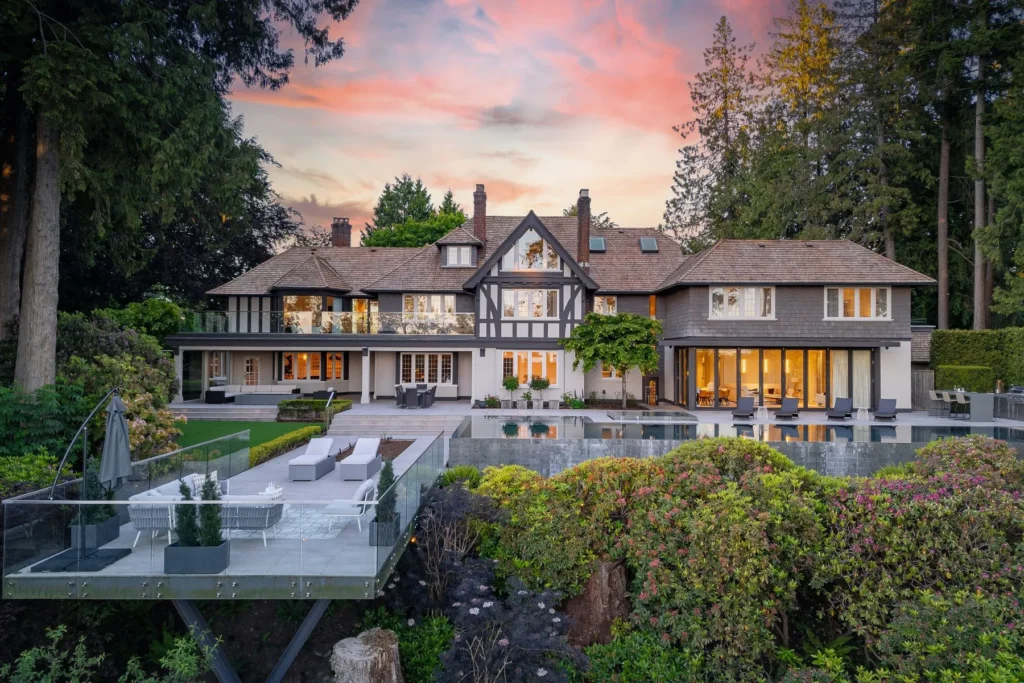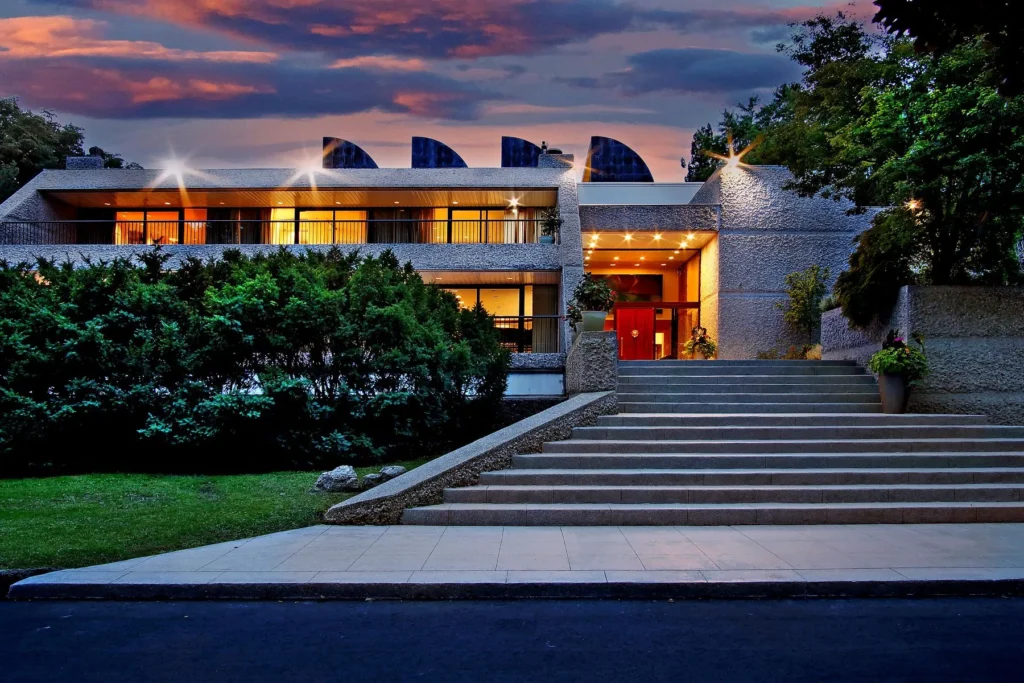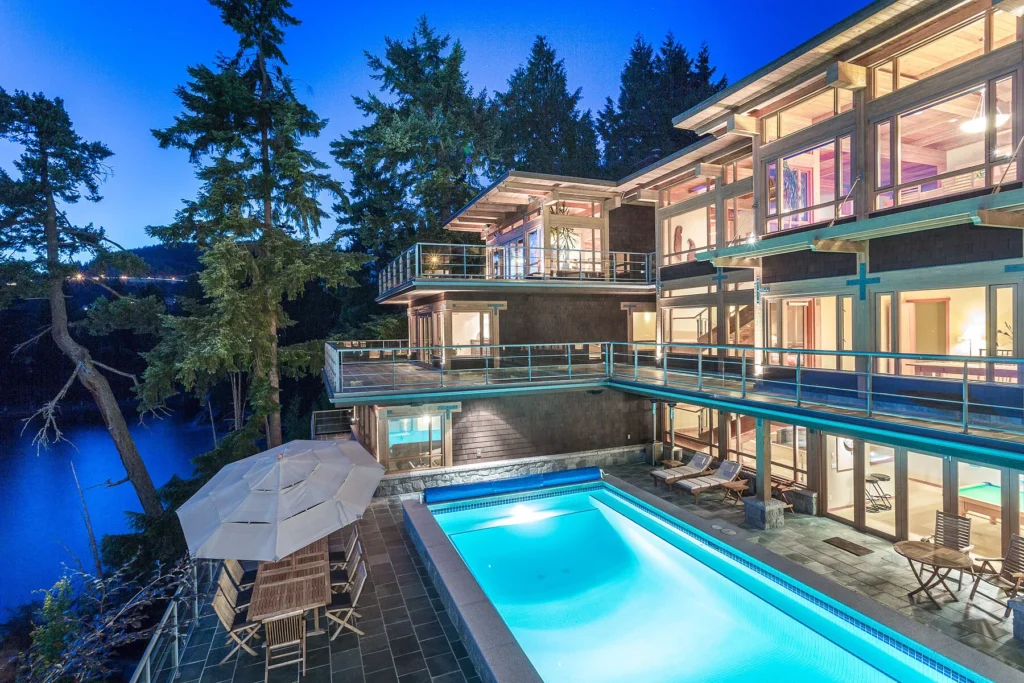
$19,000,000 Luxury Mansion In British Columbia, Canada
The acquisition of ultra-high-end waterfront real estate along the Pacific Northwest coast is traditionally driven by emotional concepts of architectural prestige, personal escapism, and visual status. When a structural listing emerges within the premium marine corridors of British Columbia, carrying a substantial valuation of $19,000,000 USD (approximately $25,800,000 CAD), real estate marketing channels immediately deploy romantic, luxury-centric narratives. They write prose detailing enchanted sanctuaries, fairytale lifestyles, and sunset balconies, enticing affluent buyers to evaluate a highly technical piece of maritime infrastructure as a simple, passive residential home.
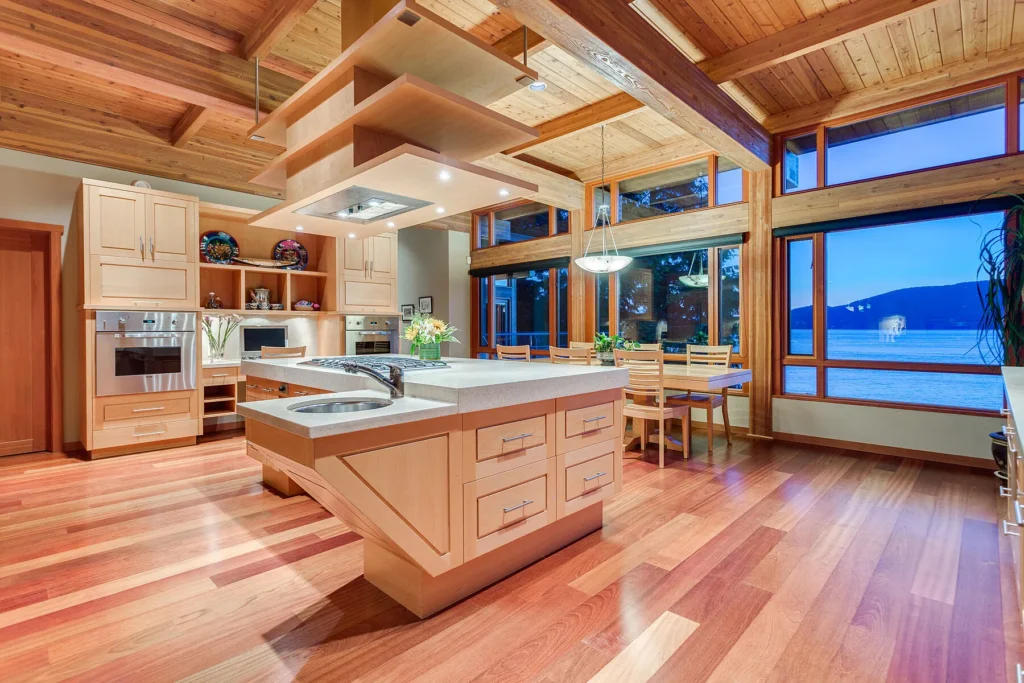
The physical property commanding this high-tier positioning is an expansive 13,000 square foot custom-built waterfront estate spread across three structural levels. The property features five bedroom suites, seven bathrooms, solid Brazilian cherry hardwood flooring, an industrial-grade kitchen system designed by the interior house Redl Kitchens, automated floor-to-ceiling panoramic glass walls, a heavy-duty four-level internal elevator system, an outdoor swimming pool deck, and a completely enclosed, temperature-controlled indoor wellness pavilion housing a secondary indoor pool and integrated hot tub.
Crucially, the defining engineering feature of this estate—believed to be a completely non-replicable asset layout within North American residential architecture—is a 50-foot attached indoor private yacht garage that allows an operator to navigate a luxury vessel directly from the open ocean into the core structural skeleton of the primary residence.
On a glossy social media tour or an international luxury brokerage portal, this property presents an image of complete lifestyle dominance.
However, if you strip away the high-end marketing text and evaluate this estate from an advanced maritime engineering, structural risk, and fiscal liability angle, a completely different asset profile emerges. A property that houses an active, deep-water marine docking facility inside its primary residential foundation cannot be analyzed using standard residential real estate templates. It must be evaluated with the same precision applied to commercial harbor infrastructure, marine engineering assets, and highly technical capital portfolios. This exhaustive analysis looks past the standard lifestyle narrative, analyzes the complex maintenance mechanics of indoor dock infrastructure, confronts the unique climate and tax pressures of Western Canada, and outlines the strategic parameters required to determine whether this $19,000,000 maritime estate represents a true investment masterstroke or a profound capital drain.
1. The Indoor Private Yacht Garage: Analyzing the Complex Engineering and Hydrostatic Liabilities
The absolute headline feature of this $19,000,000 British Columbia estate is the 50-foot attached indoor private yacht garage. Brokers treat this engineering element as an unassailable luxury asset value-add, emphasizing the prestige of pulling up to your home and securing your vessel within the enclosed comfort of your private residential footprint.
From a structural engineering and hydrodynamic standpoint, housing an active marine waterway inside a 13,000 square foot luxury home introduces relentless physical liabilities that require constant operational oversight,
                  [ Active Ocean Waterway Ingress Interface ]
                                      │
         (Continuous Tidal Shifts, Saline Vapor, & Wave Resonance)
                                      │
         ┌────────────────────────────┴────────────────────────────┐
         ▼                                                         ▼
[ Subterranean Hydrostatic Strain ]                       [ Corrosive Saline Vapor Inversion ]
Continuous water pressure puts stress                     Salt air migrates upward, threatening
on foundation waterproofing membranes. internal concrete, framing, and steel.- The Hydrostatic Pressure Challenge: An indoor yacht garage requires a direct, subterranean opening to the open ocean, allowing the vessel to enter a reinforced internal wet slip. This means the lower foundations of the home are in a permanent, direct dialogue with changing ocean tides, localized water currents, and wave resonance. The concrete retaining walls and underwater pilings supporting the garage must withstand immense, continuous hydrostatic pressure. If the specialized waterproofing membranes, crystalline concrete sealants, or submarine gate joints suffer even a microscopic failure over time, saltwater will migrate into the structural footings of the main house, leading to concrete carbonation and rebar corrosion.
- The Submarine Gate Mechanical Abyss: To isolate the indoor pool and living levels from the raw ocean elements, an indoor yacht garage depends on a heavy-duty, automated industrial submarine gate system. This gate must manage changing water levels, maintain an absolute tight seal against wind and waves, and open smoothly on command. Exposing heavy mechanical gates, high-torque hydraulic motors, and electronic position sensors to a permanent saltwater environment creates an intense maintenance cycle. If a single limit switch or hydraulic seal fails due to saline corrosion, the system falls into immediate paralysis, either locking your multi-million-dollar vessel inside the home or exposing the internal garage bay to open marine weather fronts.
2. The Corrosive Micro-Climate Inversion: The Strategic Threat to Premium Internal Finishes
The interior design matrix of this Western Canada mansion details an exquisite selection of high-end materials, including rich Brazilian cherry wood floors, custom cabinetry by Redl Kitchens, and expansive multi-level glass walls.
The strategic risk factor that most residential buyers fail to calculate is the corrosive micro-climate inversion created by combining an indoor yacht garage with an indoor swimming pool and hot tub pavilion within a single connected residential structure,
The continuous evaporation of water within an enclosed indoor marine dock and pool environment generates an intense, localized high-humidity micro-climate saturated with microscopic salt crystals.
[ Active Indoor Marine Dock & Pool ] ──► [ High-Volume Saline Vapor Ingress ] ──► [ HVAC System Salt Loading ]
                                                                                                │
[ Rapid Timber Deflection & Warping ] ◄── [ Failure of Electronic Circuitry ] ◄── [ Micro-Gasket Degradation ]- The Hardwood Hardship Cycle: Premium Brazilian cherry timber flooring requires absolute atmospheric stability to maintain its geometric alignment and finish clarity. When damp, salty air from the internal yacht garage and indoor pool zones migrates into the main living areas through open circulation channels, the timbers absorb moisture unevenly. This atmospheric fluctuation causes real hardwoods to expand and contract, creating risks of cupping, joint separation, and finish clouding over extended holding windows.
- The Destruction of Custom Millwork: The high-end cabinetry designed by Redl Kitchens relies on high-precision tolerances and pristine surfaces. Saturated marine air acts as a natural corrosive agent against European cabinet hinges, runners, and structural adhesives. Without continuous, high-volume industrial dehumidification and air-purification networks running around the clock, premium wood veneers can blister, and soft-close mechanical joints can degrade prematurely.
- The Automation and Elevator Electronic Abyss: This estate features an intricate four-level indoor elevator system and automated climate controls. Microscopic salt particles carried by the internal air currents collect continuously on elevator tracking lines, electronic limit switches, and control circuit boards. The rate of electrical connection failure in this high-humidity environment is significantly higher than in standard luxury homes, requiring permanent safety service contracts with specialized technical engineers.
3. The Dual-Pool Thermodynamic Burden: Operating an Indoor-Outdoor Water Park in Western Canada
The leisure infrastructure of this British Columbia waterfront estate is designed for top-tier indulgence, integrating an outdoor swimming pool on the terraced slate patio with an independent indoor swimming pool and hot tub suite.
While having year-round access to both indoor and outdoor swimming options is marketed as the ultimate wellness asset, operating dual-pool systems within the specific climate profile of Western Canada creates an immense financial and mechanical burden,
+-----------------------------------+-----------------------------------+
| Expected Luxury Pool Experience   | Real-World Thermodynamic Fact    |
+-----------------------------------+-----------------------------------+
| Effortless, dual-zone swimming    | Intense winter cold fronts force  |
| options that stay perfectly warm  | commercial boiler networks to run |
| across changing seasons.          | at maximum output around the clock.|
+-----------------------------------+-----------------------------------+
British Columbia’s coastal regions experience cool, damp conditions for the vast majority of the year, with winter temperatures dropping toward freezing parameters. An outdoor pool sitting on an exposed slate terrace acts as a massive radiant heat escape basin. Heating thousands of gallons of open-air water to a comfortable temperature during the winter requires immense energy output, resulting in steep monthly utility bills.
Concurrently, the indoor pool pavilion requires a continuous input of thermal energy not just to heat the water, but to power high-capacity air-handling units (Munters systems) designed to continuously extract moisture from the air and prevent condensation from forming on the floor-to-ceiling glass windows. Turn off or lower the climate controls during non-occupancy windows to save capital, and you face an immediate risk of cold air creating structural condensation lines that cause interior water damage and mold growth within the timber frames.
4. The Four-Level Elevator Infrastructure Liability: Operating Commercial Transit for Domestic Use
Because this custom mansion is spread across three enchanting levels of living space and incorporates a subterranean or lower marine garage tier, the architectural plan includes a heavy-duty four-level indoor elevator system to ensure vertical transit across the 13,000 square foot footprint.
While an internal elevator is a mandatory convenience for a multi-tier home of this scale, introducing commercial-grade vertical lifting machinery into a private marine residence introduces long-term financial and regulatory responsibilities that resemble a corporate facility rather than a sanctuary,
- Mandatory Regulatory Safety Audits: In British Columbia, private residential elevators are subject to technical safety regulations. You cannot simply ignore the elevator mechanism until it encounters a tracking glitch. You are legally and operationally required to maintain a high-cost service contract with a certified elevator engineering firm to execute regular weight-bearing track checks, hydraulic fluid analyses, and cable examinations to prevent premature wear caused by internal salt-air loading.
- Part Obsolescence and Downtime Risks: If the custom elevator utilize specialized, low-volume components to maintain its quiet operation and sleek aesthetic lines within the residential core, replacing a single faulty motherboard or lift sensor can require international parts sourcing, resulting in significant system downtime and high shipping premiums.
- The Luxury Transit Bottleneck: If the lift encounters an automated safety lockout mode due to a minor sensor error while you are hosting high-profile international clients or multi-generational family members, moving luggage, provisions, and guests across four vertical levels becomes an immediate physical burden, transforming a luxury convenience into an operational annoyance.
5. Canadian Anti-Speculation Taxation: The Capital Erosion Matrix for Ultra-Luxury Real Estate
The financial reality of deploying nineteen million dollars into British Columbia’s premium waterfront real estate market requires navigating an aggressive, multi-layered regulatory taxation framework specifically engineered by Canadian authorities to penalize high-end property allocations and foreign capital injections.
Upon entry, and throughout your holding window, your capital is subject to non-refundable fiscal drains that strip away potential profit margins before you even begin to calculate market growth,
- BC Property Transfer Tax (PTT): British Columbia levies a progressive property transfer tax on residential transactions. For a $19,000,000 purchase, the progressive tax rate calculates to a massive, non-refundable upfront cash drain exceeding $570,000 CAD. This capital adds zero functional value to the physical asset, putting your investment immediately in the red on day one.
- The Foreign Buyers Ban Context: While certain rural ranch properties can carry exemptions from federal restrictions, prime waterfront luxury mansions positioned within major metro regions or coveted coastal zones remain under strict regulatory scrutiny. International buyers or off-shore corporate entities must navigate complex legal frameworks, or potentially face absolute purchasing barriers, unless the property carries verified exemptions, which severely thin out the future secondary resale pool.
- The Speculation and Vacancy Tax / Underutilized Housing Tax: If you are an international investor utilizing this waterfront estate as a seasonal holiday home or an occasional maritime haven rather than a primary residence, you face Canada’s Speculation and Vacancy Tax, combined with the federal Underutilized Housing Tax (UHT). These penalties extract a percentage of the property’s assessed value annually if the mansion is deemed underutilized, creating a significant annual cash drain purely to hold the deed.
6. The 5-Bedroom Spatial Redundancy Trap: Funding Dead Square Footage
When buyers search for buy 5 bedroom house BC options or look at large 13,000 square foot layouts, they often mistake vast scale for enhanced personal lifestyle comfort. This mega-mansion features expansive multi-wing living areas, a formal dining zone, separate entertainment galleries, and dual pool complexes.
Let us map out the real-world operational efficiency of an over-scaled residential footprint over a standard calendar year,
                      [ Total Residential Square Footage ]
                                       │
         ┌─────────────────────────────┴─────────────────────────────┐
         ▼                                                           ▼
[ High-Frequency Active Zones ]                             [ Low-Frequency Dead Space ]
Master Suite, Redl Kitchen,                                 4 Secondary Guest Suites, Indoor Pool
Main Living Lounge, Terraced Patio.                         Pavilion, Yacht Garage, Corridors.
(Occupies ~35% of Total Space)                              (Occupies ~65% of Total Space)
In day-to-day operations, even the most socially active families utilize less than thirty-five percent of the available interior square footage. The secondary guest wings, the indoor pool pavilion, the structural yacht garage bay, and the formal circulation corridors sit entirely silent for months at a time.
Yet, because the building features soaring ceilings and vast architectural volumes, the entire 100% of the structure must be actively heated, ventilated, dehumidified, and monitored twenty-four hours a day, seven days a week. The constant indoor humidity management required in British Columbia to prevent moisture from settling into walls, custom millwork, and furniture requires continuous HVAC activity. You are essentially funding the operational overhead of a luxury commercial lodge while only deriving personal utility from a tiny sliver of the space.
7. The Apex Illiquidity Trap: The Frozen Secondary Market of North America’s Only Yacht Mansion
While the general residential real estate market across British Columbia is globally famous for its intense demand, constant bidding wars, and rapid capital liquidity, those dynamic market rules apply exclusively to standard townhouses, suburban family homes, and mid-tier condos. The exact millisecond an asset crosses the nineteen million dollar threshold on a custom footprint featuring an integrated marine yacht garage, it exits the fluid real estate market completely and enters an incredibly sticky, frozen asset layer.
▲ [ $19M Apex Layer: Yacht Garage Mansion ] ──► Buyer Pool: Handful of Yacht-Owning Global Billionaires (Years to Exit)
■ [ $3M - $7M Layer: Standard BC Detached Homes ] ──► Buyer Pool: Affluent Domestic Corporate Elite (Moderate Speed)
● [ Under $1.5M Layer: Mass Market Condos & Towns ] ──► Buyer Pool: General Public & General Retail Investors (High Velocity Trading)
If your primary business operations, international ventures, or global equity portfolios encounter an unexpected requirement for rapid liquidity, you cannot easily or quickly convert a custom 13,000 square foot maritime estate into liquid cash. The absolute pool of active buyers possessing the un-leveraged capacity to finalize a nineteen-million-dollar residential cash transaction—while simultaneously owning a luxury vessel that matches a 50-foot indoor wet slip profile—is exceptionally small.
A trophy property of this magnitude frequently sits on the private luxury registry for twelve, twenty-four, or thirty-six months before discovering a buyer whose personal yachting lifestyle matches the building’s design configuration. If you must exit the asset quickly due to shifting economic conditions, you will be systematically forced to accept an aggressive capital markdown just to attract an opportunistic cash buyer capable of closing a complex maritime real estate transaction.
8. The Staggering Financial Opportunity Cost of Nineteen Million Dollars of Dead Capital
The final, and most compelling economic argument against deploying your liquid wealth into this British Columbia mansion is the profound opportunity cost of capital. When you lock away nineteen million dollars of liquid wealth into a single, non-income-generating primary residential asset, you are permanently removing that capital from the global financial landscape where it could be working to produce highly secure, compounding cash flows.
Let us run a highly objective, conservative financial comparison of how that exact block of wealth behaves over a standard five-year investment holding window when deployed into active, liquid market instruments versus sitting inside a dead luxury residential asset,
+-----------------------------------+-----------------------------------+
| $19M Capital Sunk in BC Mansion   | $19M Capital Deployed in Markets  |
+-----------------------------------+-----------------------------------+
| Generates $0 in passive cash flow.| At a conservative 6% compounding  |
| Accumulates massive annual bills  | annual yield, generates over      |
| for marine upkeep, HVAC, & taxes. | $1,140,000 in cash *every year*.  |
+-----------------------------------+-----------------------------------+
Over a five-year investment window, a professional, diversified corporate portfolio worth nineteen million dollars will effortlessly produce over five million seven hundred thousand dollars in clean, highly liquid compounding profit while maintaining absolute capital mobility. Conversely, the British Columbia waterfront mansion will have actively drained millions of additional dollars out of your pocket to cover high municipal property taxes, substantial electrical utility bills to power dual pools and industrial dehumidification, ongoing marine dock and submarine gate engineering maintenance, and potential vacancy penalties, while its final secondary market resale value remains completely dependent on the unpredictable high-end property cycles of Western Canada. From a standpoint of raw wealth optimization and asset protection, spending this scale of money on a single home is an inefficient use of capital.
Comprehensive Structural Matrix: The Broker’s Pitch vs. Maritime Reality
To ensure your luxury property acquisitions are guided by cold investment logic rather than romantic real estate storytelling, carefully evaluate this direct contrast between what the broker’s marketing brochure promises and the real-world operational reality of this British Columbia estate,
| The Hyper-Luxury Feature | The Broker’s Glamorous Pitch | The Real-World Operational & Financial Reality |
|---|---|---|
| $19,000,000 Purchase Price | An elite trophy property indicating the absolute peak of Canadian success, wealth, and prestige. | Extreme capital lockup with heavy asset illiquidity and high annual fixed holding costs. |
| 50-Foot Indoor Yacht Garage | A unique architectural masterpiece allowing you to park your luxury yacht safely inside your home. | High hydrostatic pressure liabilities on the foundation; automated submarine gate requires constant technical upkeep. |
| Dual Indoor & Outdoor Pools | Shimmering oases designed to allow effortless, year-round swimming regardless of weather. | High thermodynamic energy drain; requires continuous running of industrial air-handling systems. |
| Custom Redl Kitchen Studio | A culinary enthusiast’s dream featuring premium cabinetry and floor-to-ceiling windows. | Highly vulnerable to localized salt-air loading and vapor corrosion, requiring continuous air purification. |
| Four-Level Indoor Elevator | A touch of internal convenience that adds to the overall grandeur and mobility of the home. | Subject to mandatory regulatory safety audits and high-cost track repairs due to coastal humidity. |
| Terraced Slate Patio Waterfront | Breathtaking panoramic views designed to allow elegant morning coffee relaxation by the water. | Frontline coastal exposure accelerates the weathering of exterior masonry and window gaskets. |
Is This British Columbia Maritime Mansion Built for Anyone?
Despite this extensive structural, logistical, and financial critique, this property remains a stunning achievement in high-end marine residential architecture. The critical step to avoiding severe investor remorse is recognizing whether your personal balance sheet and global wealth infrastructure are vast enough to absorb the severe inefficiencies of this property class.
You are completely wasting your money on this mansion if,
- You expect your assets to remain liquid and agile: If your investment strategy relies on rapid capital mobility and the ability to exit positions within a short calendar window.
- You analyze real estate through net-yield return: If you judge your asset allocations through the strict math of opportunity cost and capital efficiency.
- You do not own a major luxury yacht asset: If you lack a 40-to-50-foot executive vessel that can actively justify the extreme engineering overhead of an internal wet slip foundation.
- You want a low-maintenance home: If you find managing automated submarine gates, industrial pool dehumidifiers, and multi-level internal elevator tracks technically annoying.
This estate represents a justifiable acquisition only if,
- Your net worth exceeds several hundred million dollars: Meaning a nineteen-million-dollar capital lockdown represents a minor fraction of your overall global wealth footprint.
- You are an active international yachting enthusiast: Who derives immense personal utility from navigating a premium vessel directly into your private residence and possesses the capital to fund it.
- You maintain an established, long-term footprint in British Columbia: And intend to utilize the property as a permanent family foundation for decades, neutralizing short-term liquidity concerns.
- The absolute architectural singularity of the garage outweighs economic logic: And you are fully prepared to take on the administrative and technical oversight required to run a custom marine dock structure.
The Verdict: Before You Issue an Inquiry to REM
If you are currently browsing high-end search results for British Columbia waterfront homes for sale or analyzing this spectacular entry at Western Canada, the final conclusion requires looking past the glamorous real estate presentation.
This five-bedroom maritime residence is an architectural triumph, but as a financial investment vehicle, it carries heavy operational and regulatory liabilities. It demands an immense lifestyle and operational sacrifice from its custodian. It forces you to manage high-maintenance marine dock and pool infrastructure, navigate punitive Canadian tax frameworks, combat aggressive coastal moisture elements, and accept a massive capital lockup within an illiquid price bracket.
Before you take any steps toward requesting private viewings, formal contract reviews, or structured financial terms, protect your global wealth. Work alongside an independent luxury asset advisory office to run a comprehensive multi-year operational cost projection. Physically audit the structural performance of the internal foundation waterproofing membranes against hydrostatic sea strain, and deeply calculate the true opportunity cost of moving nineteen million dollars out of the global financial markets.
For more information on the exact architectural layout files, to review construction compliance documentation, or to arrange an independent private tour of the waterfront sector, contact REM. Ensure you approach the negotiation table with a completely clear, realistic perspective on the long-term realities of ultra-luxury asset ownership.

Moses Oyong is a Real Estate Growth Marketing Manager and PropTech specialist with over a decade of closing residential and commercial deals worth over 200 million across Nigeria and international markets. Known for engineering AI-driven workflows that delivered a 69% uplift in sales targets and cut lead response times by 85%, Moses bridges the gap between high-performance marketing, land law, and technology to help investors, developers, and first-time buyers make confident, informed property decisions in an increasingly digital world.