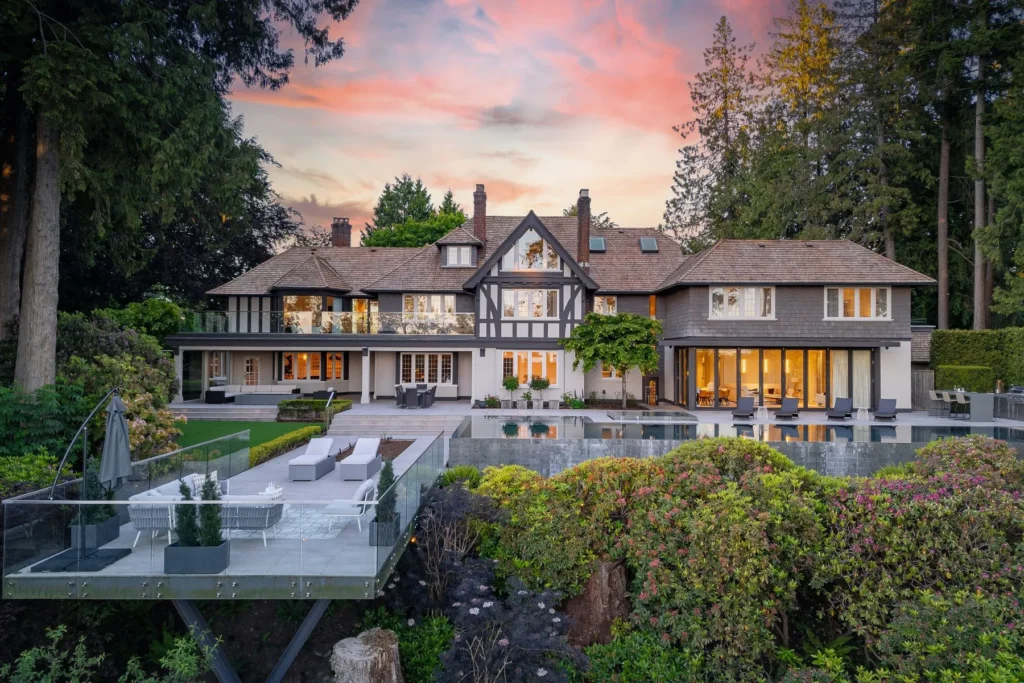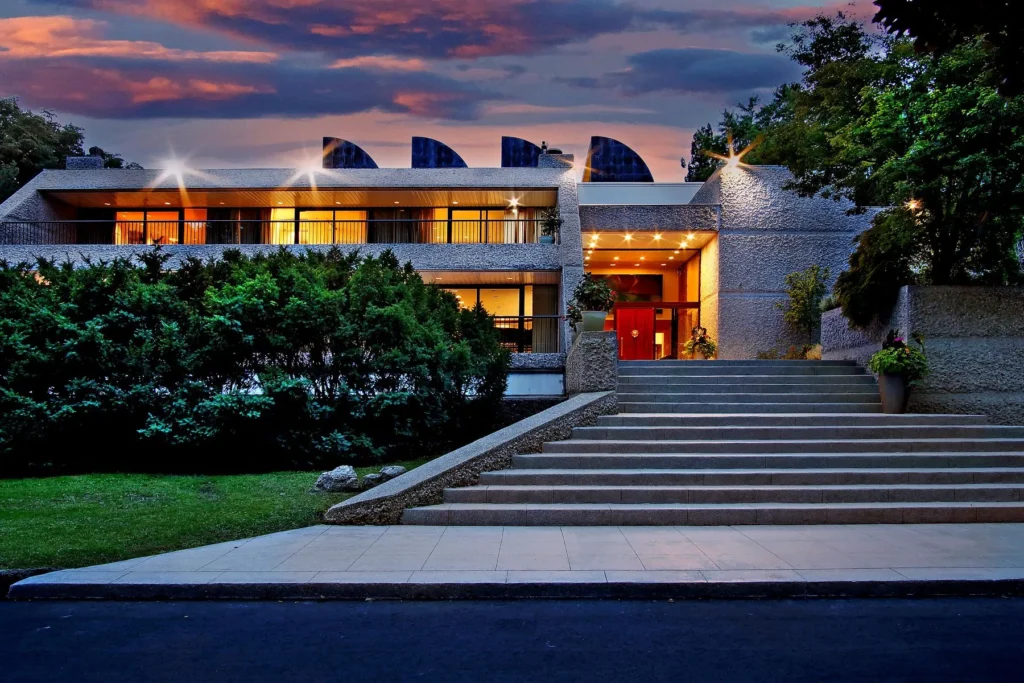
The premium tier of the Pacific Northwest residential market operates on a value system heavily driven by architectural signature, raw land area footprint, and direct exposure to natural marine sceneries. When a major waterfront listing emerges within the exclusive coastal corridors of West Vancouver, British Columbia, carrying an entry valuation of $16,000,000 USD (approximately $21,800,000 CAD), the standard real estate narrative automatically shifts into hyperdrive. Brokers focus almost exclusively on aesthetic romance, describing the property as an irreplaceable lifestyle sanctuary, a sun-soaked haven, and a pristine historical legacy that elevates your personal status while protecting your wealth from global financial market corrections.
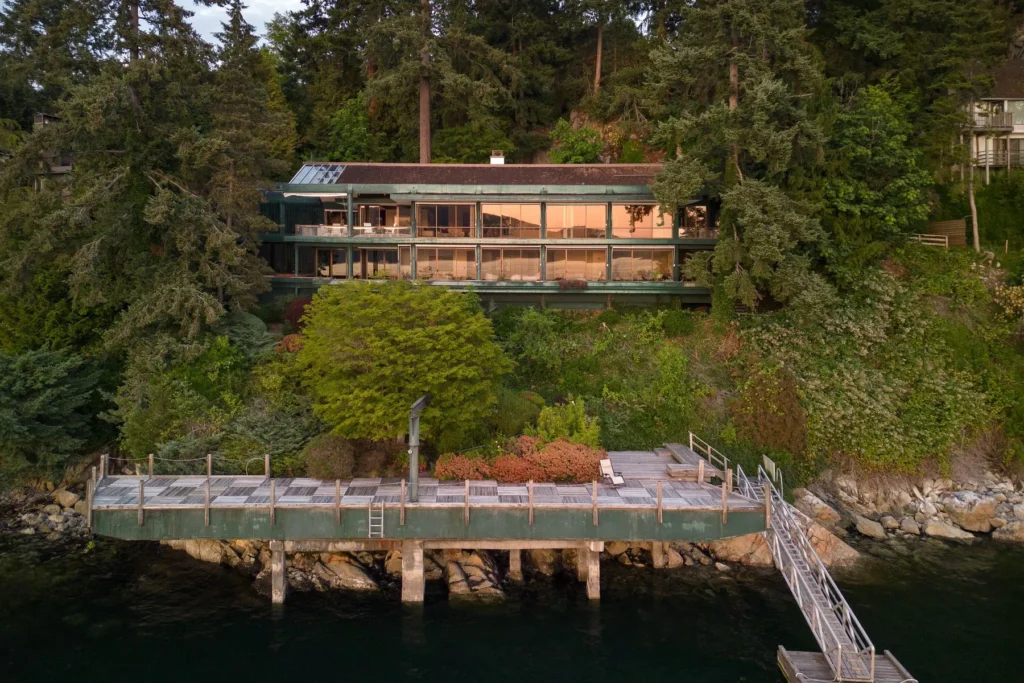
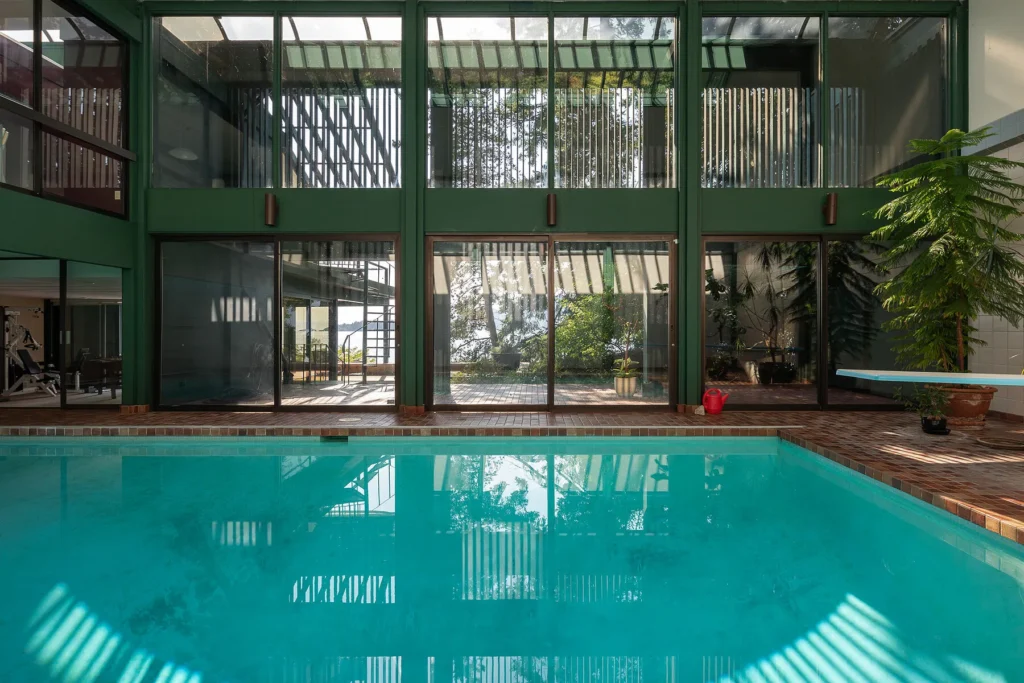
The physical property currently commanding this high-tier positioning is a custom-built, mid-century modern contemporary masterpiece designed by the legendary architectural team of Russell Hollingsworth and Ian Davidson. Occupying over 31,000 square feet of prime waterfront land, the estate boasts 175 feet of direct ocean frontage. The layout features over 7,400 square feet of finished living space spread across two horizontal levels, incorporating floor-to-ceiling glass curtain walls, a large internal indoor swimming pool pavilion, a private 50-foot deep-water marine dock, an electronic heavy-duty tender hoist system, and an enormous structural concrete seaside patio that cantilevers directly over the open ocean waves.
On a high-production-value video tour or a glossy real estate editorial, this estate represents the absolute peak of West Coast architectural success.
However, when an institutional investor or ultra-high-net-worth asset manager evaluates a property crossing the fifteen million dollar mark, the asset cannot be analyzed using standard residential templates. It must be subjected to a rigorous structural integrity, geomorphological risk, and capital efficiency audit. A house that projects a massive concrete cantilever platform over active marine tidal lines and incorporates a private commercial-grade dock infrastructure introduces significant long-term operational liabilities. This exhaustive review looks past the standard lifestyle narrative, analyzes the complex engineering mechanics of high-velocity wave impact interfaces, confronts the unique climate and tax pressures of Western Canada, and outlines the strategic parameters required to determine whether this $16,000,000 architectural landmark represents a true investment masterstroke or a profound capital drain.
1. The Cantilevered Seaside Patio Paradox: Structural Engineering and Wave Velocity Realities
The primary architectural feature of the Russell Hollingsworth Estate is its massive seaside concrete patio deck, engineered to cantilever directly over the open waters of the Pacific Northwest coastline. Brokers highlight this feature as a triumph of luxury design, emphasizing the feeling of absolute freedom as you host social gatherings on a platform floating directly above the shifting ocean currents.
From a structural engineering and marine geomorphology standpoint, projecting a massive, rigid concrete cantilever over an active marine velocity zone introduces severe, permanent structural vulnerabilities,
                   [ Open Ocean Wave Velocity Zone ]
                                  │
         (Intense Winter Storm Surges, Salt Spray, & Tidal Swells)
                                  │
         ┌────────────────────────┴────────────────────────┐
         ▼                                                 ▼
[ Cantilever Reinforcement Stress ]                       [ Sub-Base Foundation Scouring ]
Continuous cyclic wave energy places dynamic load         High-velocity water action slowly erodes
pressures on core structural anchor joints.               the coastal rock footings beneath the estate.
- The Cyclic Wave Energy Strain: The concrete cantilever platform is subjected to continuous dynamic loading forces from winter storm surges, changing tides, and high-velocity wave impacts striking the structural base. Over extended holding windows, this repetitive cyclic energy places localized stress on the internal high-tensile steel reinforcement bars and tension cables anchor-bolted into the coastal rock formations. If the structural concrete develops micro-fractures, salt air will penetrate into the core reinforcement matrix, triggering accelerated structural oxidation that compromises the load-bearing capacity of the patio deck.
- The Saline Concrete Carbonation Abyss: Cantilevered marine concrete structures are highly vulnerable to concrete carbonation and chloride-induced corrosion. Microscopic salt spray carried by the coastal winds interacts chemically with the calcium hydroxide inside the concrete, lowering its natural alkaline state. Once the protective alkaline layer around the internal rebar degrades, the steel begins to rust, expand, and split the concrete from the inside out—a process known as spalling. Restoring a cantilevered concrete deck over open water requires specialized marine engineering contractors, commercial-grade polymer sealants, and deep structural underpinning, transforming an aesthetic landmark into an ongoing high-cost maintenance liability.
2. The Private 50-Foot Deep-Water Dock and Electronic Hoist: Maritime Regulatory Realities
The listing details an exceptional waterfront asset mix: a private 50-foot deep-water marine dock, commercial-grade mooring buoys, and an integrated electronic tender hoist system designed to allow effortless launching of luxury watercraft directly from your seaside patio deck.
While having immediate private access to the ocean sounds like an unmatched lifestyle benefit, operating and maintaining heavy maritime infrastructure on the West Vancouver shoreline is an administrative and engineering minefield,
The Department of Fisheries and Oceans (DFO), Transport Canada, and the British Columbia Ministry of Environment enforce incredibly strict regulatory and environmental preservation laws over private shoreline alterations.
[ Intended Dock Structural Upgrade ] ──► [ Complex DFO Environmental Review ] ──► [ Marine Habitat Impact Analysis ]
                                                                                               │
[ Prolonged Technical Delays ] ◄── [ Multi-Agency Permitting Approvals ] ◄── [ Navigation Safety Clearances ]
- The Dock Structural Maintenance Liability: Floating docks, gangways, and underwater anchoring chains exposed to shifting marine currents, tidal drops, and barnacle colonization are under constant physical stress. To prevent wood rot, metal embrittlement, and structural anchoring displacement, the 50-foot dock requires annual commercial dive inspections, specialized anti-corrosive coatings, and structural chain tension adjustments.
- The Electronic Hoist Mechanical Abyss: Operating an electric hoist system over salt water is an operational challenge. The high-capacity electric motors, steel lifting cables, and sensitive electronic limit switches are permanently exposed to a highly corrosive saline atmosphere. If a single electrical seal or bearing fails due to salt crystallization, the hoist falls into immediate paralysis, either locking your tender craft out of the water or creating a significant safety risk during a high-stakes launching operation.
3. The Indoor Pool Micro-Climate Loop: The Threat of Moisture Saturation to Modernist Design
The internal architecture of this 7,400 square foot residence showcases an airy, open-plan layout featuring premium finished timbers, stone treatments, and a large-scale integrated indoor swimming pool pavilion designed by Hollingsworth and Davidson to bring the coastal lifestyle indoors.
The physical challenge that experienced property managers understand is the moisture saturation risk introduced by operating an indoor swimming pool within a home characterized by expansive mid-century modern glass-and-steel frames,
[ Active Indoor Swimming Pool Pavilion ] ──► [ Continuous High-Volume Evaporation ] ──► [ Air Saturation Loop ]
                                                                                                     │
[ Premature Material Weathering ] ◄── [ Heavy Condensation on Glass & Steel ] ◄── [ HVAC System Loading ]
- The Glass Facade Thermal Shock: In the winter months, West Vancouver experiences low ambient temperatures, while the indoor pool water must be heated to comfortable parameters. This creates a severe thermal gradient across the large floor-to-ceiling glass facades. If the building’s specialized commercial-grade air-handling and dehumidification networks (Munters loops) drop in efficiency for even a brief period, warm, moisture-laden air will condense along the cold glass surfaces and structural steel window columns.
- The Structural Wood and Finish Degradation: Over extended periods, chronic interior condensation can run down into the lower wall track assemblies, leading to hidden timber rot, mold colonization, and the breakdown of premium interior drywall finishes. To prevent this architectural masterpiece from experiencing premature weathering, the massive mechanical ventilation systems must run at peak capacity around the clock, driving up your monthly utility footprint.
4. Canadian Anti-Speculation Taxation: The Capital Erosion Matrix for Luxury Properties
The financial reality of deploying sixteen million dollars into British Columbia’s premium real estate market requires navigating an aggressive, multi-layered regulatory taxation framework specifically engineered by Canadian authorities to penalize high-end property allocations and foreign capital investments.
Upon entry, and throughout your holding window, your capital is subject to non-refundable fiscal drains that strip away potential profit margins before you even begin to calculate market growth,
- BC Property Transfer Tax (PTT): British Columbia levies a progressive property transfer tax on residential transactions. For a $16,000,000 purchase, the progressive tax rate calculates to a massive, non-refundable upfront cash drain exceeding $480,000 CAD. This capital adds zero functional value to the physical structure, putting your investment immediately in the red on day one.
- The Speculation and Vacancy Tax / Underutilized Housing Tax: If you are an international investor or an elite citizen utilizing this waterfront estate as a seasonal holiday home or an occasional maritime haven rather than a verified primary residence, you face Canada’s Speculation and Vacancy Tax, combined with the federal Underutilized Housing Tax (UHT). These penalties extract a percentage of the property’s assessed value annually if the mansion is deemed underutilized, creating a significant annual cash drain purely to hold the deed.
- Substantial Annual Property Taxes: Independent of vacancy penalties, the ongoing municipal and school taxes for a 31,000 square foot luxury waterfront lot in West Vancouver represent a significant fixed annual expense that persists regardless of your personal liquidity or broader financial market conditions.
5. The Spatial Redundancy Trap: Funding Dead Square Footage
When buyers search for buy 5 bedroom house BC options or look at large 7,400 square foot layouts, they often mistake vast scale for enhanced personal lifestyle comfort. The Russell Hollingsworth Estate features expansive multi-wing living areas, a formal dining zone, separate entertainment galleries, and an indoor pool pavilion.
Let us map out the real-world operational efficiency of an over-scaled residential footprint over a standard calendar year,
                      [ Total Residential Square Footage ]
                                       │
         ┌─────────────────────────────┴─────────────────────────────┐
         ▼                                                           ▼
[ High-Frequency Active Zones ]                             [ Low-Frequency Dead Space ]
Primary Master Suite, Family Kitchen,                       Secondary Guest Wings, Indoor Pool
Main Living Lounge, Cantilevered Terrace.                   Pavilion, Marine Storage Rooms, Corridors.
(Occupies ~45% of Total Space)                              (Occupies ~55% of Total Space)
In day-to-day operations, even the most socially active families utilize less than forty-five percent of the available interior square footage. The secondary guest wings, the indoor pool pavilion, the specialized marine storage rooms, and the formal circulation corridors sit entirely silent for months at a time.
Yet, because the building features high ceilings and vast architectural volumes, the entire 100% of the structure must be actively heated, ventilated, dehumidified, and monitored twenty-four hours a day, seven days a week. The constant indoor humidity management required in British Columbia to prevent moisture from settling into walls, custom millwork, and furniture requires continuous HVAC activity. You are essentially funding the operational overhead of a luxury commercial lodge while only deriving personal utility from a tiny sliver of the space.
6. The Apex Illiquidity Trap: The Frozen Secondary Market of West Vancouver Waterfront Enclaves
While the general residential real estate market across British Columbia is globally famous for its intense demand, constant bidding wars, and rapid capital liquidity, those dynamic market rules apply exclusively to standard townhouses, suburban family homes, and mid-tier condos. The exact millisecond an asset crosses the sixteen million dollar threshold on an oceanfront footprint in West Vancouver, it exits the fluid real estate market completely and enters an incredibly sticky, frozen asset layer.
▲ [ $16M Apex Layer: Hollingsworth Estate ] ──► Buyer Pool: Handful of Global Billionaires & Waterfront Investors (Years to Exit)
■ [ $3M - $6M Layer: Standard West Van Detached Homes ] ──► Buyer Pool: Affluent Domestic Corporate Elite (Moderate Speed)
● [ Under $1.5M Layer: Mass Market Condos & Towns ] ──► Buyer Pool: General Public & General Retail Investors (High Velocity Trading)
If your primary business operations, international ventures, or global equity portfolios encounter an unexpected requirement for rapid liquidity, you cannot easily or quickly convert a custom 7,400 square foot waterfront estate into liquid cash. The absolute pool of active buyers possessing the un-leveraged capacity to finalize a sixteen-million-dollar residential cash transaction—while willingly absorbing Canada’s modern anti-flipping and foreign ownership restrictions—is exceptionally small.
A trophy property of this magnitude frequently sits on the private luxury registry for twelve, twenty-four, or thirty-six months before discovering a buyer whose personal aesthetic taste aligns with the property’s mid-century modern contemporary design configuration. If changing economic conditions force you to execute a rapid exit from the asset, you will be systematically forced to accept an aggressive capital markdown just to attract an opportunistic cash buyer capable of closing a complex real estate transaction quickly.
7. The Permanent Domestic Workforce Management Burden
You cannot operate an estate that contains a 7,400 square foot residence, a 50-foot private dock, an electronic tender hoist, an indoor pool pavilion, and a 31,000 square foot prime waterfront lot with a standard domestic cleaning template.
By purchasing this property, you are effectively appointing yourself as the managing director of a highly active, specialized domestic workforce corporation,
- The Dedicated Workforce Footprint: This massive property requires an active, permanent, multi-person staff ecosystem to remain in showcase condition. You will need a full-time residential property manager, multiple specialized interior housekeepers trained to handle custom architectural materials, a pool and water feature technician, a marine dock engineer, and specialized security personnel to monitor the expansive boundary lines.
- The Absolute End of Privacy: True luxury is fundamentally rooted in quiet isolation, personal freedom, and absolute boundary control. However, because this massive West Vancouver mansion requires non-stop technical adjustments, dock grooming, and structural maintenance, your home will permanently have staff members and external technical contractors moving through the service corridors, gardens, and cantilevered lounges, completely eliminating the intimate family dynamic of a traditional home.
- The Administrative Burden: Tracking payroll, managing service contracts, arranging workplace insurances, and handling internal staff scheduling turns your private residence into a continuous operational administrative center, consuming your highly valuable personal time and mental bandwidth.
8. The Staggering Financial Opportunity Cost of Sixteen Million Dollars of Dead Capital
The final, and most compelling financial reality against purchasing this West Vancouver waterfront mansion is the profound opportunity cost of capital. When you lock away sixteen million dollars of liquid wealth into a single, non-income-generating primary residential asset, you are permanently removing that capital from the global financial landscape where it could be working to produce highly secure, compounding cash flows.
Let us run a highly objective, conservative financial comparison of how that exact block of wealth behaves over a standard five-year investment holding window when deployed into active, liquid market instruments versus sitting inside a luxury residential asset,
+-----------------------------------+-----------------------------------+
| $16M Capital Sunk in West Van Home| $16M Capital Deployed in Markets  |
+-----------------------------------+-----------------------------------+
| Generates $0 in passive cash flow.| At a conservative 6% compounding  |
| Accumulates massive annual bills  | annual yield, generates over      |
| for marine upkeep, HVAC, & taxes. | $960,000 in cash *every year*.    |
+-----------------------------------+-----------------------------------+
Over a five-year investment window, a professional, diversified corporate portfolio worth sixteen million dollars will effortlessly produce over four million eight hundred thousand dollars in clean, highly liquid compounding profit while maintaining absolute capital mobility. Conversely, the West Vancouver waterfront mansion will have actively drained millions of additional dollars out of your pocket to cover high municipal property taxes, substantial electrical utility bills to power the pools and industrial dehumidification, ongoing sea wall and marine geotechnical engineering maintenance, and potential vacancy penalties, while its final secondary market resale value remains completely dependent on the unpredictable high-end property cycles of Western Canada. From a standpoint of raw wealth optimization and asset protection, spending this scale of money on a single home is an inefficient use of capital.
Comprehensive Structural Matrix: The Sales Presentation vs. Valuation Reality
To ensure your luxury property acquisitions are guided by cold investment logic rather than romantic real estate storytelling, carefully evaluate this direct contrast between what the broker’s marketing brochure promises and the real-world operational reality of the Russell Hollingsworth Estate,
| The Hyper-Luxury Feature | The Broker’s Glamorous Presentation | The Real-World Operational & Financial Reality |
| $16,000,000 Purchase Price | An elite trophy property indicating the absolute peak of Western Canadian success and prestige. | Extreme capital lockup with heavy asset illiquidity and high annual fixed holding costs. |
| Hollingsworth & Davidson Design | A rare mid-century modern contemporary masterpiece designed by legendary Canadian architects. | High operational cost center requiring permanent multi-zone climate control and dehumidification. |
| Cantilevered Concrete Patio | An enormous outdoor oasis that cantilevers over the ocean to offer breathtaking panoramas. | Immense engineering liability regarding concrete carbonation, rebar oxidation, and wave velocity impact. |
| Private 50-Foot Deep-Water Dock | Absolute freedom to embrace an aquatic lifestyle with private marine docking slots. | Under continuous structural stress from wave action, requiring complex multi-agency DFO permitting. |
| Electronic Tender Hoist | A touch of internal convenience that adds to the overall grandeur and marine mobility of the home. | Highly vulnerable to marine air corrosion, requiring mandatory technical service contracts. |
| 31,000 Square Foot Lot | A sun-soaked waterfront haven offering unparalleled privacy and stunning security. | Saturated luxury asset stratum facing immediate exit liquidity challenges upon secondary market resale. |
Is the Russell Hollingsworth Estate Worth Buying?
Despite this extensive structural, logistical, and financial critique, this property remains a stunning achievement in large-scale modern coastal architecture. The critical step to avoiding severe investor remorse is recognizing whether your personal balance sheet and global wealth infrastructure are vast enough to absorb the severe inefficiencies of this property class.
You are completely wasting your money on this mansion if,
- You expect your assets to remain liquid and agile: If your investment strategy relies on rapid capital mobility and the ability to exit positions within a short calendar window.
- You analyze real estate through net-yield return: If you judge your asset allocations through the strict math of opportunity cost and capital efficiency.
- You value complete family privacy: If your lifestyle demands absolute seclusion without a permanent, multi-person staff workforce operating within your daily boundaries.
- You want a low-maintenance home: If you find managing cantilevered marine concrete, high-volume pool chemistry on the salt fringe, and complex shoreline sea walls technically annoying.
This estate represents a justifiable acquisition only if,
- Your net worth exceeds several hundred million dollars: Meaning a sixteen-million-dollar capital lockdown represents a minor fraction of your overall global wealth footprint.
- You are an absolute purist for mid-century modern contemporary design: And view living inside a massive 7,400 square foot home surrounded by managed coastlines as a vital legacy milestone.
- You maintain an established, long-term footprint in West Vancouver: And intend to utilize the property as a permanent family foundation for decades, neutralizing short-term liquidity concerns.
- The personal prestige of the address completely outweighs economic logic: And you possess the financial infrastructure to effortlessly support an active, live-in property management team to run a complex maritime structure.
The Verdict: Before You Issue an Inquiry to REM
If you are currently browsing high-end search results for West Vancouver waterfront homes for sale or analyzing this spectacular entry at Western Canada, the final conclusion requires looking past the glamorous real estate presentation.
This five-bedroom residence is an architectural triumph, but as a financial investment vehicle, it carries heavy operational and regulatory liabilities. It demands an immense lifestyle and operational sacrifice from its custodian. It forces you to manage high-maintenance landscape and pool infrastructure, navigate punitive Canadian tax frameworks, combat aggressive Pacific Northwest moisture elements, and accept a massive capital lockup within an illiquid price bracket.
Before you take any steps toward requesting private viewings, formal contract reviews, or structured financial terms, protect your global wealth. Work alongside an independent luxury asset advisory office to run a comprehensive multi-year operational cost projection. Physically audit the structural performance of the cantilevered concrete foundations against wave-induced under-scouring, and deeply calculate the true opportunity cost of moving sixteen million dollars out of the global financial markets.
For more information on the exact architectural layout files, to review construction compliance documentation, or to arrange an independent private tour of the West Vancouver sector, contact REM. Ensure you approach the negotiation table with a completely clear, realistic perspective on the long-term realities of ultra-luxury asset ownership.

Moses Oyong is a Real Estate Growth Marketing Manager and PropTech specialist with over a decade of closing residential and commercial deals worth over 200 million across Nigeria and international markets. Known for engineering AI-driven workflows that delivered a 69% uplift in sales targets and cut lead response times by 85%, Moses bridges the gap between high-performance marketing, land law, and technology to help investors, developers, and first-time buyers make confident, informed property decisions in an increasingly digital world.