If you have been tuned in to the world of Nigerian real estate, the phrase “Ibeju Lekki-Epe” must have come up more than a few times. It is on the lips of developers, featured in investment newsletters, and increasingly the subject of conversations among Nigeria’s most forward-thinking investors. But beyond the buzz, what truly makes this corridor in Lagos the go-to destination for savvy real estate investment? This article unpacks the full story — the government policies, the private sector momentum, the demographics, the numbers, and the compelling case for why investing here is not merely a choice but a calculated, strategic move toward a prosperous future.
Table of Contents
- Introduction
- Government Policies Driving Growth
- Private Sector Developments
- Statistics and Demographics
- Current Land Prices
- Future Price Projections
- Why Now Is the Right Time to Invest
- Conclusion
Introduction
Lagos is one of Africa’s most dynamic cities — a megacity that never sleeps, a commercial powerhouse that generates a significant portion of Nigeria’s GDP, and a real estate market that has consistently rewarded early movers. Within this sprawling urban landscape, one area is quietly but unmistakably rising to prominence: the Ibeju Lekki-Epe corridor.
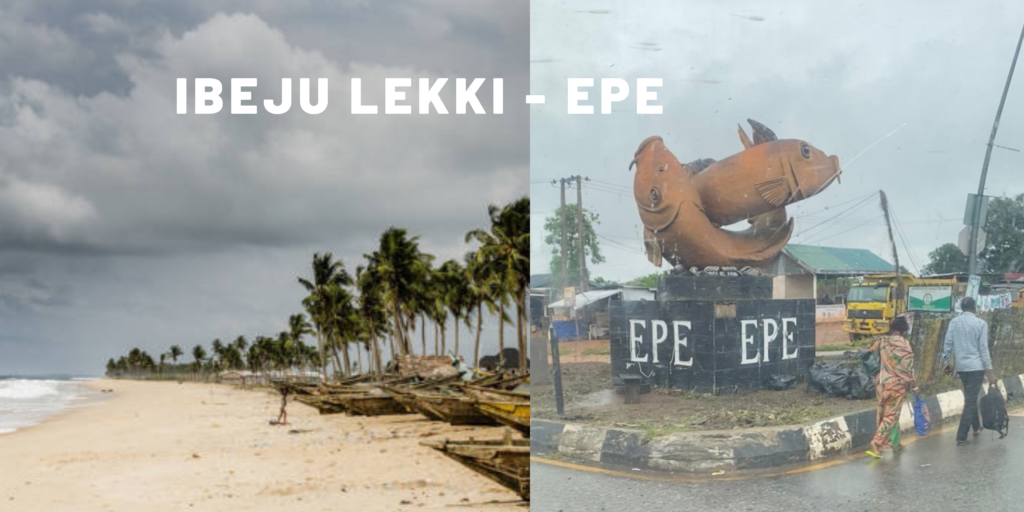
Stretching along the eastern flank of the Lekki Peninsula, Ibeju Lekki-Epe is strategically positioned between the Lagos metropolis and the Atlantic Ocean. It is close to the port, close to the planned international airport, and surrounded by some of the most significant infrastructure projects on the African continent. Its coastline is dotted with pristine beaches, its land is fertile, and its location places it at the intersection of commerce, industry, tourism, and residential living.
Unlike the already saturated and astronomically priced neighbourhoods of Victoria Island, Ikoyi, and Lekki Phase 1, the Ibeju Lekki-Epe axis still offers relatively affordable entry points — but that window is narrowing. This is not a market that will wait for the undecided. The developers have arrived, the government has committed, the multinationals have taken positions, and the infrastructure is going up. What remains is the question of whether you will be among those who recognized the opportunity early or among those who will look back and wish they had.
Government Policies Driving Growth
One of the most reliable indicators of a real estate market’s long-term potential is the level of government commitment to its development. In the case of Ibeju Lekki-Epe, the signals from both the Lagos State Government and the Federal Government of Nigeria have been consistent, substantial, and impossible to ignore.
The Lagos State Government has implemented a series of strategic policies designed to accelerate development in this corridor. Tax incentives have been introduced to attract businesses to the region, making it an economically appealing destination not just for investors but also for corporations seeking to establish operations in a growth-oriented environment. Infrastructure spending in the area has been prioritized, with roads, bridges, and utilities receiving significant attention and funding in state budgets over the past decade.
Perhaps the most transformative policy move has been the establishment and expansion of the Lekki Free Trade Zone. This special economic zone has been designed to attract foreign direct investment by offering streamlined regulatory processes, reduced tariffs, and a business-friendly environment that competes with similar zones across Asia and the Middle East. The free trade zone concept, when executed well, creates a multiplier effect: businesses come, jobs are created, workers need housing, and residential real estate demand rises. This is the trajectory Ibeju Lekki-Epe is already on.
Beyond the free trade zone, the government has also greenlit and supported the development of the Lekki Deep Sea Port, which upon full completion is set to become one of the busiest and most strategically important ports in West Africa. A deep sea port of this scale does not just serve shipping companies — it anchors an entire ecosystem of logistics, warehousing, manufacturing, and commerce. Communities grow around ports. Real estate values rise. And those who invested in land before the port reached full operational capacity often see the most dramatic returns.
The planned Lekki-Epe International Airport is another government-backed initiative that speaks directly to the future of this corridor. Airports are transformative infrastructure. They shorten distances, enable commerce, boost tourism, and signal to global investors that a region is serious about development. The combination of a deep sea port and an international airport within the same corridor is extraordinarily rare and creates a logistical and commercial hub that few regions on the continent can rival.
Private Sector Developments
Where the government leads, the private sector follows — and in the case of Ibeju Lekki-Epe, the private sector has not merely followed but has in many ways helped to lead the charge. The volume and scale of private investment flowing into this corridor represent one of the most compelling endorsements of its potential.
The single most talked-about private sector development in the area is the Dangote Refinery. Owned by Aliko Dangote, Africa’s wealthiest individual, the refinery is set to be the largest single-train petroleum refinery in the world upon reaching full capacity. With the ability to process over 650,000 barrels of crude oil per day, the refinery represents a seismic shift not just for Nigeria’s oil and gas industry but for the entire regional economy. It is expected to eliminate Nigeria’s dependence on imported petroleum products, generate thousands of direct and indirect jobs, and inject hundreds of billions of naira into the local economy on an annual basis.
The implications for real estate are significant. A refinery of this size requires a substantial and permanent workforce. That workforce needs housing, schools, hospitals, supermarkets, restaurants, and recreational facilities. The multiplier effect on the local real estate market is enormous, and it is already being felt as workers, contractors, and ancillary businesses relocate to the area and seek accommodation.
Beyond the refinery, the Lagos Free Trade Zone continues to attract industrial and commercial tenants at a steady pace. Companies from China, Europe, and across Africa have established operations within the zone, drawn by the tax incentives, the strategic coastal location, and the proximity to the deep sea port. Each new business that sets up in the free trade zone adds to the demand for surrounding real estate, from executive housing to worker accommodation to commercial retail space.
The Lagos Film City is another exciting private sector development taking shape in the corridor. Nigeria’s entertainment industry — popularly known as Nollywood — is one of the largest film industries in the world by volume of output. A dedicated film city within the Ibeju Lekki-Epe axis positions the area as a creative and cultural hub, attracting talent, production companies, hospitality businesses, and a range of ancillary services. The cultural economy is a powerful driver of real estate demand, as creatives, executives, and support staff all need places to live and work.
The Lagos Food Security Systems and Logistics Hub is yet another development that speaks to the long-term vision for this corridor. Nigeria faces significant food security challenges, and the establishment of a major logistics hub dedicated to food production, processing, storage, and distribution creates an entirely new economic vertical in the area. Agricultural investors, food processing companies, and cold chain logistics operators are among the businesses expected to anchor this hub.
Taken together, these private sector developments paint a picture of a self-reinforcing economic ecosystem — one where each new project increases the attractiveness of the next, where jobs beget residents, residents beget demand, and demand begets investment. Ibeju Lekki-Epe is not just developing; it is compounding.
Statistics and Demographics
Numbers tell a story that rhetoric cannot. The demographic and economic statistics surrounding the Ibeju Lekki-Epe corridor are among the most compelling reasons to take this market seriously.
Lagos is one of the fastest-growing cities in the world. With an estimated population of over 20 million people and growing, the city’s housing deficit is substantial and widening. The Real Estate Developers Association of Nigeria has consistently highlighted a national housing shortfall running into millions of units, with Lagos at the epicentre of the crisis. As the city expands eastward along the Lekki Peninsula — driven by the saturation and high cost of its western and central zones — the Ibeju Lekki-Epe corridor is the natural recipient of that overflow demand.
The population of the Ibeju Lekki local government area itself has grown steadily over the past decade, a trend that is expected to accelerate sharply as the major infrastructure projects become operational and draw in workers and businesses. Young professionals, middle-income families, and high-net-worth individuals are all beginning to look eastward, recognizing that the amenities, job opportunities, and lifestyle offerings of Ibeju Lekki-Epe are increasingly competitive with those of more established Lagos neighbourhoods.
Foreign direct investment into the Lekki Free Trade Zone and surrounding projects runs into the billions of dollars, with investors from China, India, Europe, and North America all having committed capital to projects within the corridor. This level of international investment not only validates the economic case for the area but also brings with it a class of expatriate workers and executives who require high-quality residential accommodation — a segment of the market that commands premium rents and sale prices.
The real estate market in the corridor has seen consistent year-on-year price appreciation over the past several years, with some areas recording gains that significantly outpace inflation and alternative investment classes. While specific figures vary by location and property type, the directional trend is unambiguous: land and property in Ibeju Lekki-Epe is becoming more valuable, and there are structural economic reasons to believe that trajectory will continue.
Current Land Prices
One of the most attractive features of the Ibeju Lekki-Epe real estate market at this moment in its development is the relative affordability of entry. Compared to the astronomical prices that now characterize Victoria Island, Ikoyi, and Lekki Phase 1 — where land can cost hundreds of millions of naira per plot — the Ibeju Lekki-Epe corridor still offers opportunities at a fraction of those prices.
For investors looking to enter the market, there are options across a wide range of budgets. Some residential plots are available with initial deposits starting from as low as the equivalent of $600, making the market accessible not just to institutional investors and high-net-worth individuals but also to members of the Nigerian diaspora, young professionals, and middle-income earners who are building wealth over time.
The variety of investment formats available in the corridor is also noteworthy. Investors can choose from outright land purchases for development or resale, structured installment payment plans that allow for gradual acquisition, joint venture arrangements with developers, and agricultural land investments that leverage the area’s natural fertility. This range of options means that the corridor accommodates different risk appetites, time horizons, and financial capacities.
It is worth noting that land prices within the corridor are not uniform. Proximity to the major infrastructure projects — the refinery, the port, the airport, the free trade zone — commands a premium. Waterfront and beachfront plots attract significant interest from luxury residential and hospitality developers. More inland plots offer lower entry prices but still benefit from the rising tide of the corridor’s overall development.
The current price environment is, by most informed assessments, a window that will not remain open indefinitely. As infrastructure projects are completed and become operational, as the workforce grows, and as the area’s reputation for investment solidifies, land prices will rise to reflect the changed reality. Those who buy before that inflection point capture the greatest upside.
Future Price Projections
Projecting the future is never an exact science, but in real estate, certain structural factors create compelling directional arguments. In the case of Ibeju Lekki-Epe, multiple converging forces point strongly toward significant long-term price appreciation.
First, supply and demand dynamics favor sustained price growth. Lagos’s population continues to grow, the city’s housing deficit continues to expand, and the Ibeju Lekki-Epe corridor represents one of the few remaining areas where large-scale, planned, and serviced real estate development is still possible. As that land is absorbed by developers and end users, the remaining supply becomes scarcer and more expensive.
Second, the completion of infrastructure projects will drive step-change increases in land values. It is well established in real estate economics that infrastructure triggers price appreciation in surrounding areas. The opening of the deep sea port, the commissioning of the refinery, the operationalization of the international airport, and the maturation of the free trade zone will each serve as catalysts for renewed investor interest and price discovery. Early investors will benefit from these catalysts most acutely.
Third, the formalization of the area’s residential, commercial, and industrial character will reduce the perceived risk that currently keeps some cautious investors on the sidelines. As more reputable developers, financial institutions, and corporate tenants establish a presence, confidence in the market will deepen and broaden, drawing in additional capital and further supporting prices.
Industry observers and real estate analysts who track the Lagos market consistently list the Ibeju Lekki-Epe corridor among the top-performing and highest-potential areas for medium to long-term investment. While short-term speculation always carries risk, the structural case for holding well-located assets in this corridor over a five to ten year horizon is robust.
Why Now Is the Right Time to Invest
The case for investing in Ibeju Lekki-Epe is strongest at this particular moment in the corridor’s development cycle, and here is why.
Every real estate market has a development arc. There is a period of early activity, when infrastructure is being laid, developers are positioning, and prices are still modest. Then comes a period of rapid growth, when projects become visible, businesses arrive, and prices begin to climb sharply. Finally, there is the mature phase, when prices are high, competition is intense, and the easy gains have been made.
Ibeju Lekki-Epe is in the transition between the first and second phases. Infrastructure is under construction. Major projects are operational or approaching completion. Businesses are beginning to arrive. Prices are rising but have not yet made the leap that will come when the full weight of the corridor’s development potential becomes obvious to the broader market. This is the window — the period when land can still be acquired at prices that will look remarkably cheap in retrospect.
Investors who entered Lekki Phase 1 in the 1990s and early 2000s made extraordinary returns. Those who bought in Ajah and Sangotedo before those areas matured saw similar outcomes. The investors who will tell the same story about Ibeju Lekki-Epe are the ones who are making their moves today.
Conclusion
The Ibeju Lekki-Epe corridor represents one of the most compelling real estate investment opportunities in Nigeria today, and arguably one of the most interesting frontier markets on the African continent. The combination of committed government policy, transformative private sector investment, favorable demographics, still-accessible pricing, and strong structural tailwinds for future appreciation creates a case that is difficult to argue against.
This is not a speculative bet on an unknown quantity. It is a reasoned, evidence-based investment in a location that has the backing of billions of dollars in infrastructure spending, the attention of Africa’s largest private investors, and the tailwind of one of the world’s fastest-growing cities pushing development steadily eastward.
The story of Ibeju Lekki-Epe is still being written. The investors who will benefit most from it are the ones who choose to be part of that story now — before the chapter of affordable entry prices comes to a close. Explore your options, do your due diligence, and take your position in what may well be the most rewarding real estate play in Lagos in this generation.

Moses Oyong is a Real Estate Growth Marketing Manager and PropTech specialist with over a decade of closing residential and commercial deals worth over 200 million across Nigeria and international markets. Known for engineering AI-driven workflows that delivered a 69% uplift in sales targets and cut lead response times by 85%, Moses bridges the gap between high-performance marketing, land law, and technology to help investors, developers, and first-time buyers make confident, informed property decisions in an increasingly digital world.