The frontier real estate market in West Africa is currently experiencing a massive wave of speculative capital migration. When a raw land listing emerges showcasing a vast 86.81-acre parcel featuring over 2,000 feet of direct waterfront shoreline, international development funds and diaspora investors instantly lose their analytical objectivity. Real estate agents across Accra deploy highly emotional marketing vocabulary, speaking of pristine paradises, endless developer possibilities, and once-in-a-lifetime opportunities to capture raw dirt before land values skyrocket across the Eastern and Volta Regions.
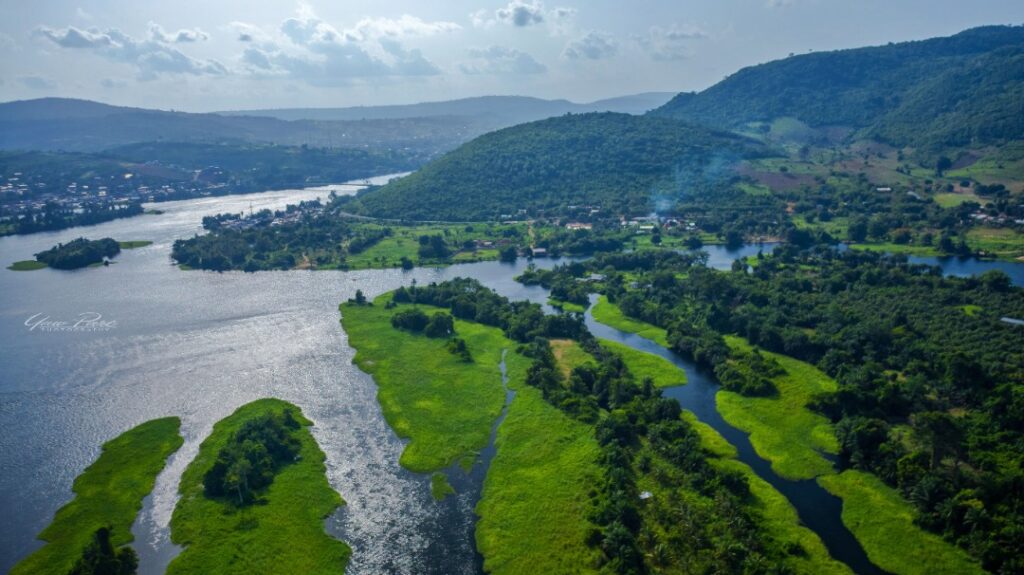
The specific asset currently capturing this major investment focus is a massive waterfront tract located in Juapong, a strategic industrial and agricultural transit hub positioned along the Volta River corridor. Priced at a substantial $5,000,000 USD, approximately 75 million Ghanaian Cedis, this expansive acreage is being marketed as a versatile canvas for a master-planned luxury residential estate with private docks, a high-yield eco-friendly tourist resort, an ultra-exclusive private sanctuary for global elites, or a sustainable commercial agricultural enterprise integrated with farm-to-table hospitality lodging.
On a glossy investment brochure or an international property registry, this tract looks like an unassailable wealth-creation masterstroke.
But if you strip away the romantic marketing narratives and evaluate this land through the cold, unvarnished metrics of Ghanaian land tenure systems, raw infrastructure deficits, rural logistics, and capital liquidity timelines, a completely different investment picture emerges. Under a passive buy-and-hold strategy, dropping five million dollars into raw land on the Volta River is a highly dangerous move that can permanently lock up your liquid wealth in a non-yielding asset trap.
If you deploy capital into this location expecting immediate passive returns without an aggressive, highly structured, multi-phased engineering and legal execution model, you are setting yourself up for severe investor remorse. This exhaustive analysis breaks down the systemic operational risks of large-scale land acquisitions in Ghana and outlines the definitive corporate blueprint required to maximize your capital drop and transform this Juapong waterfront parcel into a highly productive, high-yield commercial powerhouse.
1. The Ghanaian Land Title Minefield: The Primary Structural Risk to Foreign Capital
The absolute first and most critical hazard confronting any investor looking at Juapong Eastern Region Ghana land for sale is the highly complex, multi-layered nature of land administration and tenure systems in Ghana. Unlike real estate markets in Western Europe or North America, where land registry data is fully centralized and digitally secure, land ownership in Ghana is governed by a combination of customary law, traditional stool holdings, family lineages, and statutory state interventions.
                  [ Customary / Stool Land Authorities ]
                                    │
         ┌──────────────────────────┴──────────────────────────┐
         ▼                                                     ▼
[ Linear Family Claimants ]                          [ Overlapping Title Deeds ]
Multiple factions within a clan asserting            Historical family transactions creating
independent ownership rights over the same boundary. secondary, conflicting registry entries.
When an international entity or diaspora developer drops five million dollars to acquire a massive 86.81-acre parcel, they are highly exposed to severe title litigation risks,
The Customary Stool Land Conflict: Large tracts of land in the Eastern and Volta Regions are typically held under the custody of traditional stools or skins, representing the community’s ancestral heritage. A single transaction executed with a local chief or family head can be instantly challenged in court by rival factions within the same stool hierarchy who claim they were not adequately consulted or compensated, leading to permanent injunctions that paralyze your development for decades.
Overlapping Land Commission Registry Entry Faults: The state-run Land Commission infrastructure is continuously upgrading, but historical paper records have created widespread instances of overlapping title registrations. You can easily discover that a third-party agricultural syndicate or historical family holding possesses a legitimate, competing deed over a significant portion of your 2,000-foot shoreline, rendering your master plan legally unworkable until resolved through lengthy, expensive judicial channels.
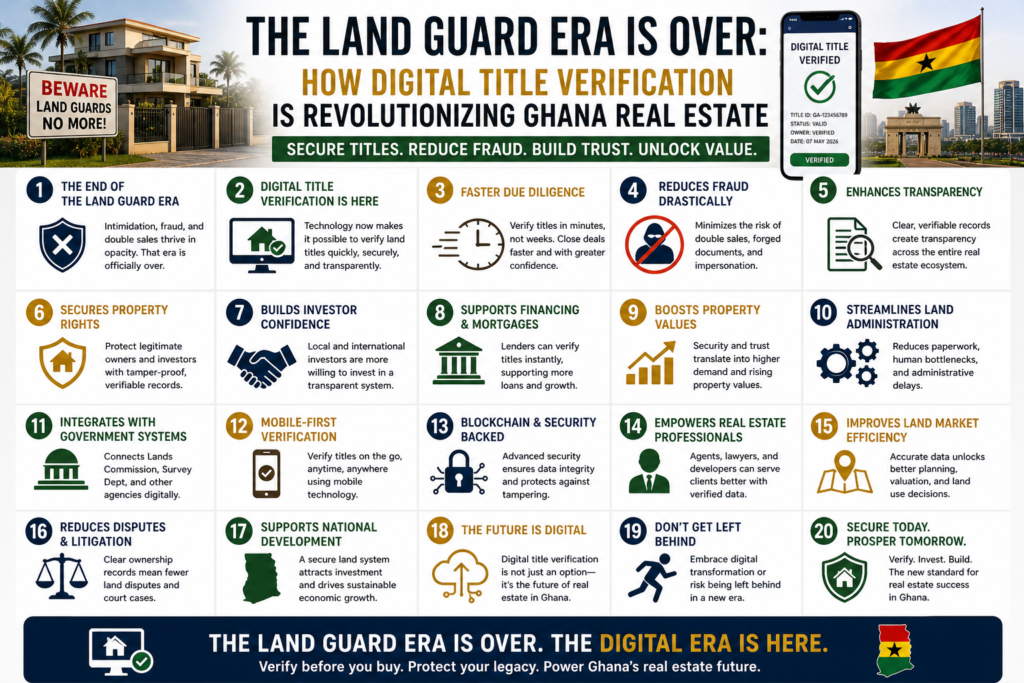
The Capital Safeguard Directive: To maximize your capital drop, not a single dollar of development capital must be deployed until a comprehensive, exhaustive root-of-title search is executed. This requires hiring independent boundary surveyors to clear the land coordinates with the Lands Commission, validating all historical transactions, and securing a formal, unassailable Land Title Certificate, fully free of encumbrances.
2. The Raw Infrastructure Deficit: Navigating the Extreme Financial Cost of Site Preparation
The promotional materials for this prime waterfront property praise the serene natural atmosphere and untouched beauty of Juapong’s shoreline. However, in the vocabulary of institutional real estate development, untouched natural beauty is simply code for a complete lack of baseline municipal infrastructure.
Sinking five million dollars into raw rural land means you are merely purchasing the right to construct the essential utility grids required to make the site habitable,
[ Your Raw Juapong Acreage ] ──► [ Complete Grid Isolation ] ──► [ Massive On-Site Capital Outlay ]
                                                                             │
[ Commercial Feasibility ] ◄── [ Private Access Roads ] ◄── [ Industrial Solar / Water Systems ]
The Power Grid Extension Gap: Large-scale commercial developments, whether an eco-resort or a luxury residential community, demand massive, uninterrupted electrical loads. If the local Electricity Company of Ghana (ECG) infrastructure near Juapong is unstable or geographically distant from your parcel boundary, extending high-voltage transmission lines, installing private industrial step-down transformers, and maintaining massive diesel backup generation arrays represents a huge capital layout that significantly dilutes your early-stage development yields.
Water Filtration and Waste Disposal Economics: While sitting directly next to the Volta River corridor provides an abundance of raw water, treating that water to meet international hospitality and residential health standards requires constructing a private, on-site water treatment plant. Furthermore, an isolated 86-acre site possesses no connection to municipal sewage lines. Developers must fund and engineer highly advanced, self-contained greywater processing facilities and ecological waste management grids to prevent polluting the pristine river environment.
Civil Access Road Networks: The durability of internal access roads is a persistent challenge in Ghana due to the intense seasonal tropical rains. Transforming raw dirt pathways into stabilized, weather-resistant paved internal road networks capable of supporting heavy construction vehicles and luxury transport access is a massive civil engineering cost center that your broker will never factor into the raw acre price.
3. The Multi-Phased Commercial Blueprint: How to Intelligently Maximize Your Capital Drop
To prevent this $5,000,000 acquisition from turning into a frozen capital block, you must entirely abandon the concept of uniform, slow-paced development. To maximize your financial returns on a massive buy development land Ghana play, you must execute a highly strategic, multi-phased commercial blueprint that balances cash flow generation with long-term asset value enhancement.
The most efficient investment trajectory involves dividing the 86.81 acres into distinct, synergistic operational zones that can be activated sequentially, allowing early-stage revenue to fund late-stage infrastructure.
                      [ Master-Planned 86.81-Acre Parcel ]
                                       │
         ┌─────────────────────────────┼─────────────────────────────┐
         ▼                             ▼                             ▼
[ Phase 1: High-Yield Agro ]  [ Phase 2: Eco-Tourism Hospitality ] [ Phase 3: Luxury Residential ]
Immediate cash generation via  Constructing high-margin boutiques,  Executing high-tier villa sales
mechanized farming and exports. premium eco-lodging, and marinas.   and land sub-leases to the elite.
By structuring your capital deployment across these distinct phases, you insulate your portfolio from market downtime and ensure the asset actively funds its own development lifecycle.
4. Phase 1 Execution: High-Yield Mechanized Agriculture and Immediate Revenue Stabilization
Leaving eighty-six acres of rich soil sitting idle while you wait years for architectural permits and hospitality construction timelines is an immense waste of capital. The fastest pathway to stabilizing your investment and generating immediate cash flow is to activate a highly mechanized, short-cycle commercial agricultural footprint on the inland portions of the property.
The soil profiles along the Volta River basin are exceptionally fertile and uniquely optimized for high-value agricultural production,
Short-Cycle Cash Crop Cultivation: By allocating fifty acres of the inland terrain to high-demand, short-cycle cash crops such as premium varieties of maize, industrial soybeans, or high-grade vegetables, you can secure multiple harvest cycles within a single calendar year. These crops can be channeled directly into the booming local agro-processing markets of Accra and Tema, generating immediate liquid revenue in local currency to offset ongoing land holding costs.
The Strategic Value of the Shoreline for Irrigation: Possessing over 2,000 feet of direct river frontage completely eliminates the primary risk of West African agriculture: drought. By utilizing a fraction of your capital drop to install modern, automated drip-irrigation pump networks along the riverbank, you ensure consistent, year-round crop yields independent of seasonal rainfall patterns, establishing a highly predictable, climate-resilient revenue stream during your primary master-planning phase.
5. Phase 2 Execution: High-Margin Eco-Tourism and Maritime Hospitality Infrastructure
Once the agricultural footprint stabilizes your baseline operational costs, Phase 2 transitions toward capturing the high-value international and domestic luxury tourism sectors. The global travel market is experiencing a massive structural shift toward sustainable, wellness-focused eco-resorts that offer absolute natural isolation without sacrificing premium comfort.
The unique geography of this Volta River real estate development site allows you to construct a highly exclusive boutique destination,
+-----------------------------------+-----------------------------------+
| Standard Mass Market Beach Resort | Premium Volta River Eco-Sanctuary |
+-----------------------------------+-----------------------------------+
| Saturated, high-competition ocean | Unique, calm riverfront landscape |
| frontages in Accra with intense   | offering complete privacy, water  |
| noise and rapid erosion risks.    | sports, and curated wellness.     |
+-----------------------------------+-----------------------------------+
Low-Impact Premium Eco-Lodging: Instead of building a massive, high-cost concrete hotel structure that ruins the natural terrain, maximize your capital efficiency by constructing ultra-luxury, low-impact timber and glass eco-villas elevated on stilted frameworks along the riverbank. This method keeps your structural construction costs highly manageable while allowing you to charge premium nightly rates that target affluent weekend travelers from Accra, international corporate executives, and members of the global diaspora.
Volta River Maritime Integration: Capitalize on the 2,000 feet of shoreline by engineering a private, floating pontoon boat dock and a boutique marina lounge. By offering curated river safaris, jet-ski rentals, kayaking courses, and high-end water sports infrastructure, you transform the property from raw land into an active, highly dynamic lifestyle destination that builds immense brand equity across West Africa.
The Farm-to-Table Hospitality Loop: Connect your Phase 1 agricultural output directly with your Phase 2 hospitality footprint. By utilizing fresh, organic produce grown right on your estate to supply your signature riverfront restaurant, you dramatically lower your resort’s supply chain logistics costs while delivering an authentic, high-end culinary experience that commands premium pricing.
6. Phase 3 Execution: High-Tier Luxury Residential Sub-Leases and Capital Extraction
The final phase of the capital maximization model focuses on long-term wealth extraction via high-end residential real estate development. Once the eco-resort and marina are fully functional, you have successfully elevated the cachet and perceived valuation of the entire location. The raw land is no longer an isolated rural plot, it is a highly prestigious luxury enclave.
You can now begin sub-leasing designated parcels of the remaining acreage to high-net-worth individuals and corporate executives seeking to build exclusive weekend estates,
The Private Dock Estates Model: Divide a section of the riverfront into premium, half-acre residential plots, ensuring each plot retains direct access to the water line. By marketing these plots as exclusive residential estates where owners can construct custom luxury villas featuring private boat slips, you can demand massive capital premiums that instantly return multiple times your initial per-acre acquisition cost.
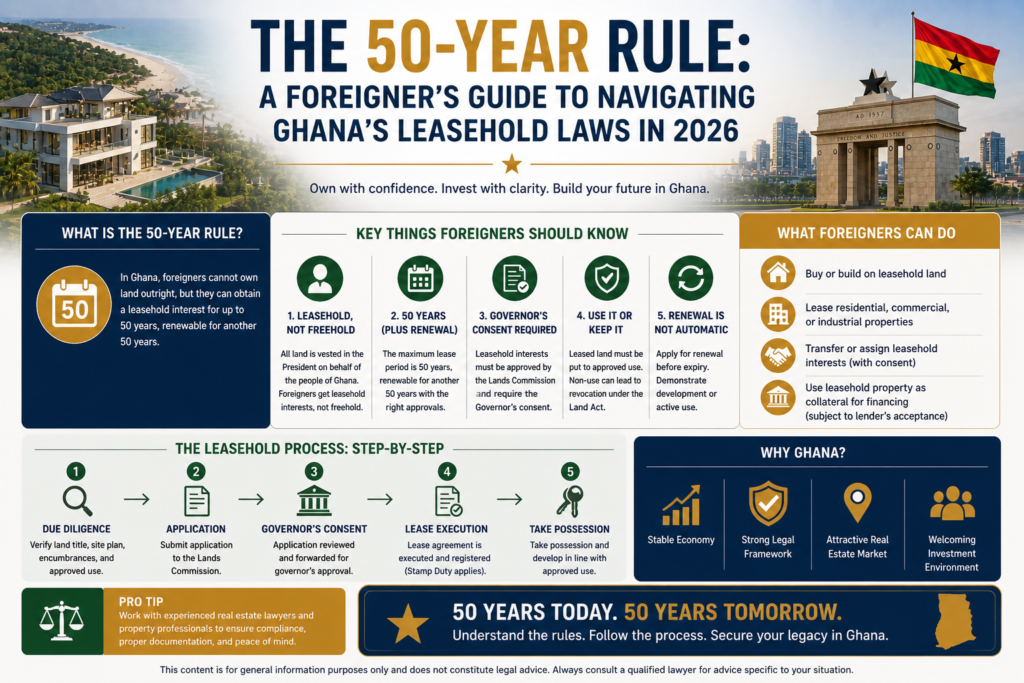
Sustained Ground Rent and Community Maintenance Streams: When structured under Ghanaian land laws, international and domestic buyers acquire land through long-term leases (typically 50 years for expatriates and 99 years for citizens). This allows you to retain ultimate ownership of the master title while generating steady, multi-decade cash flow via ongoing ground rent collections and community maintenance fees to manage the shared security, water filtration, and marina grids.
7. The Financial Realities: Currency Fluctuation Risks and Currency Hedge Tactics
Investing five million US dollars into a fixed, illiquid physical asset inside an emerging market economy introduces significant macroeconomic exposures, primarily centered around foreign exchange volatility. Real estate operations and land sales in Ghana are legally transacted in Ghanaian Cedis (GHS), yet your initial capital drop is denominated in a hard global currency (USD).
If the local currency undergoes a sharp depreciation cycle during your active development phase, your capital value can experience extreme erosion when calculated back into USD on the global stage,
[ Your $5M Hard Capital Drop ] ──► [ Local Currency Devaluation Cycle ] ──► [ USD Value Flattening Upon Exit ]
                                                                                       │
[ Capital Protection Secured ] ◄── [ Hard Currency International Contracts ] ◄── [ Agricultural Export Hedge ]
To fully insulate your portfolio from local currency depreciation and maximize the efficiency of your capital drop, you must implement strict currency hedging tactics throughout your business operations,
The Agricultural Export Protection Model: Dedicate a portion of your Phase 1 agro-production to crops designed specifically for regional or international export markets, such as high-grade cashews or specialized oils. Because export commodities are priced and traded in hard global currencies, your export revenues return directly to your accounts in US Dollars or Euros, creating a natural, automated buffer that fully balances any local currency fluctuations.
Hard Currency Indexing for Luxury Leases: When transitioning into Phase 3 residential land sub-leases and luxury resort hospitality bookings, explicitly index all long-term contracts, lease structures, and premium nightly rates directly to the US Dollar or Euro equivalent. While transactions are legally processed in local currency at the spot rate on the day of payment, indexing ensures your underlying asset valuation and operational cash flows remain completely insulated from inflation.
Comprehensive Feature Comparison: The Sales Pitch vs. The Commercial Blueprint
To ensure your investment strategies are guided by cold, corporate analysis rather than poetic real estate storytelling, carefully evaluate this direct contrast between the standard broker’s pitch and the structured commercial realities of this Juapong tract,
| The Standard Broker Listing Pitch | The Real-World Operational Fact | The Strategic Capital Maximization Blueprint |
| 86.81 Acres of Sprawling Paradise | Vast, raw land completely isolated from municipal power, water, and road networks. | Divide into distinct agro, hospitality, and residential zones to deploy infrastructure efficiently. |
| Over 2,000 Feet of Pristine Beachfront | Riverfront terrain exposed to intense seasonal current shifts and tropical vegetation overgrowth. | Install automated drip-irrigation pumps and construct low-impact floating pontoon marinas. |
| A Serene Escape for the World’s Elite | Remote rural geography requiring significant transit logistics from capital cities and airports. | Build out an elite eco-resort destination to establish local prestige before selling residential plots. |
| Fast-Developing Real Estate Area | Emerging sub-market where raw land transactions feature heavy legal and title litigation risks. | Enforce an absolute pause on development until a flawless Land Title Certificate is fully secured. |
| Endless Possibilities for Developers | A high-liability capital lockup if the land sits idle without immediate income generation. | Activate short-cycle mechanized farming immediately to cover ongoing holding costs. |
| Once-In-A-Lifetime $5,000,000 Opportunity | Astronomical entry price for raw dirt that consumes capital unless run as an active commercial business. | Leverage agricultural exports and USD-indexed luxury leases to hedge against currency depreciation. |
Is This Juapong Waterfront Tract Right for Your Portfolio?
The final investment success of this five-million-dollar land acquisition depends entirely on your corporate execution capabilities and the architecture of your broader investment portfolio. It is an exceptional geographical asset, but its ultimate net yield is determined by your operational post-handover strategy.
You should completely avoid this land parcel if,
You want a passive buy-and-hold asset: If you expect the land value to compound effortlessly over time while sitting as an idle patch of dirt without active technical, legal, and operational infrastructure management.
Your capital liquidity timeline is compressed: If your investment framework requires the ability to rapidly trade, flip, or exit real estate assets and convert brick into liquid cash within a short calendar horizon.
You are unwilling to manage local operations: If you do not possess the infrastructure, legal teams, or management bandwidth required to navigate traditional stool authorities, land title registries, and labor dynamics in West Africa.
You have a low tolerance for emerging market macro risks: If you are risk-averse regarding local currency fluctuations, changing interest rates, and initial infrastructure deficits.
This land parcel represents a premier acquisition only if,
You are an institutional master-planner: Who analyzes raw acreage as a structural platform to build multi-stream, high-margin commercial ecosystems.
You possess the capital reserves to fund utility grids: And are fully prepared to finance private industrial solar grids, water filtration networks, and stabilized access roads.
You want a powerful emerging market hedge: And plan to actively combine mechanized export farming with high-end luxury hospitality to build a hard-currency yielding empire.
You understand the profound value of waterfront scarcity: And have the institutional patience to navigate a 7-to-10-year development lifecycle to unlock the true apex value of the asset.
The Verdict: Before You Drop Capital with REM
If you are currently evaluating search results for real estate investment Volta Region Ghana or planning to step forward to secure this sprawling 86.81-acre waterfront parcel in Juapong, your final investment matrix must look past the poetic imagery of the sales pitch.
This property is a magnificent geographical canvas, but treating it as a passive residential holding is a guaranteed way to freeze your wealth in an illiquid asset trap. It carries substantial infrastructural demands and legal complexities that will continuously absorb capital unless met with an aggressive, phased commercial monetization blueprint. By running the estate as a combined mechanized cash-crop venture, premium eco-tourism destination, and high-tier residential sub-lease enclave, you can successfully capitalize on the unique agricultural and tourism dynamics of the Volta River basin, transforming a massive raw land liability into an absolute cash-flow engine.
Before you take the definitive step of entering formal contract reviews, scheduling private site visits, or outlining capital payment structures, protect your global wealth. Conduct a rigorous, independent boundary audit and title verification directly with the Lands Commission. Run a detailed multi-year financial projection for the site’s civil engineering and utility grid extensions, and deeply map out your currency hedge frameworks across the regional export and hospitality placement sectors.
For more information on the exact boundary coordinates, to review official land zoning document summaries, or to arrange an independent private tour of the Juapong waterfront sector, contact REM. Ensure you approach the negotiation table with a completely clear, realistic perspective on the long-term operational and financial realities of raw land asset ownership.

Moses Oyong is a Real Estate Growth Marketing Manager and PropTech specialist with over a decade of closing residential and commercial deals worth over 200 million across Nigeria and international markets. Known for engineering AI-driven workflows that delivered a 69% uplift in sales targets and cut lead response times by 85%, Moses bridges the gap between high-performance marketing, land law, and technology to help investors, developers, and first-time buyers make confident, informed property decisions in an increasingly digital world.