$50M Luxury House, Provence-Alpes France
The ultra-luxury residential market along the French Riviera operates on a highly sophisticated cocktail of historical romanticism, elite social positioning, and visual seduction. When an off-market estate emerges within the prestigious amphitheater of Villefranche-sur-Mer, carrying a staggering valuation of $50,000,000 USD (approximately €46,000,000), the global real estate marketing machinery shifts instantly into hyperdrive. Brokers across Paris, London, and Monaco deploy poetic sales copy, framing the acquisition as an unassailable vault for international wealth preservation and a timeless legacy sanctuary for the global billionaire elite.
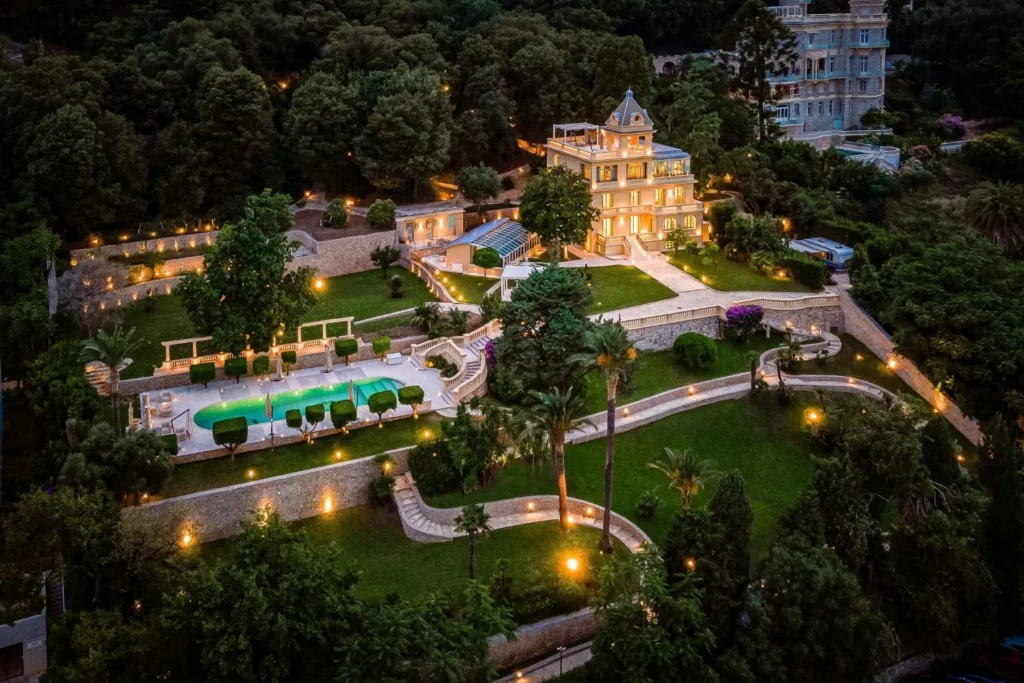
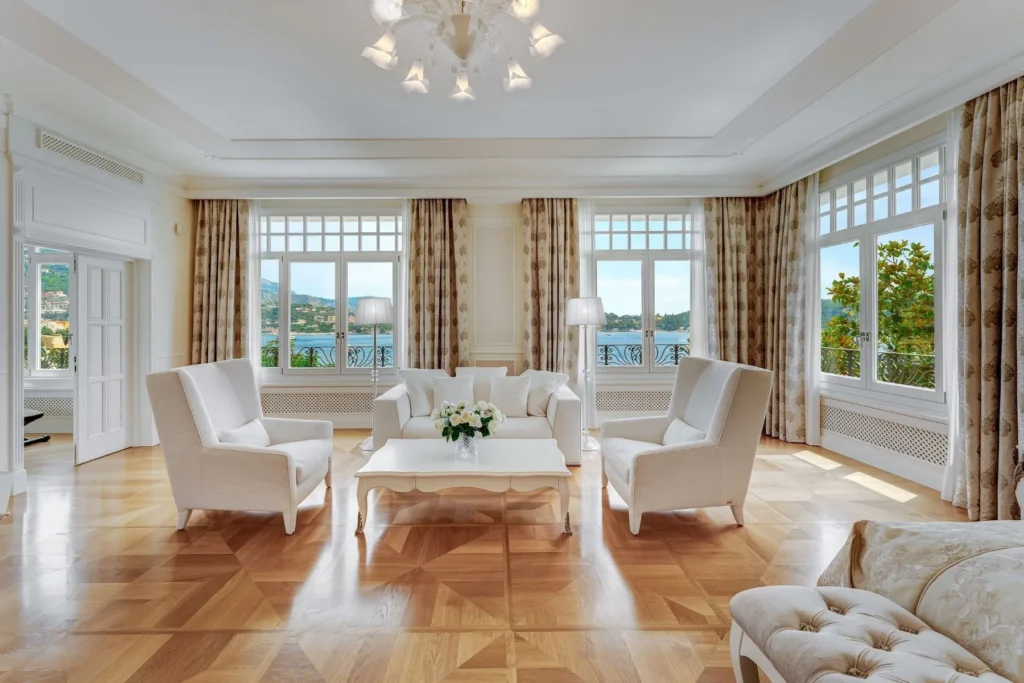
The physical asset currently occupying this hyper-exclusive orbit is a magnificent example of classic Belle Époque architecture, crowning a sprawling 16,500 square meter private plot positioned between Nice and Monaco. The estate features six expansive bedrooms, including four dedicated master suites, soaring ceilings decorated with historic ornamental moldings, formal dining galleries, a chef’s kitchen, a private tennis court, a large outdoor swimming pool, and tiered manicured gardens yielding panoramic views of the Mediterranean Sea and the rugged coastal mountains.
On a glossy international property presentation, this estate looks like the ultimate celebration of financial success and wealth stabilization.
However, if you strip away the glamour of the Côte d’Azur lifestyle, step off the panoramic stone terraces, and analyze this development through the cold, calculated metrics of French fiscal policy, structural preservation economics, asset liquidity, and alternative capital opportunity costs, a completely different reality emerges. Moving fifty million dollars of liquid wealth into a historic, fixed residential asset in France is one of the most inefficient and financially draining moves an investor can make. Far from being a smart hedge, it represents an absolute “dumb money” capital trap that will systematically erode your wealth through heavy taxation, structural liabilities, and frozen liquidity.
Here is an unvarnished analysis of the structural, regulatory, and economic realities that turn this legendary French Riviera trophy home into a profound financial burden.
1. The French Fiscal Minefield: How Taxes Instantly Devalue Your $50,000,000 Capital
The primary argument against deploying fifty million dollars into Villefranche-sur-Mer villas for sale centers around France’s notoriously aggressive and highly punitive tax framework targeting real estate and high-net-worth individuals. When you purchase premium real estate in France, your capital is immediately met with a multi-layered system of non-refundable transactional fees and structural wealth levies.
[ Your Liquid Capital: $50,000,000 ]
                  │
        (France Notaire & Transfer Fees: ~7.5%)
                  │
[ Immediate Transaction Sunk Cost: $3,750,000 ]
                  │
[ Ongoing Annual Outflows: IFI Wealth Tax + Taxe Foncière + Income Tax ]
The Notaire and Transfer Fee Friction: Upon execution of the deed, the French state levies a non-negotiable property transfer tax and notary fee package totaling approximately 7.5% of the purchase price. On a $50,000,000 acquisition, you must write an immediate, non-refundable check for $3,750,000 directly to the fiscal authority. This capital adds zero functional value to the physical structure, meaning your investment is instantly and deeply in the red on day one.
The IFI Real Estate Wealth Tax Trap: France operates a highly specific wealth tax known as Impôt sur la Fortune Immobilière (IFI). This tax targets real estate assets valued above €1.3 million globally. For a $50,000,000 property, the net asset value places you in the highest marginal IFI tax bracket, which extracts up to 1.5% of the property’s value every single year. This translates to a recurring annual cash drain of up to $750,000 purely to hold the deed, transforming your passive sanctuary into a continuous capital drain.
The Surtax on Local Rates: In addition to the IFI, you are subject to localized property taxes (Taxe Foncière and Taxe d’Habitation for secondary residences), which are calculated at elevated premium rates for massive estates with swimming pools and tennis courts. Combined with potential French income taxes if you choose to lease the property seasonally, the fiscal infrastructure is structurally engineered to penalize fixed asset wealth.
2. The Belle Époque Structural Abyss: The Non-Stop Operational Maintenance Tax
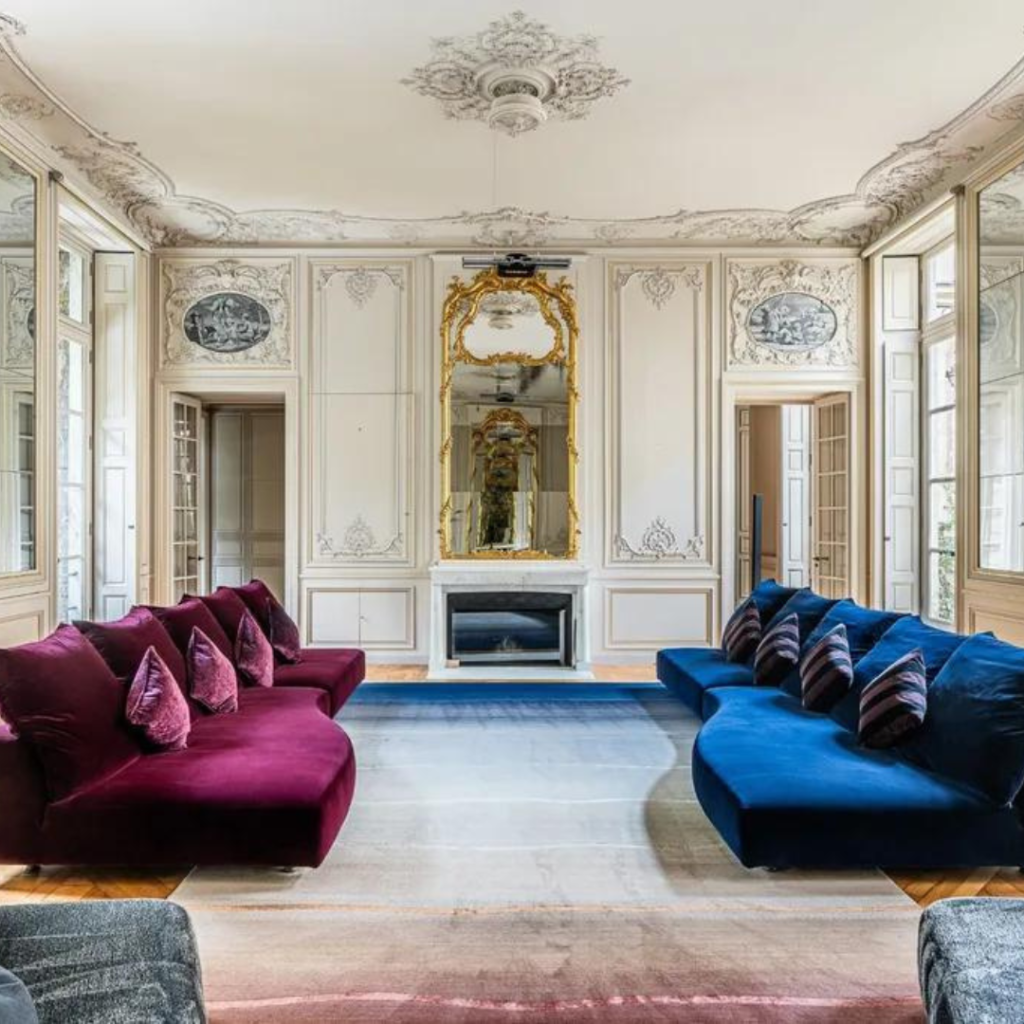
The architectural identity of this Villefranche-sur-Mer estate is defined by its classic Belle Époque heritage, showcasing intricate exterior moldings, traditional stone masonry, and soaring internal plaster ceilings. While this aesthetic represents the absolute height of European historical romance, operating a century-old architectural monument on a coastal hillside is a monumental financial burden.
Historical buildings in France are subject to strict cultural heritage preservation codes, meaning you cannot execute standard, budget-friendly home modifications or quick structural repairs,
Any structural modification, facade restoration, or roof repair on a Belle Époque estate requires formal permission from the Architectes des Bâtiments de France (ABF) and must be executed by specialized, high-cost certified heritage craftsmen.
[ Coastal Saline Air Moisture ] ──► [ Degradation of Historic Plaster & Stonework ] ──► [ Structural Crack Lines ]
                                                                                                  │
[ High-Cost Artisanal Restorations ] ◄── [ Strict ABF Regulatory Mandates ] ◄── [ Complex Permitting Delays ]
Furthermore, the property’s frontline coastal exposure means it is under constant attack from airborne salinity, intense summer heat, and winter moisture cycles coming off the Mediterranean Sea. The porous limestone facades naturally absorb salt spray, leading to stone carbonation, plaster micro-cracking, and the steady degradation of historical exterior moldings.
To keep this 16,500 square meter estate from looking weathered and losing its premium appeal, you must employ a permanent fleet of highly specialized artisans, structural engineers, and restorative painters. The ongoing maintenance overhead required just to preserve the structural integrity of the home can easily consume hundreds of thousands of dollars annually, acting as a non-stop operational tax on your capital.
3. The 16,500 Square Meter Landscaping and Amenity Liability
The listing highlights the sprawling 16,500 square meter plot, featuring tiered Mediterranean gardens, an outdoor swimming pool, and a private tennis court. In the vocabulary of institutional wealth management, this scale of raw, outdoor resort infrastructure translates directly to an immense, non-stop operational management burden.
Let us look past the initial lifestyle glamour and analyze the logistics required to maintain these outdoor assets on a steep coastal hillside,
+-----------------------------------+-----------------------------------+
| Expected Luxury Garden Experience | Real-World Coastal Hillside Fact  |
+-----------------------------------+-----------------------------------+
| Relaxing strolls through pristine,| Steep, tiered stone retaining     |
| manicured Mediterranean gardens   | walls under immense pressure from |
| overlooking the sea.              | soil shifting and mountain runoff.|
+-----------------------------------+-----------------------------------+
Retaining Wall Structural Stabilization: Hillside properties along the Côte d’Azur are built on complex stone terraces. Over cycles of heavy autumnal rains (épisodes méditerranéens), the immense hydrostatic pressure behind ancient retaining walls can cause structural shifting, bulging, or catastrophic land subsidence. Monitoring and reinforcing thousands of square meters of tiered retaining walls requires ongoing geotechnical assessments and expensive structural anchoring solutions.
The Pool and Tennis Court Maintenance Drain: An open-air swimming pool positioned on a coastal cliffside acts as a natural catchment basin for airborne dust, salt spray, and organic debris. The continuous introduction of salt mist destabilizes the pool’s chemical balance, putting extreme workload strain on filtration systems and heating units. Similarly, a private tennis court exposed to intense Mediterranean UV radiation requires constant resurfacing, line repainting, and wind-break maintenance to remain in a usable, premium state.
4. The Apex Illiquidity Trap: The Frozen Secondary Market Horizon
The mass-market residential sectors across France possess areas of steady transaction speed and high capital liquidity. However, that trading fluidity completely disappears at the absolute apex of the luxury real estate Côte d’Azur tier. The moment a single residential property crosses the forty million dollar threshold, it exits the traditional real estate market completely and becomes an incredibly sticky, illiquid asset block.
▲ [ $50M Apex Stratum: Villefranche Estate ] ──► Buyer Pool: Handful of Global Sovereigns/Billionaires (Years to Transact)
■ [ $5M - $15M Stratum: Standard Côte d'Azur Villas ] ──► Buyer Pool: Affluent European Corporate Elite (Moderate Speed)
● [ Under $1M Stratum: Mass Market Condos ] ──► Buyer Pool: General Domestic Public & Retail Investors (High Liquidity)
If your core international business networks, venture capital portfolios, or corporate enterprises encounter a sudden, unexpected requirement for substantial liquid capital, you cannot rapidly convert a historic six-bedroom mansion in Villefranche-sur-Mer into liquid funds. The absolute pool of global buyers possessing the un-leveraged capacity to finalize a fifty million dollar residential cash transaction—while willingly absorbing France’s punitive wealth tax structures—is remarkably small.
A property of this magnitude frequently sits on the private luxury registry for twelve, twenty-four, or thirty-six months before discovering a buyer whose personal aesthetic taste aligns with the property’s historic design configuration. If you must exit the asset rapidly due to changing global economic conditions, you will be systematically forced to accept a predatory, multi-million-dollar capital haircut just to attract a buyer capable of closing a complex international transaction.
5. The Spatial Redundancy Trap: High Carrying Costs for Dead Square Footage
When international buyers search for buy 6 bedroom mansion South of France listings, they often look at large room counts and multiple master suites as an indicator of enhanced luxury lifestyle comfort. The Villefranche estate features six bedrooms, four master suites, formal dining galleries, and vast living zones designed for large-scale international entertainment.
Let us evaluate the real-world operational efficiency of an over-scaled residential layout over a standard calendar year,
                      [ Total Residential Square Footage ]
                                       │
         ┌─────────────────────────────┴─────────────────────────────┐
         ▼                                                           ▼
[ High-Frequency Active Zones ]                             [ Low-Frequency Dead Space ]
Primary Master Suite, Kitchen,                              4 Secondary Master Suites, Formal
Main Living Room, Terraces.                                 Dining Galleries, Circulation Halls.
(Occupies ~35% of Total Space)                              (Occupies ~65% of Total Space)
In day-to-day operations, even the most socially active owners utilize less than thirty-five percent of the available physical space. The secondary master suites, the formal indoor dining galleries, and the vast circulation corridors sit entirely unoccupied for the vast majority of the year.
Yet, because the building features high ceilings and historic architectural volumes, you must continuously power, light, heat, and climate-control every single square inch of the property around the clock to prevent humidity and moisture from destroying the finishes. The coastal humidity of the South of France requires constant interior climate management to prevent mold from settling into custom plasterwork, delicate fabrics, and high-end artwork collections. You are funding the permanent operational overhead of a luxury resort while only deriving daily personal utility from a tiny sliver of the space.
6. The Novelty Obsolescence Risk: The Saturated French Riviera Luxury Context
Many investors look at the French Riviera and assume that because the location is world-famous, their capital is fully insulated from market downside. This is a common luxury investment misconception.
The high-end property market across the Côte d’Azur is intensely saturated with competing ultra-luxury enclaves, each striving to attract the same limited pool of global billionaire capital,
The Competition from Adjacent Enclaves: Villefranche-sur-Mer faces continuous luxury branding competition from adjacent, hyper-exclusive peninsula destinations like Saint-Jean-Cap-Ferrat, Cap d’Antibes, and the ultra-prime residential sectors of Monaco.
The Buyer Paradigm Shift: Modern ultra-high-net-worth buyers increasingly favor sleek, hyper-modern, glass-and-steel architectural masterpieces featuring integrated home automation, subterranean supercar galleries, and low-maintenance smart building materials. A historic Belle Époque estate requiring a permanent army of restoration craftsmen faces a structural disadvantage in appeal, making it increasingly difficult to attract the modern generation of tech-wealth buyers upon an eventual resale.
7. The Colossal Opportunity Cost of Fifty Million Dollars of Dead Capital
The final, and most compelling financial reality against purchasing this Villefranche-sur-Mer estate is the profound opportunity cost of capital. When you lock away fifty million dollars of liquid wealth into a single, non-income-generating primary residence, you are permanently removing that capital from the global financial landscape where it could be working to produce highly secure, compounding cash flows.
Let us run an objective financial comparison of how that exact block of wealth behaves over a standard five-year investment holding window when deployed into active, liquid market instruments versus sitting inside a dead luxury residential asset,
+-----------------------------------+-----------------------------------+
| $50M Capital Sunk in Mansion      | $50M Capital Deployed in Markets  |
+-----------------------------------+-----------------------------------+
| Generates $0 in passive cash flow.| At a conservative 6% compounding  |
| Accumulates massive annual bills  | annual yield, generates over      |
| for maintenance, cooling, & taxes.| $3,000,000 in cash *every year*.  |
+-----------------------------------+-----------------------------------+
Over a five-year investment window, a professional, diversified corporate portfolio worth fifty million dollars will effortlessly produce over fifteen million dollars in clean, highly liquid compounding profit while maintaining absolute capital mobility. Conversely, the Villefranche Belle Époque mansion will have actively drained millions of additional dollars out of your pocket to cover high building maintenance fees, substantial electrical utility footprint bills to fight coastal humidity, ongoing artisanal restoration invoices, and punitive annual wealth taxes, while its final secondary market resale value remains completely dependent on the unpredictable high-end property cycles of Europe. From a standpoint of raw wealth optimization and asset protection, spending this scale of money on a single home is an inefficient use of capital.
Comprehensive Asset Comparison: Marketing Pitch vs. Financial Reality
To ensure your luxury property acquisitions are guided by cold logic rather than architectural poetry, carefully evaluate this direct contrast between what the broker’s marketing brochure promises and the real-world operational reality of this Villefranche-sur-Mer estate,
| The Hyper-Luxury Feature | The Broker’s Glamorous Pitch | The Real-World Operational & Financial Reality |
| $50,000,000 Purchase Price | An elite trophy property indicating the absolute peak of global success, wealth, and prestige. | Extreme capital lockup with heavy asset illiquidity and high annual fixed holding costs. |
| Belle Époque Architecture | Hand-crafted historic masterpiece featuring elegant moldings and soaring ceilings. | High exposure to coastal weathering; subject to strict ABF historical preservation restrictions. |
| 16,500 Sqm Cliffside Plot | A massive private sanctuary offering unparalleled privacy and panoramic views. | Extreme civil engineering liability regarding retaining wall stabilization and land slip management. |
| Prime Location near Monaco | Elite address offering easy access to the world-class dining and shopping of the Riviera. | Positioned within a high-congestion coastal transit corridor with significant summer traffic bottlenecks. |
| Private Pool & Tennis Court | Premium resort amenities designed for top-tier health, wellness, and social hosting. | Significant weekly maintenance overhead, chemical balancing, and continuous energy consumption. |
| 6 Bedrooms & 4 Master Suites | Massive living and dining galleries designed for elite international entertainment. | Significant capital allocated to dead space that requires continuous heating and dehumidification. |
Is This Villefranche Belle Époque Estate Built for Anyone?
Despite this extensive structural and financial critique, this property remains a stunning monument to European architectural history. The critical step to avoiding severe investor remorse is recognizing whether your personal balance sheet and global wealth infrastructure are vast enough to absorb the severe inefficiencies of this property class.
You are completely making a mistake with this estate if,
You expect your assets to remain liquid and agile: If your investment strategy relies on rapid capital mobility and the ability to exit positions within a short calendar window.
You analyze real estate through net-yield return: If you judge your asset allocations through the strict math of opportunity cost and capital efficiency.
You want a low-maintenance home: If you find managing century-old historical structures, specialized artisanal restoration teams, and steep hillside retaining walls annoying.
You want to optimize tax efficiency: If you are unwilling to absorb an immediate 7.5% transfer tax loss upon entry and face an annual 1.5% wealth tax cash drain.
This estate represents a justifiable acquisition only if,
Your net worth exceeds several billion dollars: Meaning a fifty million dollar capital lockdown represents a minor fraction of a single percentage point of your overall wealth footprint.
You are an absolute collector of rare historic architecture art: And view living inside an uncompromised, perfectly preserved Belle Époque design as a personal legacy milestone.
You maintain an established, long-term footprint in France: And intend to utilize the property as a permanent family foundation for decades, neutralizing short-term liquidity concerns.
The personal prestige of the address completely outweighs economic logic: And you are fully prepared to fund the continuous operational and maintenance overhead required to preserve a historic maritime monument.
The Verdict: Before You Issue an Inquiry to REM
If you are currently analyzing high-end search results for buy luxury property French Riviera or considering a move into this spectacular entry at Villefranche-sur-Mer, the final conclusion requires looking past the glamorous real estate presentation.
This six-bedroom Belle Époque residence is an architectural triumph, but as a financial investment vehicle, it carries heavy operational and regulatory liabilities. It demands a significant lifestyle and operational sacrifice from its custodian. It forces you to manage high-maintenance historical infrastructure, absorb punitive tax structures, combat coastal climate elements, and accept a massive capital lockup within an illiquid price bracket.
Before you take any steps toward requesting private viewings, formal contract reviews, or structured financial terms, protect your global wealth. Work alongside an independent luxury asset advisory office to run a comprehensive multi-year operational cost projection. Physically audit the structural performance of the hillside retaining walls against moisture-induced shifting, and deeply calculate the true opportunity cost of moving fifty million dollars out of the global financial markets.
For more information on the exact architectural layout files, to review construction compliance documentation, or to arrange an independent private tour of the Villefranche sector, contact REM. Ensure you approach the negotiation table with a completely clear, realistic perspective on the long-term realities of ultra-luxury asset ownership.

Moses Oyong is a Real Estate Growth Marketing Manager and PropTech specialist with over a decade of closing residential and commercial deals worth over 200 million across Nigeria and international markets. Known for engineering AI-driven workflows that delivered a 69% uplift in sales targets and cut lead response times by 85%, Moses bridges the gap between high-performance marketing, land law, and technology to help investors, developers, and first-time buyers make confident, informed property decisions in an increasingly digital world.