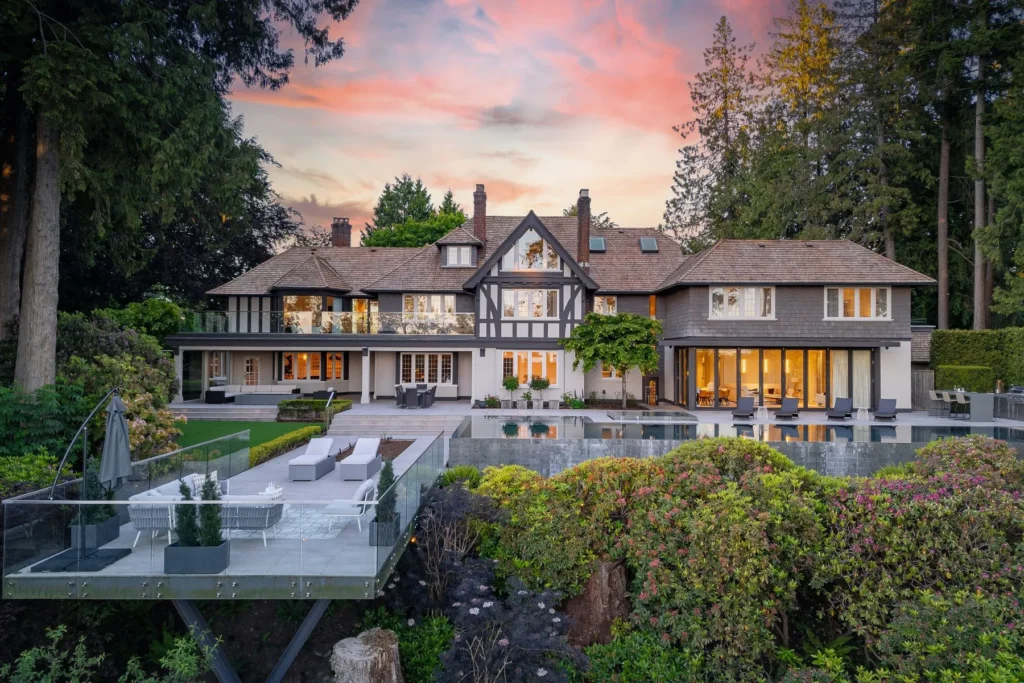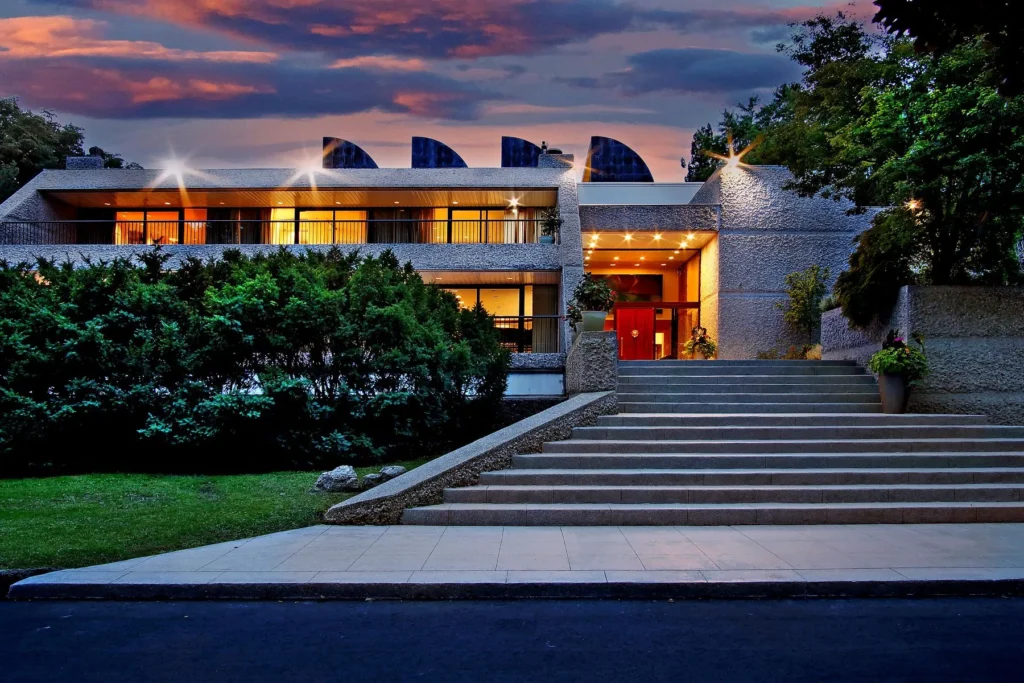
$16,000,000 Luxury House In Vancouver, Canada
Engineering, Architectural, and Capital Allocation Risk Assessment
Location: Penthouse 1 (PH1) – 1568 Alberni Street, West End, Vancouver, BC
Underwritten Valuation: $16,000,000 USD (Marketed Domestically at $21,900,000 CAD)
Executive Summary & Performance Metrics
================================================================================
AUDIT PARAMETERS & BUILDING PROFILE
================================================================================
Architectural Provenance.............. Kengo Kuma & Associates (KKAA)
Interior Architecture Collaboration... Fruition Interior Design Studio
Livable Footprint Space............... 4,364 Square Feet (Across Three Multi-Levels)
Terrace Landscape Footprint........... 2,283 Square Feet (Three Dedicated Patios)
Primary Structural Core............... Sculptural Curved Concrete & Glass Curtain Wall
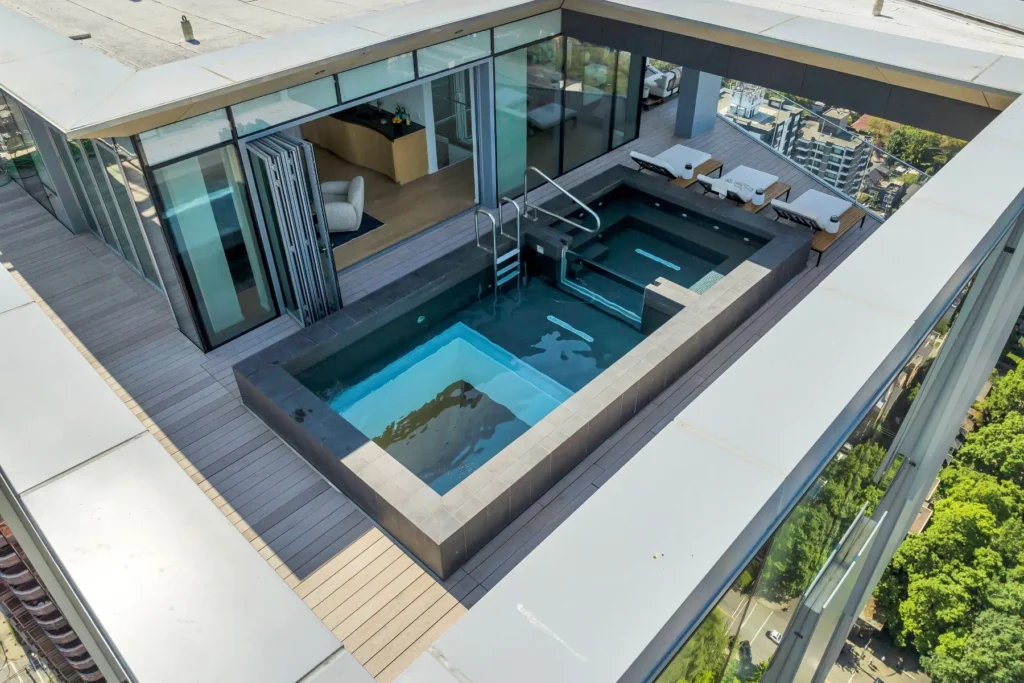
Specialized Marine Infrastructure..... Private Glass-Bottom Rooftop Suspended Pool & Spa
Custom Lighting Installations......... Studio D'armes, Enzo Catellani, & Bocci Art Grids
================================================================================
The super-prime high-rise market in Downtown Vancouver operates on an artificial asset-pricing premium heavily driven by architectural starchitect signatures and extreme spatial concentration. When a flagship vertical asset like Penthouse 1 atop Alberni by Kengo Kuma enters the transaction pipeline carrying an international valuation framework of $16,000,000 USD (or $21,900,000 CAD), consumer-facing real estate marketing channels instantly activate a highly romanticized, lifestyle-centric narrative. They deploy poetic prose detailing magical glass-bottom pools, skyhome sanctuaries, and sun-kissed mountain views, inviting affluent buyers to view a highly complex, multi-level architectural prototype as a simple, passive urban vacation pad.
This institutional risk assessment report completely strips away that promotional veneer. By evaluating this property through the unvarnished mechanics of advanced high-rise hydroponic engineering, severe structural envelope thermal loads, multi-tier monthly strata fees, localized anti-speculation vacancy taxes, and alternative asset opportunity costs, it establishes that the Alberni Penthouse carries significant operational overheads. Under a standard passive property management template, it functions as a highly demanding capital trap that will systematically erode your liquid wealth.
1. The Suspended Glass-Bottom Pool: A Complex Structural and Hydrostatic Engineering Liability
The defining luxury crown of the Alberni Penthouse is its private, rooftop-level glass-bottom swimming pool and spa. Positioned directly above the lower livable tiers of the 4,364 square foot skyhome, the pool’s structural glass floor is engineered to refract sunlight downward, casting moving light patterns across the 20-foot main living and dining salons below.
While this execution represents a striking feat of visual art and modern architecture, operating a large-scale water retention basin directly over custom interior living quarters introduces exceptional structural engineering liabilities:
                  [ High-Altitude Suspended Marine Pool Core ]
                                       │
         (Cyclic Water Movement, Structural Building Sway, & Seismic Loads)
                                       │
         ┌─────────────────────────────┴─────────────────────────────┐
         ▼                                                           ▼
[ Joint Seal Carbonation & Fatigue ]                        [ Hydrostatic Structural Shock ]
Continuous structural building sway stretches and           Water weight acts as a dynamic dynamic load,
degrades precision chemical perimeter seals.                putting immense load stress on slab joints.
The Building Sway and Interfacial Seal Strain: High-rise towers like Alberni are engineered to flex and sway safely in response to high-velocity Pacific Northwest wind loads and regional seismic activity. A massive pool filled with thousands of gallons of water acts as a heavy dynamic load at the absolute apex of the tower. As the building shifts, the water volume sloshes, creating intense cyclic hydrodynamic forces against the pool’s structural glass panels and concrete retaining frames. Over extended holding windows, this continuous movement stretches the specialized chemical gaskets and perimeter seals. If these seals degrade even microscopic fractions of a millimeter, saltwater or chemically treated pool water will migrate into the structural slab joints, triggering hidden concrete carbonation, rebar corrosion, and immediate water leaks into the finished luxury spaces below.
The Thermal Expansion and Contraction Matrix: The rooftop terrace is exposed directly to Vancouver’s raw climate shifts, ranging from cool winter freezes to direct summer solar loading. The glass panels and concrete framing expand and contract at completely uneven rates. This localized thermal movement requires heavy-duty, automated climate-stabilization heating loops to run around the clock to maintain structural equilibrium, transforming a relaxing design feature into a constant source of engineering maintenance invoices.
2. The Multi-Tier Moving Glass Wall Envelope: Thermal Shocks and Tracking Alignments
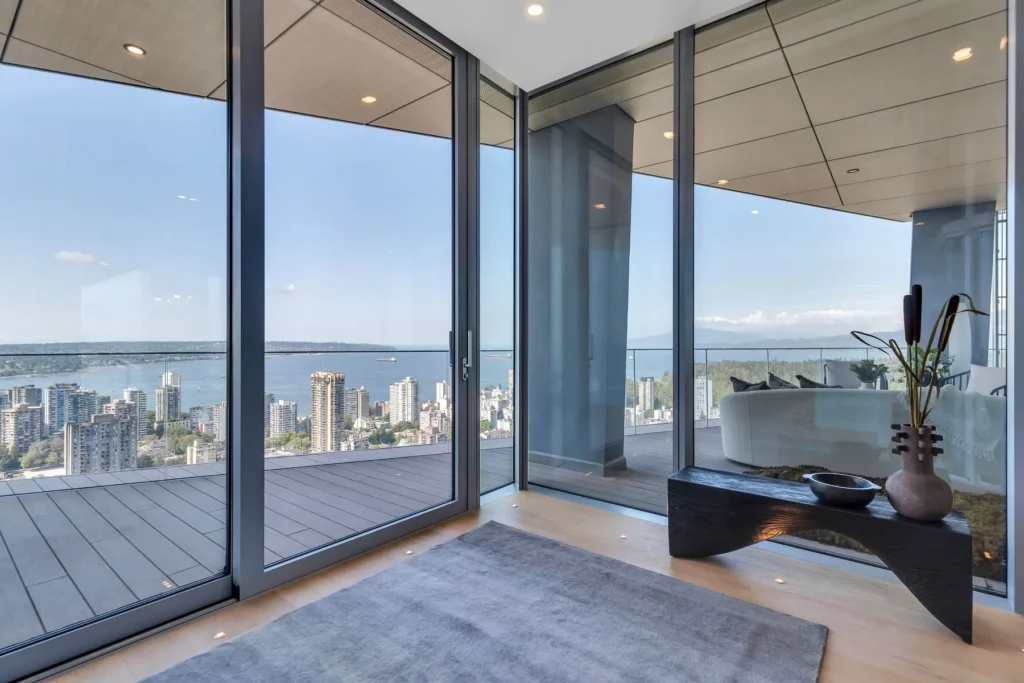
To achieve Kengo Kuma’s vision of seamless harmony between architecture and environment, the penthouse utilizes multi-panel lift-and-slide glass curtain walls that open completely to link the main living areas to the 2,283 square feet of terraced cedar decking.
While these expansive glass frames maximize the panoramic views of Coal Harbour and the North Shore Mountains, large-scale moving glass wall systems introduce significant insulation vulnerabilities within British Columbia’s coastal profile:
[ Extreme Thermal Gradient Shift ] ──► [ Aluminum Tracking Tracks Contract ] ──► [ Microscopic Gasket Gaps ]
                                                                                               │
[ High Monthly Energy Footprints ] ◄── [ HVAC Heat Pumps Forced into Overdrive ] ◄── [ Thermal Insulation Leaks ]
During the winter cycle, cold maritime winds drop exterior temperatures while the interior great room is heated to comfortable parameters. This creates a severe thermal gradient across the large glass panels and aluminum track assemblies. The metal components contract and expand unevenly, which can cause the precision track mechanisms to settle out of absolute millimeter alignment over time.
Once the airtight seals break down, thermal insulation leaks occur, allowing cold air to infiltrate the primary suites and forcing the multi-zone commercial heat pumps into overdrive to maintain internal equilibrium. Furthermore, managing the solar heat load absorbed through these massive expanses of glass during summer weeks requires continuous cooling output, resulting in steep, non-yielding monthly electrical utility bills.
3. Branded Multi-Level Strata Fees: The Escalating Fixed Cash Drain
The primary structural trap that distinguishes ultra-luxury high-rise assets from equivalent freehold estates is the permanent, escalating nature of monthly condominium strata maintenance fees. Real estate brokers push the concept of effortless condo living, emphasizing that you are paying for premium 24/7 concierge services, private inner gardens, soundproof music rooms, and wine tasting rooms.
From a strict capital-efficiency standpoint, high-end strata fees represent a permanent, non-yielding cash drain that erodes your core capital every thirty days, with zero wealth retention:
[ Branded Strata Fee Cash-Burn Model (Alberni PH1 Portfolio) ]
────────────────────────────────────────────────────────────────────────────────
Estimated Monthly Base Fee: ~$4,337 CAD Month / ~$52,000+ CAD Annually
10-Year Cumulative Fixed Outflow Base: ~$520,000+ CAD (Subject to Board Hikes)
────────────────────────────────────────────────────────────────────────────────
This cash drain is completely unrecoverable; it acts as a recurring cash penalty purely to maintain the shared infrastructure of the tower. Because these fees are subject to board inflation adjustments and special infrastructure levies if the building’s central mechanical systems, private glass elevators, or communal wellness facilities require maintenance, your holding cost carries a permanent, upward trajectory that compresses your terminal net asset returns.
4. The Fruition Interior Design Customization Trap: High Sunk-Cost Depreciation
The interior architecture of the Alberni Penthouse showcases an extraordinary selection of bespoke materials exclusive to this unit, featuring custom wavy maple cabinetry, premium Brazilian “Laguna Bay” quartzite countertops, heavy suede wallpapers, and custom-sculpted lighting installations designed by the artists Enzo Catellani and Bocci.
While these premium finishes represent the absolute peak of contemporary luxury taste, from an institutional capital preservation perspective, custom high-design residential interiors carry an aggressive depreciation curve:
The Non-Retainable Value Multiplier: Ultra-high-net-worth investors searching for most expensive apartments in Vancouver do not factor the previous owner’s custom design choices into their purchase valuation equations. Buyers at the $15M+ tier routinely view interior surfaces as highly personalized variables, often stripping out custom wallpapers, millwork, and lighting grids upon handover to match their specific familial, cultural, and aesthetic tastes.
The Sunk Cost Real-World Fact: The multi-million dollar premium you pay upfront for finished interior upgrades by Fruition Design behaves identically to loose luxury furniture—it depreciates rapidly the moment human occupancy begins, representing a significant sunk cost that fails to compound or retain value on the secondary market.
5. Canadian Anti-Speculation Taxation: The Multi-Layered Capital Erosion Matrix
The financial reality of deploying sixteen million dollars of international capital into Vancouver’s premium high-rise sector requires navigating an aggressive, multi-layered regulatory taxation framework explicitly engineered by Canadian authorities to penalize luxury property vacancies and offshore capital storage.
Upon entry, and throughout your holding window, your capital is subject to significant non-refundable fiscal drains that lower your portfolio velocity:
BC Property Transfer Tax (PTT): British Columbia levies a progressive property transfer tax on residential attached acquisitions. For an asset transaction valued at roughly $21.9 million CAD, your non-refundable upfront cash tax obligation scales to a massive fee exceeding $600,000+ CAD. This capital must be settled out of pocket on closing, adds zero functional value to the property, and instantly puts your investment in the red on day one.
The BC Speculation and Vacancy Tax (SVT): Because Vancouver is classified as a designated taxable region under the Speculation and Vacancy Tax framework, if an international investor or offshore corporate entity utilizes the penthouse as a seasonal holiday home or an occasional urban retreat rather than a verified primary residence, the provincial revenue authority extracts up to 2.0% of the property’s assessed market value every calendar year.
The Federal Underutilized Housing Tax (UHT): Combined with the provincial SVT, Canada’s federal UHT extracts an additional 1.0% annual surcharge on underutilized high-end properties owned by non-citizens, creating a significant multi-hundred-thousand-dollar annual cash drain purely to hold the deed to an idle asset.
6. Comprehensive Structural Matrix: The Sales Presentation vs. Valuation Reality
To ensure your luxury property acquisitions are guided by cold investment logic rather than romantic real estate storytelling, carefully evaluate this direct contrast between what the broker’s marketing brochure promises and the real-world operational reality of the Alberni Penthouse:
| The Hyper-Luxury Feature | The Broker’s Glamorous Presentation | The Real-World Operational & Financial Reality |
| $16,000,000 Purchase Price | An elite trophy skyhome indicating the absolute peak of Canadian architectural success and prestige. | Extreme capital lockup with heavy asset illiquidity and high annual fixed holding costs. |
| Kengo Kuma Sculptural Form | A defining landmark structural masterpiece fused seamlessly with the surrounding environment. | High ongoing strata maintenance fees and permanent dependence on shared tower mechanical infrastructure. |
| Glass-Bottom Rooftop Pool | A magical statement pool asset designed to allow elegant city light viewing while floating. | High engineering risk regarding joint seal degradation, building sway stresses, and moisture leakage. |
| Three Huge Outdoor Terraces | Over 2,283 gross square feet of open-air cedar decking built for year-round elite social hosting. | Frontline exposure to mountain wind loads, requiring specialized winterization and drainage management. |
| Bespoke Fruition Interior Art | Custom Laguna Bay quartzite counters and Bocci lighting installations crafting a true sanctuary. | High material depreciation curve; future secondary buyers will likely gut the space to match their taste. |
| Primary Suite Outdoor Bath | An ultra-luxurious retreat featuring an outdoor soaker tub overlooking Coal Harbour vistas. | High tracking and seal contraction liabilities along the glass balcony gates during winter freezes. |
7. The Apex Illiquidity Trap: The Frozen Secondary Market of Vancouver Penthouses
While the general residential real estate market across British Columbia shows steady transaction speed and reliable capital liquidity for mid-market single-family homes and urban condos, those dynamic market rules apply exclusively to standard properties. The exact millisecond a single vertical asset crosses the fifteen million dollar threshold in a high-rise format, it exits the fluid real estate market completely and enters an incredibly sticky, frozen asset layer.
▲ [ $16M+ Apex Layer: Alberni Penthouse ] ──► Buyer Pool: Handful of Local & Global Billionaires (Years to Exit)
■ [ $3M - \$6M Layer: Standard Urban Luxury Condos ] ──► Buyer Pool: Affluent Domestic Corporate Elite (Moderate Speed)
● [ Under \$1.5M Layer: Mass Market Condos & Towns ] ──► Buyer Pool: General Public & General Retail Investors (High Velocity Trading)
If your primary business operations, international ventures, or global equity portfolios encounter an unexpected requirement for rapid liquidity, you cannot easily or quickly convert a custom 4,364 square foot modern contemporary penthouse into liquid cash. The absolute pool of active buyers possessing the un-leveraged capacity to finalize a sixteen-million-dollar residential cash transaction—while willingly absorbing Canada’s modern anti-flipping and foreign ownership restrictions—is exceptionally small.
A trophy property of this magnitude frequently sits on the private luxury registry for twelve, twenty-four, or thirty-six months before discovering a buyer whose personal aesthetic taste aligns with the building’s specific sculptural configuration. If changing economic conditions force you to execute a rapid exit from the asset, you will be systematically forced to accept an aggressive capital markdown just to attract an opportunistic cash buyer capable of closing a complex real estate transaction quickly.
8. The Staggering Financial Opportunity Cost of Sixteen Million Dollars of Dead Capital
The final, and most compelling economic argument against deploying your liquid wealth into this Alberni penthouse is the profound opportunity cost of capital. When you lock away sixteen million dollars of liquid wealth into a single, non-income-generating primary residential asset, you are permanently removing that capital from the global financial landscape where it could be working to produce highly secure, compounding cash flows.
Let us run a highly objective, conservative financial comparison of how that exact block of wealth behaves over a standard five-year investment holding window when deployed into active, liquid market instruments versus sitting inside a dead luxury residential asset:
+-----------------------------------+-----------------------------------+
| \$16M Capital Sunk in Condo Asset | \$16M Capital Deployed in Markets  |
+-----------------------------------+-----------------------------------+
| Generates \$0 in passive cash flow.| At a conservative 6% compounding  |
| Accumulates massive annual bills  | annual yield, generates over      |
| for strata fees, HVAC, & taxes.    | \$960,000 in cash *every year*.    |
+-----------------------------------+-----------------------------------+
Over a five-year investment window, a professional, diversified corporate portfolio worth sixteen million dollars will effortlessly produce over four million eight hundred thousand dollars in clean, highly liquid compounding profit while maintaining absolute capital mobility. Conversely, the Alberni penthouse will have actively drained hundreds of thousands of additional dollars out of your pocket to cover high municipal property taxes, substantial electrical utility bills to power the suspended pool and industrial dehumidification, escalating monthly strata service charges, and potential vacancy penalties, while its final secondary market resale value remains completely dependent on the unpredictable high-end property cycles of British Columbia. From a standpoint of raw wealth optimization and asset protection, spending this scale of money on a single home is an inefficient use of capital.
Institutional Portfolio Verdict & Strategy
Critical Rejection Criteria
The Fluid Capital Allocator: If your investment strategy relies on rapid capital mobility, high asset velocity, and the capacity to exit fixed property positions within a single fiscal quarter.
The Net-Yield Purist: If you calculate portfolio performance through the strict math of opportunity cost, capital efficiency, and upfront closing transaction taxation.
The Low-Maintenance Maverick: If you find managing suspended glass-bottom structural pool frameworks, high-capacity high-rise air-handling mechanics, and complex multi-panel alignment calibrations operationally annoying.
Justifiable Investment Parameters
The Sovereign Balance Sheet: Meaning a capital lockup of this magnitude represents a minor fraction of a single percentage point of your overall corporate or familial wealth footprint.
The Architecture Art Collector: If holding an uncompromised, flagship piece of West Coast modernist architecture by Kengo Kuma represents an essential personal legacy or status milestone.
The Turnkey Urban Resident: If you intend to utilize the property as a permanent family foundation for decades, fully utilizing the private double garages, wine lockers, and 270-degree panoramic views while completely neutralizing short-term liquidity concerns.
Pre-Acquisition Directive: Before Contacting REM
Prior to initiating formal contract reviews, scheduling private site inspections, or outlining capital settlement frameworks for the Alberni Penthouse, you must protect your global capital by executing a rigorous independent audit:
Rooftop Suspended Pool Structural Integrity Audit: Deploy specialized marine civil engineers to extract material analysis reports from the pool’s concrete frame and execute laser-alignment checks on the glass-bottom structural joints against high-altitude building sway metrics.
Tower Shared Mechanical Infrastructure Evaluation: Request a comprehensive legal review of the strata corporation’s current reserve fund accounts and multi-year mechanical upgrade schedules to ensure no massive special assessments are pending for shared tower cooling structures or glass curtain walls.
Cross-Border Fiscal Optimization Review: Coordinate with your dedicated tax advisory office to calculate the definitive net impact of British Columbia’s progressive property transfer tax brackets and recurring speculation vacancy metrics against your global capital mobility targets.
To request the complete architectural layout blueprints, to review official building zoning compliance data summaries, or to arrange an independent private tour of the penthouse grounds, contact REM. Ensure you approach the negotiation table with a completely clear, realistic perspective on the long-term operational and financial realities of ultra-luxury vertical asset ownership.
This walkthrough tour of Alberni by Kengo Kuma visualizes the high-end materials, organic curved lines, and distinct architectural features analyzed in this asset critique, highlighting how the property integrates with Vancouver’s downtown skyline.

Moses Oyong is a Real Estate Growth Marketing Manager and PropTech specialist with over a decade of closing residential and commercial deals worth over 200 million across Nigeria and international markets. Known for engineering AI-driven workflows that delivered a 69% uplift in sales targets and cut lead response times by 85%, Moses bridges the gap between high-performance marketing, land law, and technology to help investors, developers, and first-time buyers make confident, informed property decisions in an increasingly digital world.