The world of luxury real estate has long been synonymous with grandeur, exclusivity, and a touch of indulgence. For decades, the metric of elite property ownership was defined by excess: soaring square footage, rare imported marbles shipped across oceans, and massive mechanical HVAC networks keeping cavernous estates chilled against regional climates.
But in today’s environmentally conscious landscape, a profound shift is occurring. Discerning buyers, institutional wealth managers, and visionary developers are increasingly seeking something far more refined: sustainable sophistication.
This paradigm shift begs a critical question that sits at the intersection of capital preservation and ecological stewardship: can luxury real estate truly be eco-friendly?
The answer is a resounding yes.
In fact, sustainable features are no longer just nice-to-haves or niche marketing bullet points; they are quickly becoming the definitive hallmark of modern luxury living. True opulence is no longer about how much energy a property can consume, but how intelligently it interacts with its environment. As global capital increasingly flows toward forward-thinking, resilient assets, the integration of sustainability and luxury has transformed from an idealistic vision into an institutional mandate.
Part 1: The Macro Foundations of Eco-Luxury
To understand why sustainable sophistication is sweeping through the upper echelons of the global property market, we must look beyond the aesthetics and analyze the structural, cultural, and financial forces driving this transformation.
                  THE TRIPLE-WIN OF ECO-LUXURY

  [Regulatory Compliance] ---> [Lower Decarbonization Risk] ---\
  [Discerning Client Demand] -> [Premium Rental & Sale Alpha]  X ---> [Long-Term Portfolio Safety]
  [Advanced Building Tech] --> [Drastically Reduced OpEx]  ---/
1. Aligning Values with Global Capital Movement
Today’s luxury real estate buyer is deeply environmentally aware. This is a cohort composed of global entrepreneurs, tech visionaries, and multi-generational wealth stewards who understand the profound impact their choices have on the planet. They are actively drawn to properties that mirror their personal values and corporate environmental goals.
Sustainable luxury real estate allows these individuals to indulge in an elite lifestyle without compromising their commitment to a healthy planet. It offers a rare harmony where high design meets environmental consciousness, turning a private residence into an active statement of ecological leadership.
2. A Bold New Definition of Luxury
Luxury is no longer just about sheer square footage and opulent, resource-heavy finishes. It’s about living well, and that concept now extends to living responsibly.
The modern elite value wellness, clean air, pure water, and architectural longevity. Sustainable features like advanced energy efficiency, closed-loop water conservation, and the innovative use of bio-derived or recycled materials demonstrate a sophisticated, forward-thinking approach to living that deeply resonates with discerning buyers. A property that generates its own power and cleans its own water is the ultimate modern expression of self-sovereignty and architectural independence.
3. Enhanced Property Value and Risk Mitigation
Sustainable features aren’t just good for the environment; they’re phenomenal for your investment portfolio. Numerous global studies have shown that residential and commercial properties boasting verified green credentials (such as LEED Platinum, BREEAM Outstanding, or localized net-zero certifications) command higher resale premiums and enjoy faster absorption rates in competitive markets.
Furthermore, eco-friendly engineering yields drastically lower operating costs, protecting asset owners from rising municipal utility fees. From a risk-management perspective, investing in sustainable luxury is a brilliant long-term play: it insulates your capital from future carbon taxes, tightening building emissions regulations, and the physical threats of climate volatility.
Part 2: The Hallmarks of Sustainable Luxury Real Estate
So, what exactly defines sustainable luxury real estate in the modern era? It goes far beyond simply mounting a few solar panels on a traditional roof or installing a smart thermostat. True eco-friendly sophistication requires a holistic, ground-up reimagining of how a building is structured, constructed, and operated over its lifecycle.
+-------------------------------------------------------------------------+
|                  THE CORE PILLARS OF SUSTAINABLE DESIGN                 |
+-------------------------------------------------------------------------+
| [Bioclimatic Architecture] ---> Maximizes natural light & wind flow     |
| [Renewable Microgrids]     ---> Decentralized solar, wind, & geothermal |
| [Circular Water Management]--> Rainwater capture & greywater filtration |
| [Regenerative Materials]   ---> Low-carbon, non-toxic, local sourcing    |
| [Holistic Wellness Tech]   ---> Advanced air purification & circadian light|
+-------------------------------------------------------------------------+
1. Bioclimatic Architecture and Smart Design
The first line of defense in sustainable luxury is smart, passive design. Bioclimatic design principles utilize the natural elements of a specific geographic location—such as sunlight, prevailing wind patterns, and local topography—to dramatically reduce a building’s mechanical energy consumption.
This involves features such as:
Optimal Solar Orientation: Positioning the property to maximize natural daylighting in winter while minimizing intense thermal gain during peak summer hours.
High-Performance Thermal Envelopes: Utilizing advanced insulation materials and triple-glazed smart glass that tints dynamically based on sunlight intensity, keeping indoor temperatures perfectly regulated.
Natural Cross-Ventilation: Engineering internal air pathways that draw cooling breezes through the living spaces, eliminating the need for continuous air conditioning.
2. Decentralized Renewable Energy Sources
Modern eco-luxury estates operate as independent microgrids. Solar photovoltaic arrays are no longer clunky additions; they are seamlessly integrated directly into the building’s architecture via solar roof tiles and energy-generating glass facades.
               THE EXTRACTION-FREE HVAC CYCLE

  [Stable Earth Temp: ~15°C] ---> [Geothermal Heat Pump] ---> [Winter Heating / Summer Cooling]
              ^                                                            |
              \---------------------- [Heat Exchange Return] <-------------/
In addition to solar, deep-earth geothermal heating and cooling systems tap into the stable temperatures beneath the earth’s surface, providing whisper-quiet, incredibly efficient climate control without burning a single fossil fuel. These advanced technologies not only shrink a property’s carbon footprint to absolute zero but also deliver complete energy independence, ensuring the estate remains fully operational during municipal grid failures.
3. Circular Water Conservation Systems
Water is one of our planet’s most precious resources, and sustainable luxury real estate treats it with the utmost respect. Elite eco-friendly properties deploy advanced, multi-tiered water management networks.
Rainwater harvesting systems collect, filter, and store thousands of gallons of water in architectural underground cisterns for use in automated, drip-irrigation networks. Concurrently, on-site greywater filtration systems safely treat water from showers and sinks, recycling it for secondary flushing and landscape maintenance. Outside, traditional water-heavy lawns are replaced with beautiful, drought-resistant native landscaping that thrives naturally in the local climate, significantly reducing overall water demand.
4. Regenerative and Locally Sourced Materials
The materials used to build a luxury home tell a story of origin, craftsmanship, and environmental responsibility. Sustainable sophistication embraces materials that have low embodied carbon and are harvested through ethical, circular supply chains.
| Luxury Material Class | Traditional Sourcing | Sustainable Alternative |
| :--- | :--- | :--- |
| **Structural Frame** | Carbon-heavy structural steel & virgin concrete. | Cross-Laminated Timber (CLT) & green fly-ash concrete. |
| **Primary Facades** | Imported, quarried stone shipped globally. | Locally quarried heritage stone & rammed earth. |
| **Interior Flooring** | Old-growth exotic hardwoods. | Rapidly renewable bamboo & reclaimed historic timber. |
| **Finishes & Paints** | High-chemical, high-VOC oil-based paints. | Natural lime plasters & zero-VOC plant-derived stains. |
By choosing materials that are either deeply renewable or lovingly salvaged from historical structures, architects can create a highly textured, warm aesthetic that simply cannot be replicated by mass-produced synthetic alternatives.
5. Healthy Living Environments and Biophilic Wellness
True luxury encompasses deep, holistic well-being. Sustainable real estate prioritizes the internal health of its occupants by meticulously controlling indoor air, light, and sound quality.
By banning high-VOC (Volatile Organic Compound) paints, synthetic adhesives, and toxic chemical sealants from construction, eco-luxury homes maintain pure, toxin-free indoor air. This is supported by medical-grade energy recovery ventilation (ERV) systems that continuously flush the home with fresh, filtered outdoor air while retaining internal thermal energy.
Furthermore, biophilic design—the intentional integration of nature into the built environment via living green walls, indoor water features, and expansive glass vistas—harmonizes your physiological rhythms, lowering stress levels and boosting cognitive clarity.
Part 3: The Global Archetypes of Sustainable Luxury
Sustainable luxury real estate isn’t confined to a single architectural style, climate, or location. It is a flexible philosophy that can be applied to various settings, from ultra-dense urban financial centers to fragile coastal environments and pristine mountain ranges.
       GEOGRAPHIC EXPRESSIONS OF ECO-LUXURY

  [Urban Centers]   ---> High-Rise Sanctuaries (Vertical Forests, Co-Gen Grids)
  [Coastal Edges]   ---> Regenerative Modern Masterpieces (Pilings, Tidal Protection)
  [Wilderness Hubs] ---> Rustic Net-Zero Retreats (Geothermal, Carbon-Negative Timber)
1. Modern Masterpieces: High-Tech Transparency
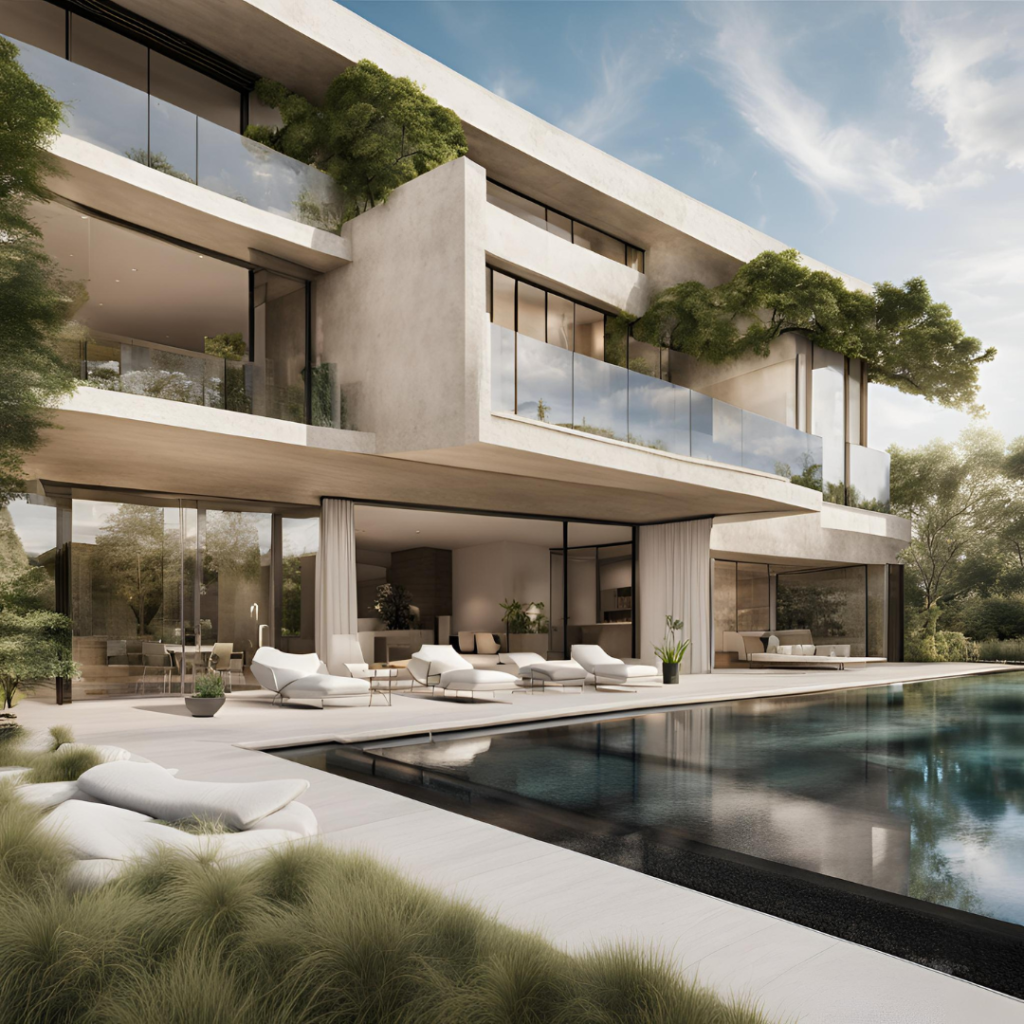
Sleek, contemporary homes defined by clean lines, expansive glass walls, and open-floor living plans integrate seamlessly with cutting-edge energy-efficient technologies.
In these structures, the massive glass panels are engineered with low-emissivity coatings and microscopic photovoltaic layers that generate electricity while blocking harmful UV rays. Automated building management systems (BMS) utilize predictive AI to constantly adjust window shading, lighting levels, and underfloor climate zones based on real-time weather tracking, ensuring the home operates at peak efficiency without requiring any manual effort from the owner.
2. Rustic Retreats: Harmonizing with the Wilderness
Nestled in breathtaking, sensitive natural landscapes—such as alpine valleys, dense coastal forests, or arid desert canyons—luxury eco-cabins and rustic retreats show how architecture can respect its surroundings.
These properties are often built entirely from locally sourced timber and non-toxic rammed earth, allowing them to visually blend into the local geography. Powered by discreet geothermal loops and protected by advanced rainwater harvesting systems, these wilderness sanctuaries operate entirely off-grid. They provide complete luxury and security in remote corners of the world while leaving absolutely no structural scar on the local ecosystem.
3. Urban Sanctuaries: Vertical Eco-Ecosystems
In the world’s bustling metropolises, sustainable luxury takes the form of vertical residential communities. Modern high-rise luxury towers are increasingly incorporating sprawling green roofs, cascading vertical gardens, and advanced tri-generation power plants that produce electricity, heating, and cooling right on-site.
These vertical eco-ecosystems dramatically reduce the overall carbon footprint of urban living while offering residents a clean, quiet oasis high above the chaotic city streets below.
Part 4: Navigating the Complexities of the Eco-Luxury Market
While the benefits of sustainable luxury real estate are clear, executing an eco-friendly property acquisition or development requires navigating a unique set of technical, legal, and operational hurdles. To protect your capital, you must approach the market with a rigorous framework for due diligence.
1. Verifying Green Credentials and Combatting Greenwashing
As demand for sustainable properties continues to soar, the real estate market has seen an unfortunate rise in “greenwashing”—the practice of making misleading or exaggerated claims about an asset’s environmental benefits. A developer might market a villa as “eco-friendly” simply because it features energy-saving LED lightbulbs and a small herb garden.
To protect your capital, always demand verified third-party documentation. Look for properties backed by established international certification bodies:
+------------------------------------------------------------------------+
|                    GLOBAL GREEN CERTIFICATION METRICS                  |
+------------------------------------------------------------------------+
|  LEED (Platinum/Gold):     Assess lifecycle energy, water, & materials. |
|  BREEAM (Outstanding):     Rigorous European standard for asset eco.   |
|  WELL Building Standard:   Measures occupant health & air purity.      |
|  Edge Certification:       Focuses on embodied carbon in frontier spaces.|
+------------------------------------------------------------------------+
If a property lacks formal certification, engage an independent green building auditor to verify the insulation values, operational efficiency of the HVAC systems, and the sourcing origins of the primary building materials before entering a contract.
2. Assessing Infrastructure Resilience and Geopolitical Factors
Sustainable sophistication requires analyzing how a property will perform twenty to thirty years down the line. When looking at high-yield luxury real estate in emerging markets or fast-developing maritime logistics hubs, you must evaluate local public infrastructure resilience.
If you are purchasing a luxury estate near an economic driver like a new deep-sea port project, verify that the area’s master plan includes sustainable zoning laws, reliable renewable energy connections, and robust municipal flood defense systems. An eco-friendly home can only maintain its value if the surrounding community infrastructure is built to withstand long-term environmental changes.
Part 5: The Strategic Execution Framework
Building an eco-friendly property portfolio requires moving past standard buyer habits and adopting a proactive, institutional approach to procurement and management. Use this operational blueprint to guide your next acquisition:
1. Execute a Comprehensive Energy and Lifecycle Audit
Before finalizing the purchase of an existing luxury estate, require a full lifecycle energy audit. This assessment uses thermal imaging cameras to check for hidden energy leaks in the property’s envelope and tests the operational efficiency of all onboard power systems. Understanding an asset’s baseline energy demand allows you to accurately forecast future utility costs and calculate the potential return on investment for any planned eco-friendly upgrades.
2. Optimize Local Tax Incentives and Subsidies
Governments worldwide are increasingly using fiscal policy to encourage green construction. Many forward-thinking jurisdictions offer substantial tax credits, property tax abatements, and low-interest financing options for buildings that hit strict net-zero performance targets. Have your financial team review local regulations to ensure you capture every available subsidy, lowering your initial capital expenditure and boosting your net yields.
3. Establish Specialized Green Property Management Protocols
An eco-luxury property requires specialized operational oversight. Traditional property managers may not understand how to properly service an advanced geothermal heat pump, manage a greywater filtration system, or maintain the specialized software running a smart building management system.
+---------------------------------------------------------------------+
|                  SUSTAINABLE ASSET MANAGEMENT FLOW                  |
+---------------------------------------------------------------------+
| [Eco-Luxury Property Asset] ---> [Specialized Technical Oversight] |
|                                             |                       |
|                                             v                       |
| [Maintained Capital Value]  <--- [Optimized Lifecycle Efficiency]   |
+---------------------------------------------------------------------+
Ensure your property management team is fully trained to manage your estate’s sustainable infrastructure, preserving both its operational efficiency and long-term capital value.
The Verdict: Investing in a Resilient, Elegant Future
By intentionally choosing sustainable luxury real estate, you are doing far more than purchasing a beautiful piece of architecture; you are making a calculated investment in a resilient, elegant future. You are taking a proactive step to shrink your environmental footprint while anchoring your wealth to high-performing, future-proof assets that contribute to a healthier planet for generations to come.
                        THE INVESTMENT TRAJECTORY

  [ Traditional Excess Real Estate ]      [ Sustainable Luxury Property ]
  - High carbon exposure risk            + Insulation from emissions penalties
  - Volatile, rising utility overhead   + Self-sovereign power generation
  - Accelerating physical depreciation   + Long-term structural durability
Finding the perfect sustainable luxury property requires deep industry expertise. Here at REM, we understand the intricate nuances of both high-end real estate and sustainable engineering. Our team of dedicated professionals is uniquely equipped to help you navigate the global market, identify verified eco-friendly opportunities, and secure properties that perfectly align with your refined aesthetic and personal values.
Are you ready to explore the future of elite living? Whether your goal is a striking contemporary smart home with ocean views, a quiet net-zero mountain sanctuary, or a high-yield commercial stake in an emerging green logistics hub, sustainable luxury offers an exceptionally sophisticated way forward.
Contact REM today for Eco-Friendly Luxury Real Estate investing opportunities. Let us help you discover your next landmark asset—a property that showcases your exceptional taste, protects your capital, and honors your commitment to a sustainable world. Let’s make it happen!

Moses Oyong is a Real Estate Growth Marketing Manager and PropTech specialist with over a decade of closing residential and commercial deals worth over 200 million across Nigeria and international markets. Known for engineering AI-driven workflows that delivered a 69% uplift in sales targets and cut lead response times by 85%, Moses bridges the gap between high-performance marketing, land law, and technology to help investors, developers, and first-time buyers make confident, informed property decisions in an increasingly digital world.