
Imagine sinking into a plush armchair, bathed in the warm glow of a bedside lamp that adjusts to your preferred setting.
Soft music plays faintly in the background, a melody curated just for you.
This isn’t a scene from a science fiction film; it’s a glimpse into the future of hospitality, a future shaped by the magic of technology.
And for astute investors, this future symphony presents a captivating opportunity: the world of hotel room investment.
How Technology is Serenading a New Era of Hotel Room Investment
For decades, the hospitality industry has thrived on providing guests with a comfortable haven, a refuge from the everyday.
But today’s travelers are a discerning bunch.
They crave not just comfort, but an experience – an experience tailored to their unique needs and preferences.
This is where technology steps onto the stage, playing a pivotal role in transforming the guest experience and, consequently, the landscape of hotel room investment.
Let’s delve into the harmonious blend of technology and hospitality, exploring how it’s shaping the future for hotel room investors:

The Enchanting Melody of Personalization
Imagine a world where your hotel room anticipates your desires.
With the help of artificial intelligence (AI), guest preferences can be gleaned from past stays, online bookings, and even social media.
As you enter your room, the temperature adjusts to your liking, the lighting dims to a relaxing level, and your favorite music begins to play.
This is the magic of AI-powered personalization, a feature that can significantly enhance guest satisfaction and loyalty, ultimately driving repeat business – a beautiful melody for your hotel room investment.
The Seamless Symphony of Contactless Solutions
Gone are the days of long queues at the reception.
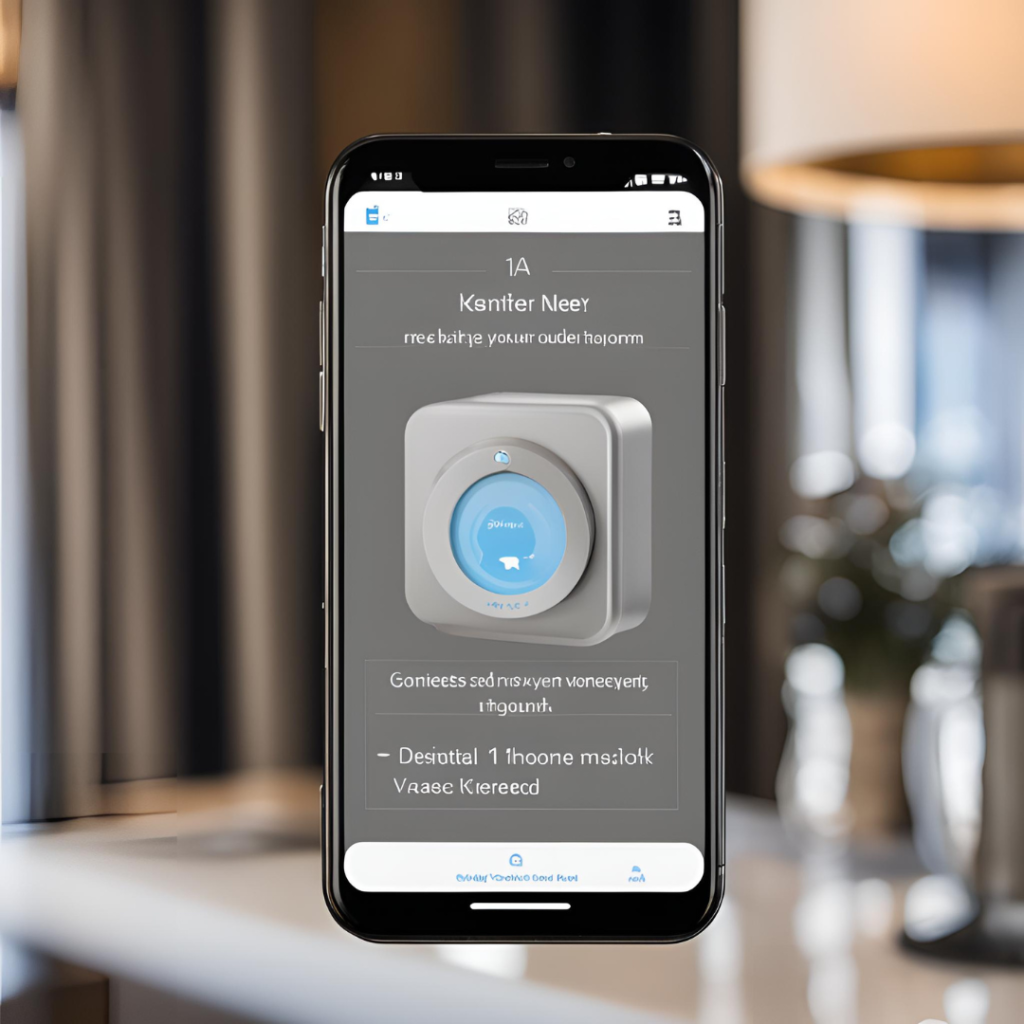
With contactless technology taking center stage, guests can now check-in and check-out seamlessly through their smartphones.
Digital room keys eliminate the need for physical cards, while voice-activated assistants take care of adjusting thermostats, ordering room service, or playing movies.
This symphony of contactless solutions not only streamlines the guest experience but also promotes hygiene and safety, a crucial element in today’s travel landscape.
The Calming Rhythm of Smart Amenities
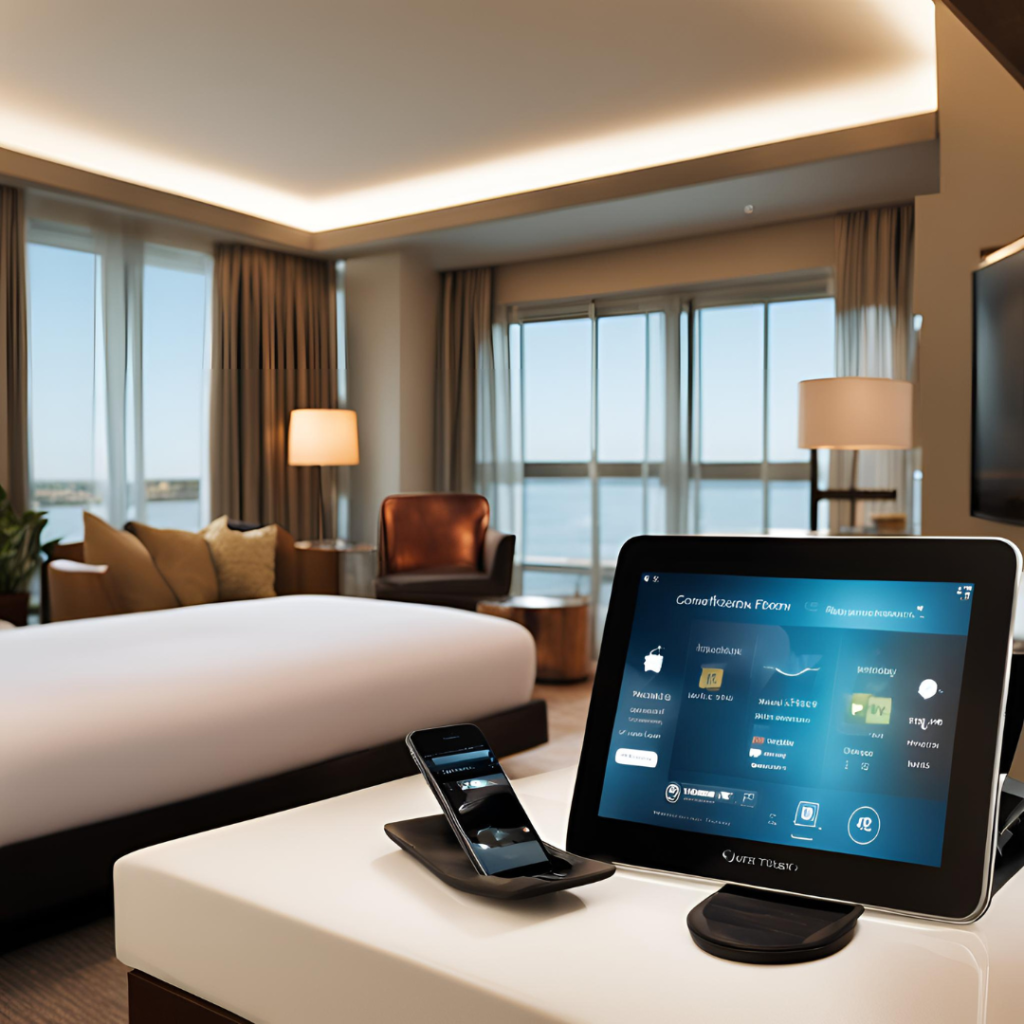
Step into a smart bathroom with a mirror that displays the weather forecast or a high-tech showerhead that remembers your preferred water pressure.
Smart TVs featuring personalized recommendations and in-room tablets for controlling everything from lighting to housekeeping – these are just a few examples of the smart amenities that are transforming hotel rooms into havens of comfort and convenience.
Investing in hotel rooms that embrace smart technology showcases your commitment to providing an unparalleled guest experience, a quality that resonates deeply with modern travelers, thus harmonizing with your investment goals.

The Uplifting Chorus of Guest Engagement
Technology doesn’t have to be impersonal.
Chatbots powered by AI can answer guest queries promptly and efficiently, while interactive platforms can facilitate communication between guests and hotel staff.
Guests can use these platforms to request additional amenities, book spa treatments, or simply share their feedback.
This two-way communication fosters a sense of connection and allows hotels to address guest needs in real-time, leading to higher satisfaction and positive online reviews – a chorus of praise that can significantly impact your hotel room investment’s success.

The Serene Soundscape of Data-Driven Decisions
The beauty of technology lies in its ability to collect and analyze data.
Hotel room investors can leverage this data to gain valuable insights into guest preferences, occupancy rates, and revenue trends.
This information can be used to optimize pricing strategies, personalize marketing efforts, and identify areas for improvement within the hotel.
Data becomes the maestro, conducting the symphony of your hotel room investment, ensuring it remains profitable and competitive in the ever-evolving hospitality landscape.
Investing in the Future: A Harmonious Blend
As you can see, technology is not just transforming the guest experience; it’s creating a symphony of opportunity for hotel room investors. By embracing these technological advancements, you can ensure your real estate investment stays relevant, caters to the exact needs of modern travelers, and delivers exceptional returns.
Investing in the future of hospitality requires a harmonious blend of technology and layout design. To ensure your hotel room investment sings its own success story, contact REM today.
Click here to learn more about how we can elevate your hotel rooms and turn them into guest havens that resonate with the future of hospitality.
The Operational Efficiency Paradigm – Slashing OpEx Through Proptech
For the sophisticated hotel room investor, the integration of advanced property technology (proptech) isn’t just about impressing guests with high-tech novelties; it is a calculated operational strategy designed to maximize net operating income (NOI). In traditional hospitality models, energy consumption and manual labor represent the two largest drains on an asset’s profitability. Traditional hotels routinely waste millions of dollars heating or cooling empty rooms simply because housekeeping staff lack real-time visibility into occupancy patterns.
                  THE CAPITAL PRESERVATION ENVELOPE

  [Unoccupied Room State] ---> [IoT Sensors Trigger Shutdown] ---\
  [Harsh Peak Utility]    ---> [Automated Micro-Grid Routing]  X ---> [Optimized Asset Yields]
  [Predictive Maintenance]--> [Pre-Emptive Machine Service]    ---/
Smart hotels eliminate this operational waste through the deployment of interconnected Internet of Things (IoT) sensors and smart occupancy management software. When a guest steps out of their suite for a business meeting or a city tour, the room’s central hub instantly communicates with the building management system (BMS).
The system automatically lowers the HVAC output, switches off unnecessary lighting networks, and seals the motorized window blinds to minimize solar heat gain. This automated process can slash a property’s overall energy consumption by up to 30%, directly lowering utility overhead and increasing the net monthly yield distributed to individual room deed holders.
| Hotel Operational Matrix | Legacy Property Management | Next-Gen Smart Tech Stack |
| :--- | :--- | :--- |
| **Energy Management** | Continuous manual settings; high waste. | Automated IoT climate scaling based on occupancy. |
| **Maintenance Workflows**| Reactive repairs after an asset breaks. | Predictive diagnostics tracking system health. |
| **Labor Allocation** | Manual check-ins and paper routing. | Seamless digital entry keys and AI guest service. |
| **Repricing Velocity** | Rigid, seasonal manual rate updates. | Real-time algorithmic daily rate adjustments. |
Furthermore, smart hotel infrastructure introduces the power of predictive maintenance. Instead of waiting for a central air conditioning unit to fail mid-lease—which triggers emergency repair bills and causes a negative guest review—integrated diagnostic sensors constantly monitor equipment performance.
The software flags subtle drops in mechanical efficiency long before a breakdown occurs, allowing maintenance teams to service the machine during scheduled down-periods. This predictive approach extends the lifespan of the building’s physical components, protects the asset owner from unexpected capital calls, and ensures the room remains a highly productive income vehicle.
Dynamic Algorithmic Repricing – Capitalizing on Market Volatility
In an era defined by fluctuating inflation and currency shifts, traditional real estate models that rely on long-term fixed leases carry significant risk. If local operating costs or taxes spike midway through a multi-year commercial lease, the property owner’s real returns are severely compressed.
Hotel room investments completely bypass this vulnerability by utilizing the asset market’s most agile revenue model: real-time algorithmic repricing.
               THE DYNAMIC PRICE EXTRAPOLATION

  [Local Event/Demand Surge] ---> [AI Analytics Scrapes Demand] ---> [Instant ADR Adjustment]
               ^                                                                |
               \-------------------- [Maximized Revenue per Room] <-------------/
By connecting the hotel’s property management software directly to global distribution systems (GDS) and big-data analytics platforms, room rates are automatically recalibrated multiple times a day. The algorithm constantly monitors local event schedules, airport passenger arrivals, competitor pricing matrices, and ambient weather patterns to calculate the exact market price for every room key.
+-------------------------------------------------------------------------+
|                        THE REVENUE OPTIMIZATION MODEL                   |
+-------------------------------------------------------------------------+
| [Legacy Fixed Room Rate] ---> Misses pricing upside during peak surges  |
|                                         |                               |
|                                         v                               |
| [Dynamic AI Rate Scale]  ---> Captures immediate pricing premiums in real-time|
+-------------------------------------------------------------------------+
When a sudden surge of corporate travelers or tourists hits a specific city district, the platform instantly increases the Average Daily Rate (ADR) to maximize revenue. Conversely, during low-occupancy periods, the system can dynamically deploy targeted digital promotions to keep occupancy stable. This exceptional pricing agility allows hospitality assets to outpace inflation in real time, leaving traditional real estate models far behind.
Fractional Tokenization and the Liquidity Revolution
The historic barrier to entering the institutional luxury real estate market has always been the immense capital requirement. Historically, owning a premium asset in a top-performing commercial district required deep capital reserves, extensive corporate legal networks, and complex financing approvals.
Modern proptech has completely transformed this model by introducing fractional tokenization and deeded room syndications.
This structural shift brings unprecedented liquidity and diversification options to your real estate portfolio. Instead of concentrating a massive amount of capital into a single residential property in an isolated local market, you can now seamlessly distribute your wealth across multiple branded hotel units in top global travel destinations like Dubai, London, Lagos, or Miami.
This borderless approach spreads your risk across different economic regions and currency zones, protecting your capital from localized market corrections while ensuring you collect steady, hands-off passive returns.
Designing for the Next Generation of Wealth Creators
To secure sustained asset appreciation over the long term, a hospitality property must align with the cultural values, lifestyle expectations, and communication styles of the next generation of wealth creators.
The rising global cohort of tech entrepreneurs, digital nomads, and corporate leaders view luxury through an entirely new lens. To these buyers, luxury is defined by seamless digital integration, environmental responsibility, and high-quality wellness design.
+-----------------------------------------------------------------------+
|                    THE MODERN TRAVELER AMENITY WEIGHT                 |
+-----------------------------------------------------------------------+
|  Outdated Premium Focus:     |  The 2026 Tech-Wellness Standard:      |
|  - Heavy, dark wood decor    |  + Smart biophilic air management      |
|  - Formal check-in counters  |  + High-speed fiber-optic mesh networks|
|  - Rigid, isolated room plans|  + Integrated, ergonomic flexible zones|
+-----------------------------------------------------------------------+
Properties engineered to incorporate biophilic lighting profiles, low-emission materials, and advanced air purification setups see immediate demand from health-conscious modern professionals.
When a hotel room functions effortlessly as both an ergonomic remote workspace and a restorative personal sanctuary, it naturally maintains peak occupancy levels year-round. By investing in real estate assets that proactively integrate these technological and wellness designs, you ensure your portfolio remains highly relevant, resilient, and primed for superior capital growth across the decades.
The Digital Horizon of Wealth Preservation
The global hospitality market is undergoing a profound, irreversible transformation. As old-school, resource-heavy building designs steadily lose their appeal and rigid leasing structures struggle to adapt to volatile inflation, the future belongs to agile, tech-driven, and highly optimized vertical assets.
                        THE PORTFOLIO CHRONICLES

  [ Legacy Commercial Assets ]           [ The Tech-Optimized Hotel Deed ]
  - Exposed to rigid long-term lease caps + Real-time daily adaptive pricing
  - High utility waste & manual overhead + Automated energy saving via IoT sensors
  - Slow, illiquid transaction closures  + Fluid, borderless fractional ownership
Stop allowing legacy real estate models to restrict your capital growth and expose your wealth to inflation. Step into the digital future of property optimization, leverage the operational efficiencies of modern hospitality proptech, and construct an elite, hands-off global income stream that stands the test of time.
How are you preparing your real estate portfolio for the future? Are you ready to capitalize on the high margins of smart, IoT-driven hotel suites, or are you exploring fractional entries into global hospitality microgrids? Let’s map out your tech-driven investment strategy in the comments below.
If you found this future-focused asset guide valuable, make sure to subscribe to the RealEstateMoses Newsletter for regular insider investment alerts, and share this masterclass with your network of fellow visionaries. Invest with clarity, build with conviction.

Moses Oyong is a Real Estate Growth Marketing Manager and PropTech specialist with over a decade of closing residential and commercial deals worth over 200 million across Nigeria and international markets. Known for engineering AI-driven workflows that delivered a 69% uplift in sales targets and cut lead response times by 85%, Moses bridges the gap between high-performance marketing, land law, and technology to help investors, developers, and first-time buyers make confident, informed property decisions in an increasingly digital world.