Pal Pang, founder of ANOTHER
In 2002, the last turbine at London’s Lots Road Power Station was shut down.
The red-brick building, completed in 1904, was once claimed to be the largest power station in the world and fed the London Underground for nearly a century. Before it went quiet, Hong Kong’s Hutchison Whampoa had already acquired the site.
That same year, I graduated from the Interior Design Department at the University for the Creative Arts in the UK and registered ANOTHER in Hong Kong.
The two events had nothing to do with each other. Twenty-four years later, they echo along the Thames.
A slower clock than mine
The Lots Road redevelopment moved far more slowly than my studio did. Hutchison Whampoa invited Sir Terry Farrell to draw up the master plan in 1996. Local residents opposed it, it went through a public hearing, and it was only approved in 2006. The financial crisis and the Thames super sewer works caused further delays, and construction finally began in 2013.
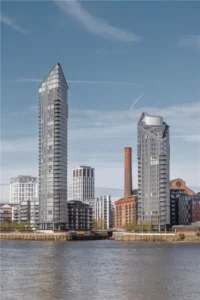
Today the site is part of Chelsea Waterfront. Two glass towers stand by the river, and the old power station has been kept. A building that once supplied electricity to the city has found another way to exist.
Furniture as micro-architecture
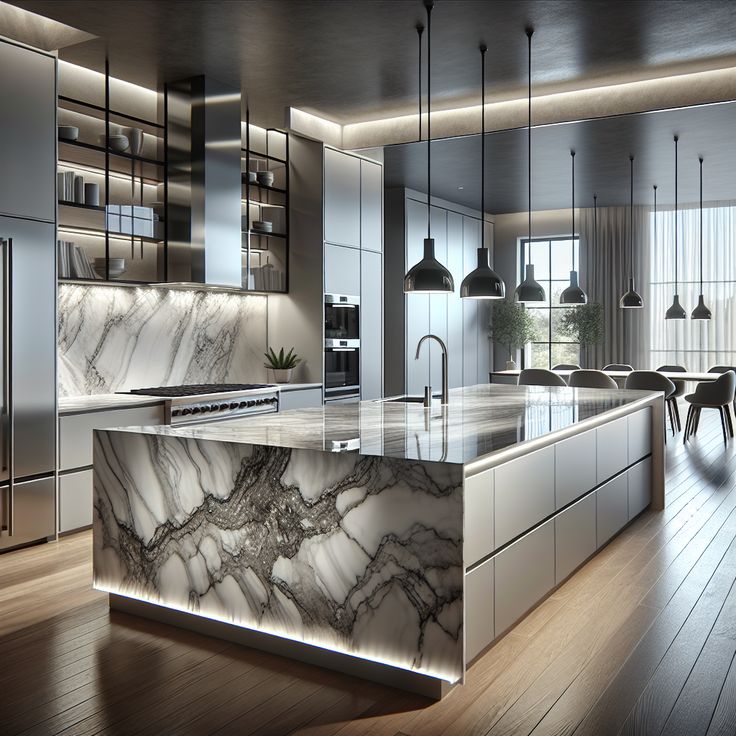
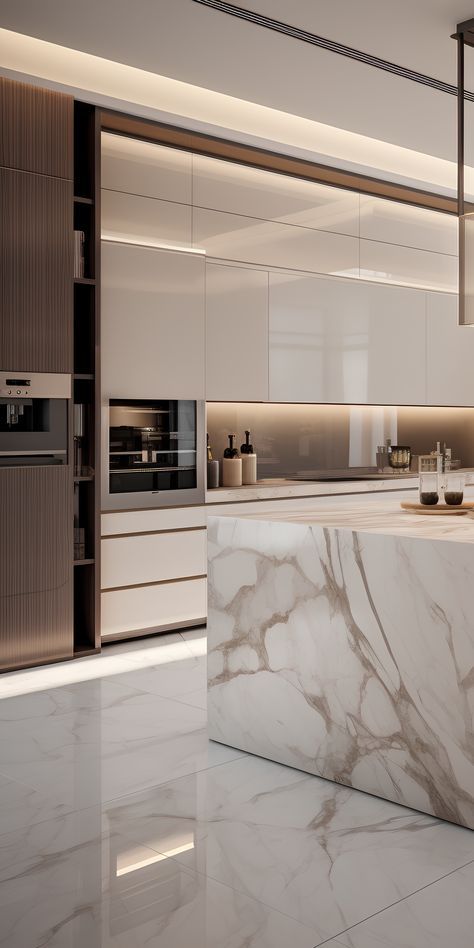
On this project I led the design of one residential unit. We started from a standard vacant unit delivered by the developer and took it through project management and interior furnishing. The furniture was custom-made in Asia and installed in one go after arriving in London.
This approach is uncommon in London. Designers, furniture suppliers, and contractors are usually managed separately, so when design intent collides with site conditions, a project tends to fall back on contractual and liability boundaries.
My design thinking usually begins with one simple question: “After getting up from the sofa, where do people go?”
That question led me to propose Furniture as Micro-Architecture. Furniture is not an accessory to a space. It is part of the spatial order.
Being judged by my peers
At the end of September, the London Architecture Awards announced its 2026 finalists. In the “Residential Project of the Year · Detached House” category there were six finalists. Five were local UK practices, and I was the only Chinese designer.
I have often sat on the judging side of international design competitions. This time it was my peers who judged my work.
More than an interior design firm
Over twenty years, my projects have spanned Hong Kong, Guangzhou, and London. My clients include MTR Corporation and Hutchison Whampoa. My projects include the Dama Station commercial center in Guangzhou, a top-floor duplex at Battersea Power Station, and One Hyde Park. In 2025 I took part in the Venice Architecture Biennale and published two design monographs.
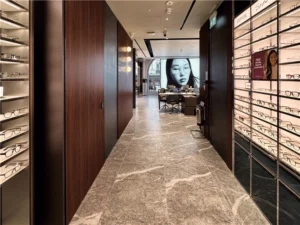
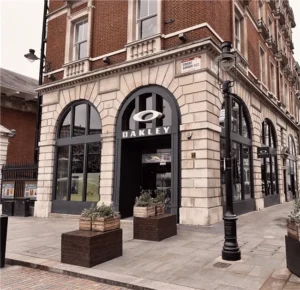
ANOTHER is no longer just a traditional interior design studio. I have brought our London experience into the team by inviting the Italian architect Milco Di Gaetano to join us. He has more than twenty years of experience in London commercial space, working as a construction and project manager for international brands such as Brunello Cucinelli, Oakley, and Luxottica. He has spent years on high-end retail projects on Sloane Street and Bond Street.
When a brand arrives in London, it faces more than the commercial space itself. It has to enter a city with its own history, rules, and rhythm.
In my collection, I wrote this about my partner: “Every idea must be tested on site. His job is to ensure it survives.”
London, Milan, and Paris are the three core cities in the book. Design, furniture, architecture, project management, and Asian manufacturing all sit inside a single project, because the hardest part begins after a brand signs a European lease.
In China, a mature brand usually arrives with its products, team, and supply chain. In London, the same project still has to get through planning permission, building codes, fire safety review, landlord drawing approval, and the pace of the local construction crew.
“Some things can be solved with a budget. Some things can’t.”
For a Chinese brand entering Europe for the first time, the unfamiliar part is rarely the consumer. It is the city itself. A protected historic facade, a shared wall, or a building a hundred years older than the brand can change the whole approach to a project.
Another is never the second
Many people read the name ANOTHER as “second.” On the title page of my collection, I wrote: “Another is never the second.”
Lots Road stopped generating power in 2002. Twenty-four years later it still stands by the Thames, no longer producing electricity.
And ANOTHER is standing in front of another door.
To learn more about our projects and collaborations in London, Hong Kong, and Europe, or to get in touch, you can find us on Xiaohongshu.

Pal Pang is an award-winning interior designer with over 20 years of experience in the industry. He is the recipient of numerous prestigious accolades, including the International Property Award for Best Interior Design and the A’ Design Award. His innovative approach to sustainable luxury has garnered recognition across the globe, setting new standards in interior design. Known for his ability to seamlessly blend elegance with environmental responsibility, Pal has worked on some of the most iconic projects, including a prestigious Mayfair apartment, consistently pushing the boundaries of what is possible in the world of interiors.