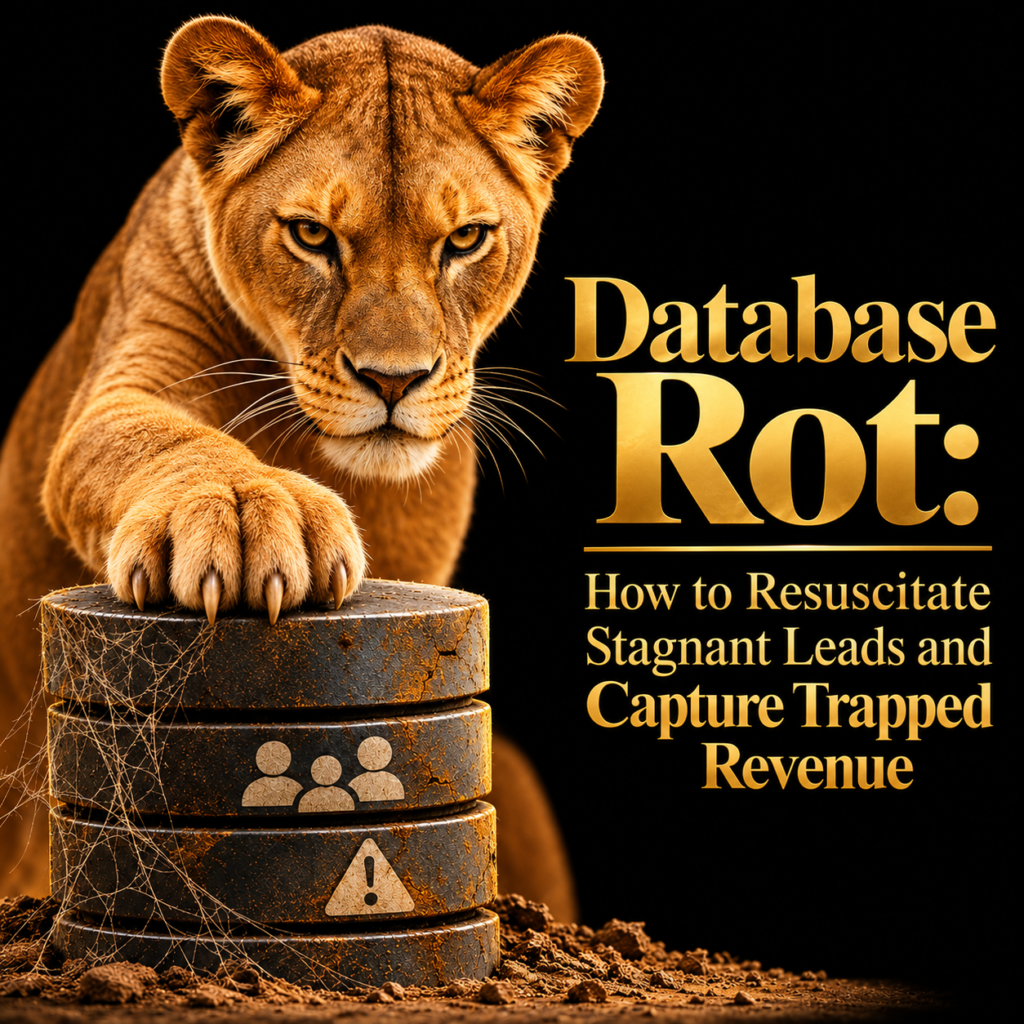
Open your CRM right now and sort by last activity. Scroll down until you find the leads nobody has touched in six months. Keep scrolling. For most brokerages and agencies, that list is long.
Every one of those names cost you something. Ad spend, portal fees, a team member’s time on the first call, or a referral you had to earn. They were interested once. Then the follow-up stopped, and they went quiet.
That is database rot. It is one of the most common and least talked about revenue leaks in real estate.
What database rot actually is
Database rot is what happens when leads enter your CRM faster than your team can work them, and nobody has a system for the ones who don’t reply right away.
It usually looks like this:
- Hundreds or thousands of contacts with no activity in 90 days or more
- Leads stuck in New or Contacted stages forever
- Duplicate records, old phone numbers and dead emails
- No clear owner for leads that went cold
- A team that only chases fresh enquiries because those feel easier
The leads are not dead. Most of them just went unattended. Someone who enquired about a two-bedroom in March may be ready to buy in November. Someone who was “just looking” may have sold their other property since. Timing changes. Your follow-up needs to keep up with it.
Why this costs you more than you think
Most agencies measure the cost of lead generation but not the cost of lead neglect. Here is the simple math.
If you spent money to generate 2,000 leads over the past year and you only actively worked the 300 most recent ones, you paid for 1,700 conversations you never finished. Even a small recovery rate on that group can add up to real closed deals, with no new ad spend.
Reviving an existing lead is also cheaper than buying a new one. They already know your name. They already raised their hand. You are not starting from zero.
And it saves time. Your team stops chasing cold new traffic for every deal and starts working a warm pool you already own.
Step 1: Audit before you message anyone
Do not blast your whole database on day one. That is how you get spam complaints, blocked numbers and a damaged sender reputation.
Start with a quick audit:
- Export your leads with last activity date, source, stage, budget and property type if you have them.
- Remove the obvious junk. Fake numbers, bounced emails, duplicates, and anyone who asked to be removed.
- Group by age. Split leads into 30 to 90 days, 90 to 180 days, 180 days to a year, and over a year.
- Flag the high-intent ones. Anyone who viewed a property, requested a valuation, attended a viewing, or replied at any point deserves priority.
This usually takes a day or two. It is the most useful two days you will spend on your database all quarter.
Step 2: Segment by intent, not just by age
Age matters, but intent matters more. A lead who went quiet after a viewing is very different from a lead who downloaded a brochure and never opened another email.
A simple segmentation that works:
- Warm: had a call, viewing or two-way conversation, then went quiet
- Lukewarm: enquired and got a response, but never engaged further
- Cold: enquired once, never replied
- Past clients and referrers: people who already did business with you or sent someone your way
Start with warm and past clients. They convert fastest and give you quick wins that build momentum.
Step 3: Send messages that sound like a person
Most revival campaigns fail because the message sounds like a mass email. It should sound like a real agent checking in.
Keep it short. Mention something specific. Ask one easy question.
Example for a warm lead:
Hi Anna, it’s Moses from REM GLOBAL. We spoke a few months back about 3-bedroom options in Miami. A few new listings came up in your budget range this week. Are you still looking, or did plans change?
Example for a past client:
Hi Sarah, hope you’re settled in well. Quick question: are you still happy with the property, or have you thought about what it’s worth now? The market has moved and I can send you a quick update if useful.
Example for a cold lead:
Hi James, you enquired about apartments in Dubai Marina earlier this year. Prices and availability have shifted since then. Would a short update on what’s changed be helpful?
What makes these work:
- They reference something real
- They give the person an easy way to say “not now”
- They don’t push for a call or a viewing in the first message
- They offer something useful, such as an update, rather than just asking for attention
Step 4: Use more than one channel
Some people ignore email and answer WhatsApp within minutes. Others never check WhatsApp but respond to a call. Use a short sequence across channels over two weeks:
- Day 1: WhatsApp or SMS
- Day 3: Email with a useful market update or new listings
- Day 7: Follow-up message with a different angle
- Day 10 to 14: Phone call to anyone who engaged but didn’t reply
Stop the sequence as soon as someone responds. Move them to a live conversation with an agent right away. Speed matters here. A reply that sits for two days loses the moment you just created.
Step 5: Automate the repetitive parts
This is where your CRM earns its keep. Manually messaging 500 people is not realistic for most teams. But you do not need to do it by hand.
Set up simple automations to:
- Tag leads as “stale” after a set number of days without activity
- Trigger a re-engagement sequence automatically
- Notify the assigned agent the moment a lead replies or clicks
- Move leads back into an active pipeline stage when they respond
- Re-tag non-responders so they don’t get chased forever
Automation should handle the reminders and first touches. Humans should handle the conversations. If a lead replies and gets a robotic answer, you lose them again.
Step 6: Track what matters
Don’t judge the campaign by open rates alone. Watch the numbers that connect to revenue:
- Reply rate: how many people responded
- Re-engagement rate: how many moved back into an active stage
- Viewings or valuations booked from revived leads
- Deals closed from the revived pool
- Opt-outs: a high number tells you your message or timing is off
Run the campaign on one segment first. See what works. Adjust the message, then roll it out to the next group.
Step 7: Stop it happening again
Reviving old leads once is useful. Building a system so they never rot is better. A few habits that help:
- Set a rule for how long a lead can sit without activity before it is flagged
- Give every lead an owner and a next step, always
- Review stale leads monthly, not yearly
- Add a long-term nurture track for people who aren’t ready now but might be in a year
- Clean your data regularly so the list stays usable
The bottom line
You already paid for these leads. The question is whether you finish the work or let them sit.
A clean, segmented database with a simple follow-up system saves your team time, brings back conversations you thought were gone, and closes deals without spending more on ads. The revenue is already in your CRM. It just needs someone to go and get it.
If you want help auditing your database and building a reactivation system that fits your team, get in touch with RealEstateMoses.

Erica Mensa is a real estate researcher and market analyst at Real Estate Moses, specializing in West African property dynamics, emerging PropTech, and macroeconomic trends. With deep expertise in regional land tenure systems and cross-border investment regulations, Erica breaks down complex structural changes, from the mechanics of digital title verification and leasehold laws to the shifting financial landscape of consumer credit and urban expansion. Her data-driven market reports provide international investors, developers, and local buyers with the strategic clarity needed to confidently navigate evolving real estate markets in Ghana and across the sub-region.