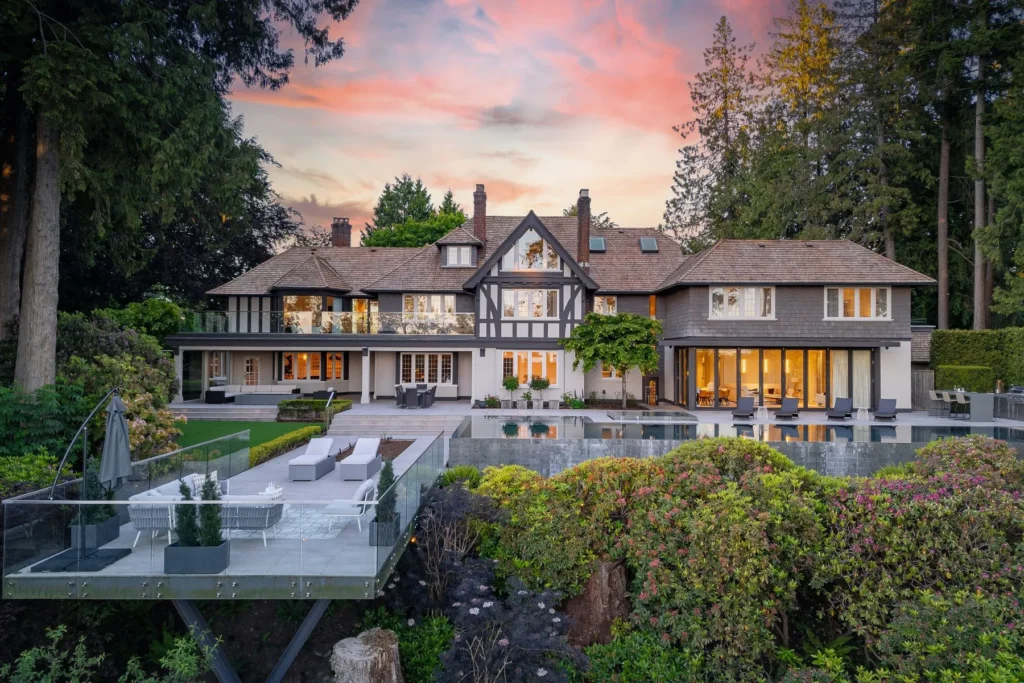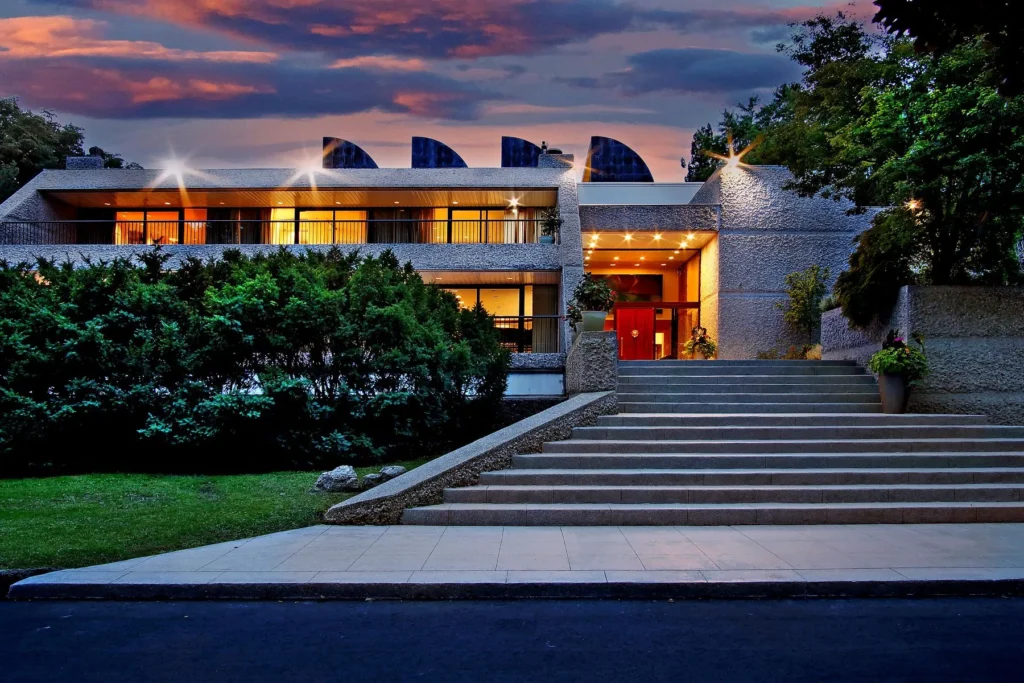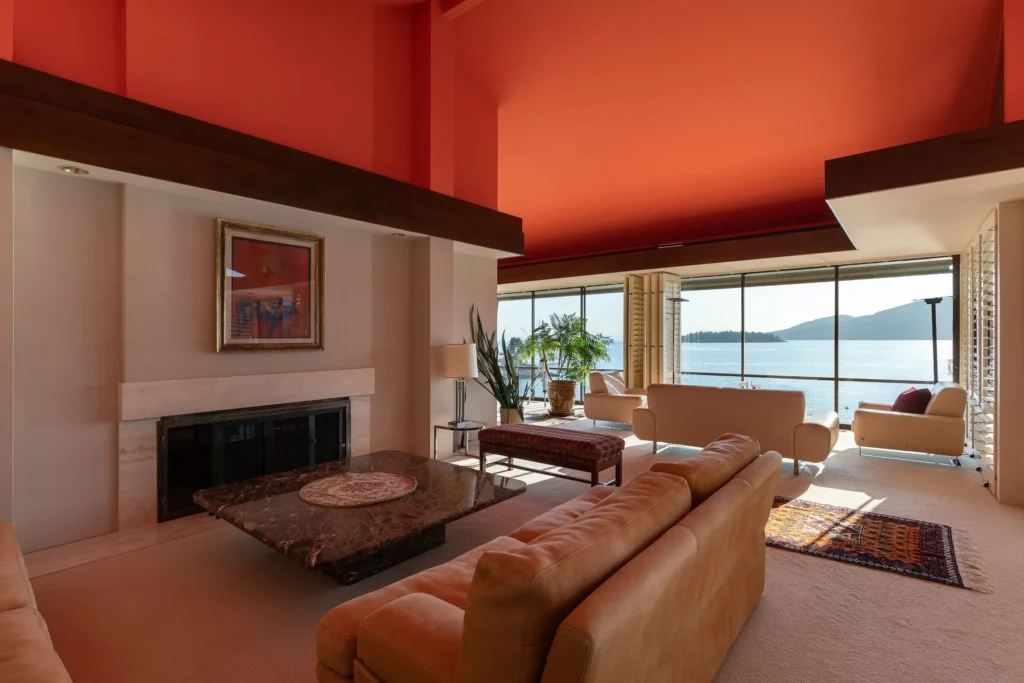
$11,000,000 Luxury House In West Vancouver, Canada
Asset Registry: 5375 Kew Cliff Road, Caulfeild, West Vancouver, BC
Asset Paradigm: Mid-Century Modern Waterfront “Fixer” Landmark
Underwritten Valuation Framework: $11,000,000 USD (Sold Context: ~$15,000,000 CAD)
PRE-PURCHASE AUDIT SUMMARY
================================================================================
PROPERTY SPECIFICATION MATRIX
================================================================================
Design Origin................. 1968 Mid-Century Modern Masterpiece
Architectural Lineage......... Russell Hollingsworth & Ian Davidson
Total Site Area Floor......... 31,753 Square Feet (0.73-Acre Private SW Point)
Oceanfront Linear Basin....... 175 Linear Feet (Direct Coastal Low-Bank Access)
Interior Area Footprint....... 8,035 Gross Sqft / 7,400 Sqft Active Living Unit
Primary Structural Elements... Cantilevered Oceanside Patio, Indoor Pool Shell, 50ft Dock
================================================================================
The luxury residential micro-market of West Vancouver’s Caulfeild enclave operates on an asset-pricing model driven by architectural pedigree and extreme shoreline scarcity. When a property like the 1968 Russell Hollingsworth & Ian Davidson Estate enters the transactional pipeline carrying an open-market entry tag around $11,000,000 USD (domestic listing layer at $15,000,000 CAD), consumer-facing real estate copy automatically shifts into hyper-emotional marketing mode.
They deploy enthusiastic prose detailing personal slices of heaven, barefoot morning walks, and a simple “modern makeover.”
This institutional engineering and capital allocation report completely strips away that lifestyle marketing veneer. This property is explicitly not a simple cosmetic remodel; it is a highly technical, late-stage mid-century structural framework with deep coastal liabilities. By examining the asset through the cold physics of 1960s unreinforced concrete carbonation, complex multi-agency marine permitting, and the severe financial holding costs enforced by British Columbia’s tax matrix, this audit establishes the real-world operational costs hidden behind this historic SW point.
SECTION 1: THE REMODELING RECONSTRUCTION TRAP: THE DEEP LIABILITIES OF A 1968 STRUCTURE
The sales brochure highlights the property as a “1968 gem ready for a modern makeover,” inviting the buyer to imagine reconfiguring the interior spaces to inject personal style into a grand 7,400 square foot layout.
From a structural engineering standpoint, opening up and modernizing a West Coast Modern post-and-beam concrete framework built in 1968 exposes the investor to significant project risk:
                  [ Proposed Mechanical & Spatial Modernization ]
                                         │
               (Structural Demolition of 1968 Envelope Load Paths)
                                         │
         ┌───────────────────────────────┴───────────────────────────────┐
         ▼                                                               ▼
[ Hidden Seismic Retrofit Mandates ]                      [ Hazardous Material Mitigation Tax ]
Municipal building codes force complete shear-wall        Mandatory structural clear-outs required for
upgrades once major renovations pass threshold limits.     aged interior insulation layers and plumbing pipes.
The Code-Triggered Structural Retrofit Trap: West Vancouver municipal building inspectors enforce strict regulatory thresholds under the modern British Columbia Building Code. The moment a renovation project alters a significant percentage of the interior partitions or layout configuration of an older structure, the city legally revokes its grandfathered status. You are then legally forced to execute full seismic retrofits, installing expensive steel moment frames and subterranean shear-wall anchoring points into the bedrock to meet modern earthquake load vectors.
The Hazardous Material Remediation Abyss: Structures finalized in the late 1960s across Canada routinely utilized building materials that face intense environmental handling regulations today. Stripping down the interior walls down to the primary wood studs and concrete pillars requires expensive asbestos abatement, lead-paint containment loops, and specialized hazardous material transport logistics, instantly multiplying the initial projected cost per square foot of your remodel.
SECTION 2: THE CANTILEVERED PATIO AND ELECTRIC HOIST CORROSION OVERHEAD
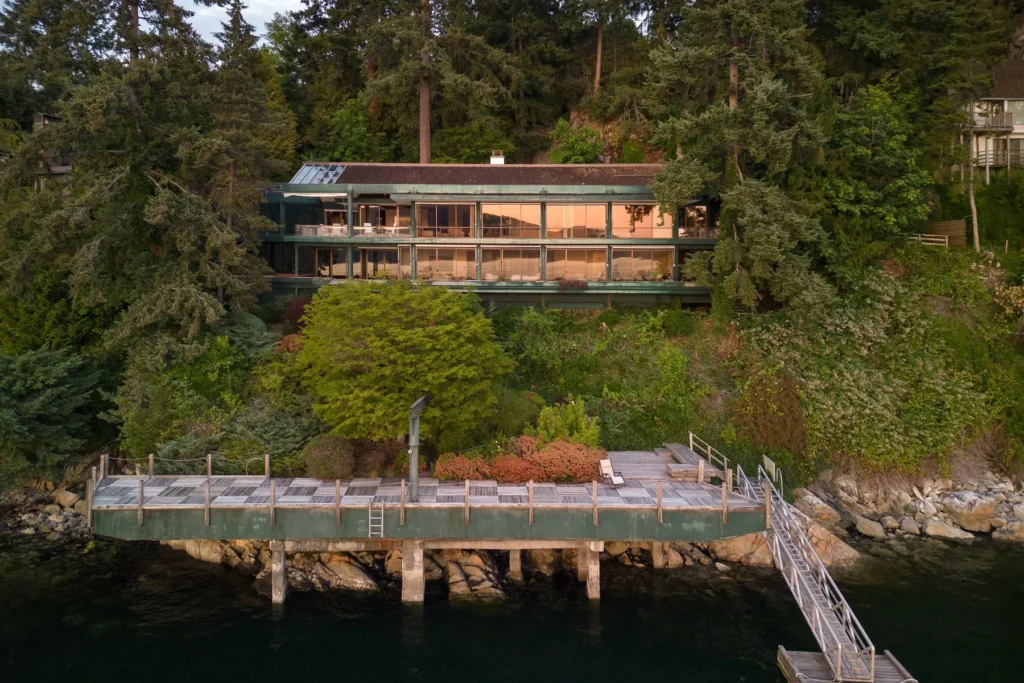
A defining architectural feature of the estate is its enormous seaside patio deck, engineered to cantilever directly out over the active ocean tides, alongside a heavy-duty electronic tender hoist system built to lower and raise marine watercraft straight from the private terrace.
While this setup presents an elite lifestyle aesthetic for outdoor hosting, marine structural forensics identify this interface as a permanent maintenance battle:
[ Frontline Salish Sea Exposure ] ──► [ Microscopic Chloride Penetration ] ──► [ Reinforcement Steel Carbonation ]
                                                                                               │
[ Destructive Concrete Spalling ] ◄── [ Rebar Rust Expansion Splits Concrete ] ◄── [ Core Cantilever Cracking ]
Chloride-Induced Concrete Carbonation: Exposed to continuous wave resonance, high-velocity wind spray, and dense marine fog for over half a century, the cantilevered concrete deck has absorbed millions of microscopic chloride ions. This chemical loading alters the internal alkaline balance of the concrete. Once the salt air reaches the internal steel rebar matrix, the steel oxidizes, expands up to six times its original volume, and fractures the concrete from the inside out—a structural failure known as spalling. Restoring a historic cantilevered deck over open water requires hydro-demolition, anti-corrosive zinc anode installations, and specialized structural carbon-fiber reinforcing wraps.
The Electronic Hoist Mechanical Failure Loop: Operating an electric lifting winch over frontline saltwater creates an endless loop of mechanical maintenance invoices. High-density salt crystallization continuously degrades electronic limit switches, high-torque gearboxes, and multi-strand steel cables. Sourcing specialized marine contractors to audit, load-test, and certify an older residential hoist system adds a persistent operational tax to your outdoor setup.
SECTION 3: THE PRIVATE 50-FOOT MARINE DOCK REGULATORY MINEFIELD
The ultimate luxury asset value-add featured at 5375 Kew Cliff Road is its private 50-foot deep-water marine dock driven into the protected waters facing west toward Bowen Island.
While possessing a private, deep-water mooring slip in West Vancouver is an incredibly scarce and highly valuable piece of real estate capital, managing and updating water-based infrastructure in British Columbia requires navigating a multi-layered regulatory minefield:
+-----------------------------------+-----------------------------------+
| The Romantic Broker Narrative     | The Real-World Operational Fact   |
+-----------------------------------+-----------------------------------+
| Effortless private docking for    | Shifting tidal pressures require   |
| luxury boats and instant marine   | constant piling audits; subject to|
| transit from your private shore.  | draconian multi-agency DFO codes. |
+-----------------------------------+-----------------------------------+
The DFO and Transport Canada Permitting Barrier: You do not hold total autonomy over the water footprint below the high-water mark. Any repair work, piling reinforcement, gangway restoration, or dock extension requires multi-agency approval from the federal Department of Fisheries and Oceans (DFO), Transport Canada’s Navigation Protection Program, and the West Vancouver municipal environmental council. Sourcing marine habitat assessments and environmental impact studies to prove your dock maintenance will not disrupt local marine flora or fish populations can delay construction timelines for months.
The Hydrodynamic Stress Factor: The Salish Sea experiences powerful winter storm swells, aggressive marine tidal currents, and intense log-booming drift forces. A 50-foot dock driven into a exposed point lot suffers continuous lateral twisting forces. If the sub-surface mooring chains, industrial float connectors, or rock-anchor joints fail during a coastal storm, the entire dock infrastructure can drift or tilt, resulting in catastrophic emergency salvage and marine pile-driving expenses.
SECTION 4: THE INDOOR POOL THERMODYNAMIC COMPLEXITY MATRIX
The mid-century blueprint incorporates a massive internal indoor swimming pool pavilion designed to blend the coastal luxury lifestyle seamlessly into the core of the home across both levels.
While an indoor pool provides excellent year-round recreation away from the cool Pacific Northwest air, running a large-scale indoor wet-spa inside an older residential envelope creates a permanent micro-climate risk:
[ Active Indoor Pool Evaporation ] ──► [ High Internal Moisture Loading ] ──► [ Air Infiltration through Gaskets ]
                                                                                               │
[ Structural Framework Weathering ] ◄── [ Moisture Condenses Inside Timbers ] ◄── [ Interfacial Cold Inversion ]
Operating an indoor pool involves generating constant water vapor. In a 1968 modern home featuring single-pane architectural glass frames or older window tracking systems, this dense indoor moisture meets cold external glass surfaces during the winter.
If the property’s specialized commercial-grade air-handling units and industrial dehumidifiers are not completely re-engineered from scratch during your makeover, this moisture will condense directly inside the structural post-and-beam timber joints. This continuous moisture cycle leads to hidden timber rot, mold colonization behind the wall cavities, and premature weathering of your finished carpentry, transforming a leisure asset into a persistent operational utility tax.
SECTION 5: BRITISH COLUMBIA’S CAPITAL-EROSION TAX MATRIX
The financial reality of deploying eleven million US dollars into the premium residential sector of West Vancouver requires navigating an aggressive, multi-layered regulatory taxation framework explicitly engineered by Canadian authorities to penalize high-value real estate holdings and underutilized wealth storage.
Upon entry, and throughout your holding window, your capital is subject to significant non-refundable fiscal drains that lower your portfolio velocity:
BC Property Transfer Tax (PTT): British Columbia levies a progressive land transfer tax system on residential acquisitions. For a transaction valued at roughly $15,000,000 CAD, your non-refundable upfront cash tax obligation scales to approximately $430,000 CAD. This capital must be paid out of pocket on closing, adds zero functional value to the home, and instantly puts your investment in the red on day one.
The Speculation and Vacancy Tax / Underutilized Housing Tax: If you are an international investor, an off-shore corporate entity, or an elite family office utilizing this waterfront estate as a seasonal holiday home or an occasional architectural retreat rather than a primary residence, you face Canada’s Speculation and Vacancy Tax (SVT) alongside the federal Underutilized Housing Tax (UHT). Combined, these national and provincial penalties extract up to 3.0% of the property’s assessed market value every single year it sits empty or underutilized, creating an aggressive annual cash drain purely to hold the deed.
Substantial Fixed Municipal Property Taxes: Independent of vacancy penalties, the ongoing municipal and school taxes for an expansive 31,753 square foot point lot in Caulfeild exceed $65,000 CAD annually, acting as a fixed, non-yielding holding tax on your capital.
SECTION 6: COMPREHENSIVE STRUCTURAL MATRIX
Marketing Claims vs. Institutional Valuation Realities
| The Property Feature | The Broker’s Glamorous Presentation | The Real-World Operational & Financial Reality |
| $11,000,000 Evaluation | An elite trophy property indicating the absolute peak of Western Canadian success and prestige. | Extreme capital lockup with heavy asset illiquidity and high annual fixed holding costs. |
| 1968 Hollingsworth Design | An architectural masterpiece ready for a simple modern makeover to infuse personal style. | High structural liability regarding code-triggered seismic upgrades and asbestos remediation. |
| Cantilevered Oceanside Patio | Enormous outdoor oasis built to cantilever over the ocean for breathtaking panoramas. | High engineering risk regarding concrete carbonation, rebar oxidation, and wave velocity impacts. |
| Private 50-Foot Deep-Water Dock | Absolute tactical freedom to embrace an aquatic lifestyle with private marine docking slots. | Under continuous structural stress from tidal swells, requiring complex multi-agency DFO permitting. |
| 7,400 Sqft Living Layout | Sprawling interior layout flooded with natural light, perfect for hosting lavish parties. | Significant capital allocated to dead space that requires continuous heating and climate management. |
| Integrated Indoor Swimming Pool | A massive indoor pool pavilion designed to immerse you in luxury and relaxation. | High engineering liability requiring continuous running of industrial dehumidification systems. |
SECTION 7: THE APEX ILLIQUIDITY TRAP: THE FROZEN HORIZON OF CAULFEILD
While the general residential real estate market across British Columbia shows steady transaction speed and reliable capital liquidity for mid-market single-family homes, those dynamic trading rules apply exclusively to standard properties. The exact millisecond a single residential asset crosses the ten million dollar threshold on a fixer-upper architectural footprint in Caulfeild, it exits the fluid real estate market completely and enters an incredibly sticky, frozen asset stratum.
▲ [ $11M+ USD Apex Stratum: 5375 Kew Cliff ] ──► Buyer Pool: Handful of Architecture Purists & Tech Titans (Years to Exit)
■ [ $3M - $6M Stratum: Standard Detached Homes ] ──► Buyer Pool: Affluent Regional Doctors & Executives (Moderate Speed)
● [ Under $1.5M Stratum: Mass Market Metro Condos ] ──► Buyer Pool: General Public & Retail Investors (High Liquidity Trading)
If your primary business operations, international ventures, or global equity portfolios encounter an unexpected requirement for rapid liquidity, you cannot easily or quickly convert a custom 1968 modern contemporary estate requiring extensive structural restoration into liquid cash. The pool of active buyers possessing the un-leveraged capacity to finalize an transaction of this magnitude—while simultaneously possessing the appetite to take on a multi-million dollar down-to-the-studs engineering reconstruction project—is exceptionally thin.
A trophy property of this type frequently sits on the off-market registries of specialized brokerages for twelve, twenty-four, or thirty-six months before discovering a buyer whose personal aesthetic taste aligns with Hollingsworth’s design layout. If you must exit the asset quickly due to shifting economic conditions, you will be systematically forced to accept an aggressive capital markdown just to attract an opportunistic cash buyer capable of closing a complex maritime real estate transaction.
SECTION 8: THE STAGGERING FINANCIAL OPPORTUNITY COST OF FIXED CAPITAL
The final, and most compelling financial reality against purchasing this West Vancouver waterfront mansion is the profound opportunity cost of capital. When you lock away eleven million dollars of liquid wealth into a single, non-income-generating residential construction project, you are permanently removing that capital from the global financial landscape where it could be working to produce highly secure, compounding cash flows.
Let us run a highly objective, conservative financial comparison of how that exact block of wealth behaves over a standard five-year investment holding window when deployed into active, liquid market instruments versus sitting inside a dead luxury residential project:
+-----------------------------------+-----------------------------------+
| $11M Capital Sunk in Fixer Estate | $11M Capital Deployed in Markets  |
+-----------------------------------+-----------------------------------+
| Generates $0 in passive cash flow.| At a conservative 6% compounding  |
| Accumulates massive annual bills  | annual yield, generates over      |
| for SVT taxes, HVAC, & bubblers.  | $660,000 in cash *every year*.    |
+-----------------------------------+-----------------------------------+
Over a five-year investment window, a professional, diversified corporate portfolio worth eleven million dollars will effortlessly produce over three million three hundred thousand dollars in clean, highly liquid compounding profit while maintaining absolute capital mobility. Conversely, the West Vancouver waterfront chateau will have actively drained hundreds of thousands of additional dollars out of your pocket to cover high municipal land taxes, substantial electrical utility bills to heat a massive framework, ongoing marine dock and structural concrete engineering restoration fees, and potential vacancy penalties, while its final secondary market resale value remains completely dependent on the unpredictable high-end property cycles of British Columbia. From a standpoint of raw wealth optimization and asset protection, spending this scale of money on a single project home is an inefficient use of capital.
INSTITUTIONAL PORTFOLIO INVESTMENT DIRECTIVE
PRIMARY DISQUALIFICATION CRITERIA
The Agile Capital Allocator: If your financial architecture relies on immediate capital velocity and the capacity to exit fixed real estate positions within a single fiscal quarter.
The Turnkey Move-In Purist: If your lifestyle has zero tolerance for managing multi-year municipal planning approvals, hazardous material mitigations, structural concrete reinforcement injections, and multi-agency marine dock environmental audits.
The Net-Yield Focus Investor: If you calculate portfolio performance through the strict math of opportunity cost, capital efficiency, and upfront closing transaction taxation.
JUSTIFIABLE INVESTMENT PARAMETERS
The Sovereign Balance Sheet: Meaning a capital lockdown of this magnitude represents a minor fraction of a single percentage point of your overall corporate or familial wealth footprint.
The Modernist Architecture Connoisseur: If holding an uncompromised, large-scale piece of West Coast Modern design history by Hollingsworth and Davidson along the premier shoreline layer of Caulfeild represents an essential personal legacy milestone.
The Long-Term Generational Restorer: If you possess the financial infrastructure to effortlessly fund a multi-million dollar structural stabilization project over a multi-year horizon, intending to hold the private SW point address for decades as a permanent family foundation.
PRE-ACQUISITION OBLIGATION: BEFORE ENGAGING WITH REM
Prior to initiating formal contract reviews, scheduling private site inspections, or outlining capital settlement frameworks for 5375 Kew Cliff Road, you must protect your global capital by executing a rigorous independent audit:
Cantilever and Foundation Core Integrity Testing: Deploy specialized marine civil engineers to extract concrete core samples from the cantilevered seaside deck, analyzing the chloride penetration levels and mapping any hidden internal rebar oxidation.
Municipal Code Remodeling Evaluation: Retain an independent municipal planning consultant to audit the West Vancouver zoning guidelines, establishing the definitive legal limitations regarding load-bearing partition updates and seismic upgrade thresholds for a 1968 structure.
Cross-Border Fiscal Optimization Review: Coordinate with a dedicated tax advisory office to calculate the definitive net impact of British Columbia’s property transfer taxes and recurring speculation vacancy metrics against your global wealth targets.
To request the complete architectural blueprints, to review official municipal shoreline zoning compliance data summaries, or to arrange an independent private tour of the estate grounds, contact REM. Ensure you approach the negotiation table with a completely clear, realistic perspective on the long-term operational and financial realities of ultra-luxury waterfront asset restoration.

Moses Oyong is a Real Estate Growth Marketing Manager and PropTech specialist with over a decade of closing residential and commercial deals worth over 200 million across Nigeria and international markets. Known for engineering AI-driven workflows that delivered a 69% uplift in sales targets and cut lead response times by 85%, Moses bridges the gap between high-performance marketing, land law, and technology to help investors, developers, and first-time buyers make confident, informed property decisions in an increasingly digital world.