Review: How Real Is The Pricing At Electra
Vertical Asset Integrity, Financial Friction, and Urban Envelope Risk Analysis
Location: 700 West E Street, 19th Floor, Columbia District, San Diego, California
Underwritten Valuation Framework: $950,000 to $1,150,000 USD (High-Rise Urban Core Infill)
1. STRATEGIC METRICS & SEARCH SEGMENTATION
================================================================================
AUDIT PARAMETERS & BUILDING PROFILE
================================================================================
Asset Type............................ Premium High-Rise Attached Condominium (19th Floor)
Livable Footprint Space............... 1,468 Gross Square Feet
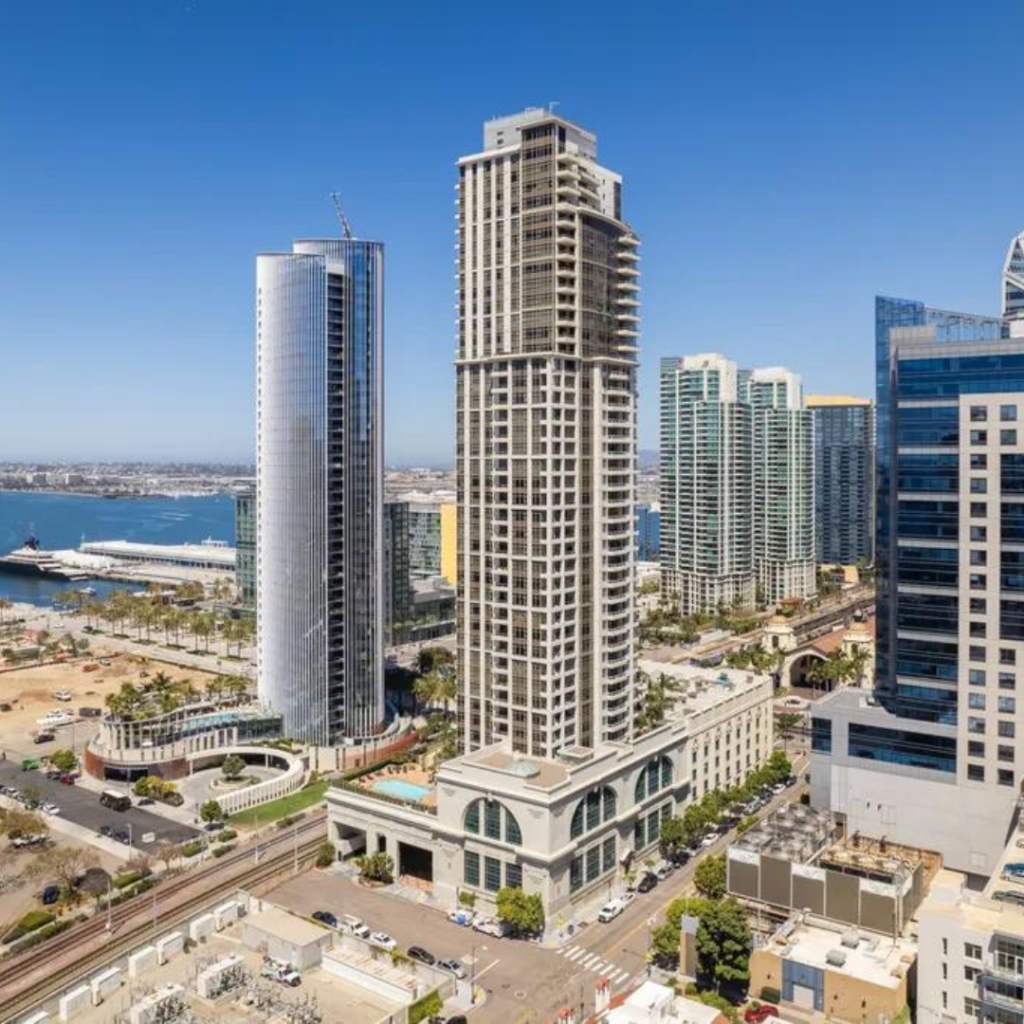
Tower Architectural Profile........... 43 Stories / San Diego's Tallest Residential Crest (2008)
Developer / Engineering Lineage....... Bosa Development / Chris Dikeakos Architects
Historical Preservation Component..... Integrated 1911 SDG&E Power Plant Neoclassical Facade
Primary Interior Structural Finishes... Solid Natural Stone Waterfall Borders, Hardwood Planks
Mechanical & Smart Infrastructure..... Centralized Tower Water-Loop Heat Pump, Bosch Appliances
Outdoor Spatial Distribution.......... Dual Independent High-Rise Balcony Terraces
================================================================================
The high-density residential luxury market in Downtown San Diego’s Columbia District operates on a strict valuation premium supported by vertical land scarcity, master-planned bayfront proximity, and branded skyscraper signatures. When a mid-tower vertical asset like a 1,468-square-foot, 19th-floor condo at Electra (700 West E Street) enters the transactional registry carrying an open-market entry framework crossing the $1,000,000 USD threshold, consumer-facing retail real estate portals immediately activate a standard emotional narrative. They deploy enthusiastic marketing prose detailing sunset cocktails on private balconies, sweeping diamond-like water vistas toward Coronado Island, and effortless resort-style pool lounging, inviting buyers to view a highly complex slice of high-density vertical infrastructure as an isolated, passive personal beach oasis.
This institutional risk assessment and financial underwriting report completely strips away that lifestyle marketing veneer. This asset class is not a detached estate; it is a highly interdependent unit bound to a shared 43-story concrete-and-steel skeleton and a complex corporate governance model. By evaluating this property through the unvarnished mechanics of coastal high-rise curtain wall thermal loading, escalating Homeowners Association (HOA) operational liabilities, architectural preservation structural interfaces, localized Southern California transfer taxes, and alternative asset opportunity costs, this audit establishes the real-world operational liabilities hidden behind the concierge desks of Electra.
2. THE HISTORIC-TOWER INTERFACIAL PARADOX: STRUCTURAL COMPLEXITIES OF ELECTRA
The defining architectural hallmark of the Electra tower is its integration of a historic landmark asset: the base of the high-rise incorporates the original 1911 San Diego Gas & Electric (SDG&E) station facade, complete with historic neoclassical window profiles and brick detailing. Developed by Bosa Development and designed by Chris Dikeakos Architects, the 43-story modern concrete tower springs directly upward from this preserved architectural base.
While this fusion represents a major triumph for urban preservation and brand prestige, structural engineers analyze the point where 2008 high-rise concrete meets 1911 historic masonry as an area of long-term structural tension:
[ 43-Story Reinforced Concrete Tower Core ] ──► [ Imposes Massive Vertical Dead Load ] ──► Shifting Stress Lines
                                                                                                  │
[ High-Cost Structural Remodeling ] ◄── [ Joint Seal Degradation & Cracking ] ◄── [ Differential Micro-Settling ]
The Risk of Differential Micro-Settling: Reinforced concrete towers and historic unreinforced masonry walls experience structural load distributions at completely different seismic and weight vectors. Over extended holding windows, the continuous weight load of the tower combined with micro-seismic vibrations across the downtown fault corridors can trigger minute, differential settling lines where the two structures join. If the structural expansion joints or elastomer seals connecting the modern concrete framework to the 1911 base degrade, moisture can seep in, creating risks of concrete carbonation and efflorescence inside the lower-tier common storage and parking structures.
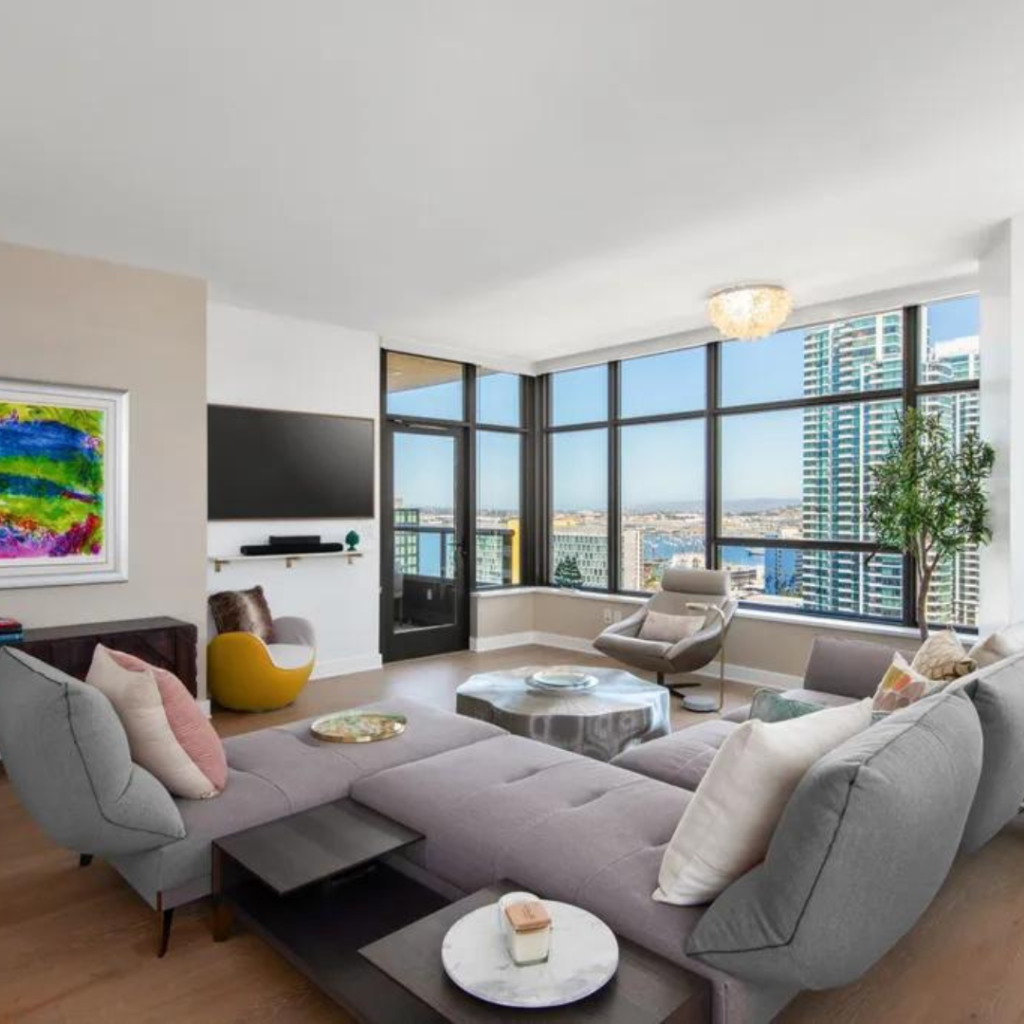
The Curtain Wall Window Thermal Stress Tax: Positioned on the 19th floor, the unit features expansive floor-to-ceiling glass fenestration arrays to capture views of San Diego Bay and the open Pacific Ocean. Because the tower faces direct coastal sunlight, these glass panels endure intense radiant heat on their exterior surfaces while the interior is actively cooled to comfortable temperatures by the individual multi-zone heat pumps. This extreme thermal gradient places continuous mechanical stress on the curtain wall gaskets and structural perimeter sealants. If the seals experience microscopic breakdown, moisture can infiltrate during intense winter storm cells, warping internal custom wood finishes and damaging drywall.
3. THE ESCALATING HIGH-RISE HOA DRAG: MANAGING PERMANENT AMENITY COSTS
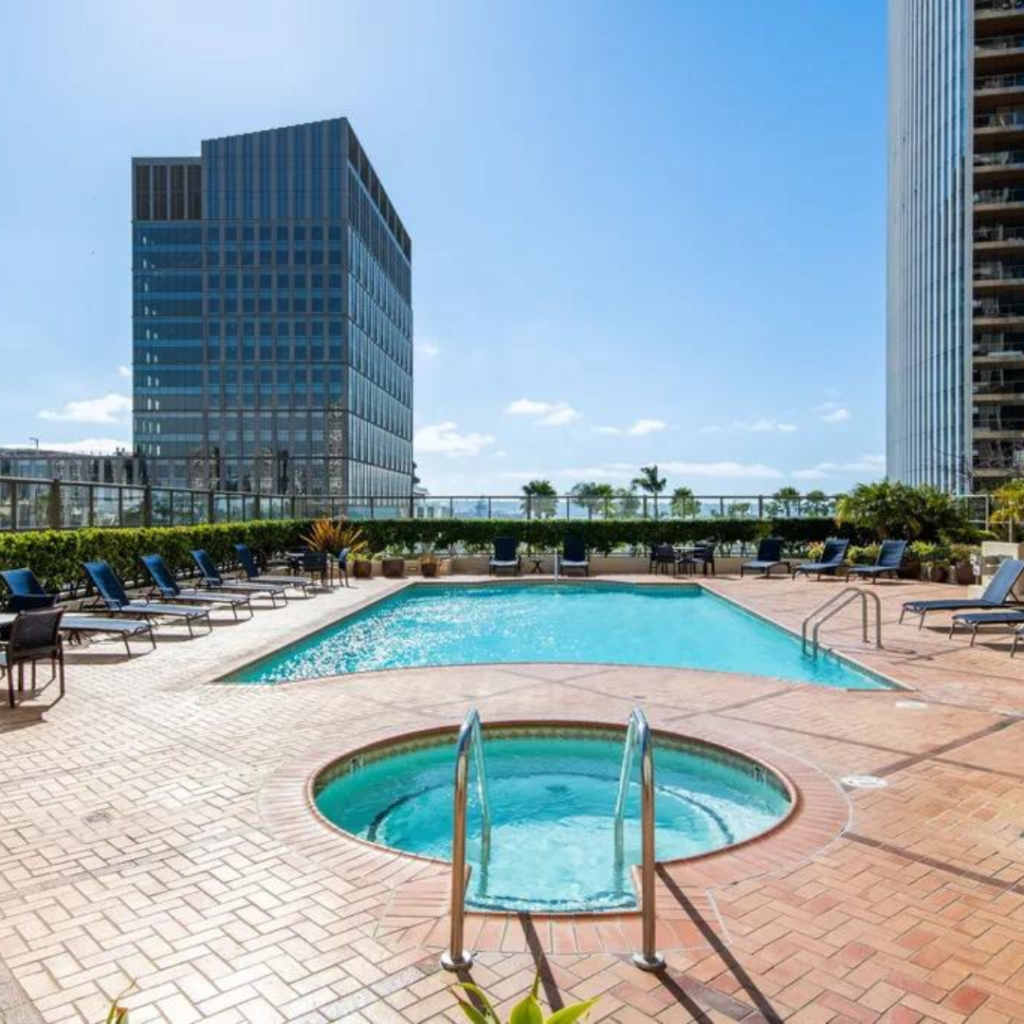
The marketing collateral heavily details the extensive resort-style luxury amenities provided on-site: an expansive 5th-floor roof-deck outdoor fireplace lounge, an atrium-style social room featuring 60-foot ceiling clearances, a fully staffed fitness center, a commercial-grade spa, steam rooms, and a 24-hour concierge uniform service.
In the lexicon of financial asset management, a premium high-rise complex with historic preservation elements represents a highly demanding operational and fixed carrying cost environment:
[ Active High-Rise Infrastructure Pools ] ──► [ High-Volume Utility Ingestion ] ──► [ Escalating Monthly HOA Fees ]
                                                                                                 │
[ Sunk Cash Outflow Wipes Out Net Yield ] ◄── [ Mandatory Special Assessment Risks ] ◄── [ Reserve Fund Depletion ]
The Substantial Base Monthly HOA Fee: Maintaining a 43-story vertical footprint equipped with high-speed elevator shafts, pressurized emergency fire suppression pumps, mechanical pool heaters, and full-time security forces requires a massive operational budget. Real-world property data from the Electra registry shows that monthly association dues routinely scale between $1,400 and $1,750+ USD every thirty days. This fee is a mandatory, unrecoverable cash outflow that must be settled regardless of your personal occupancy or seasonal usage profiles, acting as a permanent anchor that compresses your net asset returns.
The Threat of Structural Special Assessments: Under California’s Davis-Stirling Common Interest Development Act, high-rise condominium associations are legally mandated to fund independent reserve studies every three years to measure the life expectancy of shared infrastructure. Because the tower is passing its second decade of continuous operation, key mechanical assets—including the main vertical plumbing stacks, centralized chiller cooling towers, roof waterproof membranes, and garage parking automated gates—are crossing their primary utility lifecycles. If the association’s reserve fund drops below necessary levels, the board has the legal power to issue an emergency Special Assessment levy, handing each unit owner an unexpected invoice reaching thousands of dollars to cover core structural updates.
4. THE 19TH-FLOOR MICRO-CLIMATE ENVELOPE AND BALCONY WEATHERING
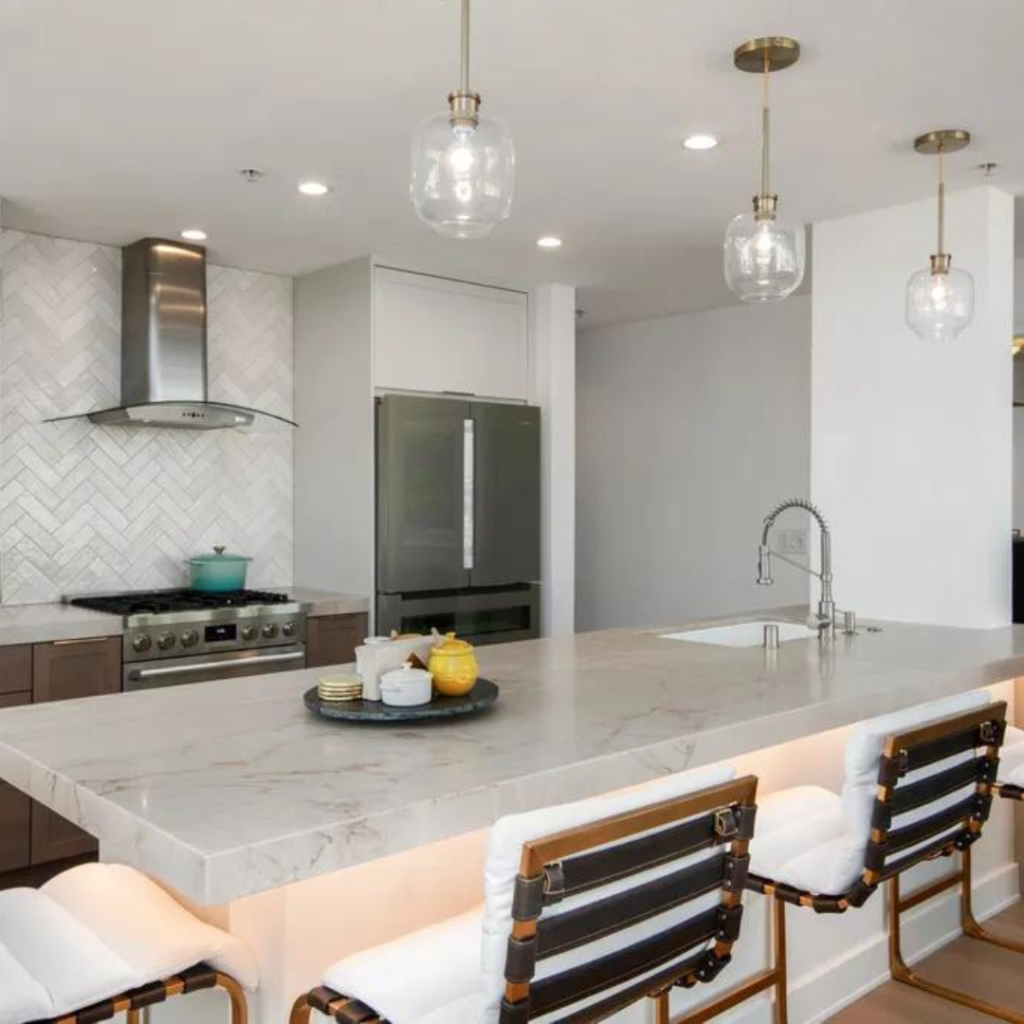
The internal layout maps out a 1,468-square-foot, dual-suite open configuration utilizing premium natural stone countertops with custom waterfall edges, integrated Bosch kitchen appliances, smart home dimmable lighting systems, and dual private high-rise balconies.
While stepping out onto your balcony to absorb a 270-degree panorama of the Gaslamp skyline and Coronado Island represents an elite lifestyle aesthetic, managing external attached platforms at high altitudes introduces unique maintenance liabilities:
+-----------------------------------+-----------------------------------+
| Expected Luxury Balcony Sanctuary | Real-World Urban High-Rise Fact   |
+-----------------------------------+-----------------------------------+
| Relaxing morning coffee breaks    | Frontline exposure to high wind   |
| in pristine, effortless comfort   | shear and marine salt mist that  |
| overlooking the Pacific coastline. | degrades sliding door tracking lines.|
+-----------------------------------+-----------------------------------+
The Wind Shear Tracking Deformation Risk: At a 19-story altitude profile, the property faces high-velocity coastal wind currents routing through the downtown skyscraper corridors. When severe seasonal Pacific winter tracking storms hit the coastline, wind-driven rain slams directly against the aluminum framing of the balcony sliding doors. The continuous dynamic wind load can distort tracking lines over multi-year use windows, breaking down the rubber weather stripping and allowing drafts to enter the main living areas, which forces your climate heat pumps to work harder to maintain balance.
The High-Altitude Moisture Condensation Loop: The modern interior incorporates smart-home climate features to tightly control indoor temperatures. In the winter, when the exterior glass surfaces are cooled by night breezes and the interior is warm, moisture can condense along the track mechanisms. If the building’s integrated mechanical ventilation loops experience an operational drop, this condensation can settle into the adjacent hardwood floor transitions, causing the wood edges to warp and buckle near the balcony doors.
5. CALIFORNIA PROPERTY TAXATION: NAVIGATING ENTRY AND CARRYING COSTS
The financial analysis of deploying capital into the Columbia District waterfront real estate sector requires navigating a strict regulatory taxation framework engineered by California authorities to capitalize on high-value property acquisitions.
Upon entry, and throughout your holding window, your capital is subject to non-refundable fiscal drains that lower your overall portfolio velocity:
[ Your Liquid Capital Allocation: ~$1,050,000 USD ]
                                 │
        (California Proposition 13 Real Estate Assessment)
                                 │
[ Mandatory Annual Property Tax: ~$11,500+ USD Recurring Cash Drain ]
The Southern California Property Tax Base: Under California’s landmark Proposition 13 legal framework, base real estate property taxes are reassessed immediately upon a transfer of ownership at roughly 1.1% to 1.25% of the newly established transaction price. For an asset acquisition at Electra clearing at a conservative baseline of $1,050,000, your annual recurring property tax bill scales to a fixed invoice exceeding $11,500 to $13,100 every calendar year, acting as a permanent, non-yielding holding cost on your liquid wealth.
Exemption from Luxury Transfer Penalties: Because the acquisition value of this mid-market attached condo lot sits well below the $5,000,000 mark, the transaction completely escapes the punitive luxury transfer taxes (such as Los Angeles’s Measure ULA) that target upper-tier estate footprints. This preserve your entry liquidity and makes downtown high-rise units an efficient choice for capital deployment compared to un-leveraged California freehold residential projects.
6. COMPREHENSIVE STRUCTURAL MATRIX
Marketing Claims vs. Institutional Valuation Realities
| The Hyper-Luxury Feature | The Broker’s Glamorous Presentation | The Real-World Operational & Financial Reality |
| $1,000,000+ Market Price | An affordable entry point indicating absolute success within San Diego’s premium vertical core. | Capital lockup within a shared multi-family asset subject to strict corporate HOA bylaws and rules. |
| 19th-Floor Corner Footprint | Panoramic floor-to-ceiling glass framing the Pacific Ocean, San Diego Bay, and Coronado Island. | High exposure to high-altitude wind shear forces and intense solar thermal load stresses. |
| Preserved 1911 Facade Base | An architecturally significant asset showcasing rich history and neoclassical Art Deco charm. | High structural liability regarding differential micro-settling and expansion joint engineering wear. |
| Dual Private Balcony Oases | Perfect open-air platforms designed for morning coffees and starlit evening hosting. | High risk of sliding door track alignment degradation and moisture condensation pooling. |
| Resort-Style Amenities & Pools | A spectacular wellness oasis including steam rooms, spas, and a 24-hour uniform concierge. | Permanent structural maintenance burden causing high monthly dues ($1,400+) and special assessment risks. |
| Integrated Bosch Kitchen | Elite culinary haven featuring natural stone waterfall edges and premium smart layouts. | High asset material depreciation; future secondary buyers may gut the surfaces to match their taste. |
7. THE SUB-MARKET LIQUIDITY HORIZON OF URBAN CONDOMINIUMS
While the ultra-luxury estate market across rural regions or mountain chalets experiences long trading horizons and high asset illiquidity, the core mid-market luxury condo segment inside Downtown San Diego operates under an entirely different economic velocity. Because these vertical assets sit within the immediate core of major professional employment sectors, bio-tech research centers, and international transit nodes like the Santa Fe Depot, they map to a stable, highly liquid professional buyer pool.
▲ [ $3M+ Elite Penthouse Stratum: Pacific Gate / Electra Crest ] ──► Buyer Pool: International Wealth Allocators (Moderate Velocity)
■ [ $800K - $1.5M Core Stratum: Electra 19th Floor Unit ] ──► Buyer Pool: Regional Professionals, Corporate Down-Sizers, & Expats (High Velocity)
● [ Under $600K Mass-Market Stratum: Peripheral Studio Flats ] ──► Buyer Pool: First-Time Local Buyers & Retail Investors (Rapid Velocity Trading)
If your primary business operations or global equity portfolios encounter an unexpected requirement for rapid liquidity, a 2-bedroom condo at 700 West E Street can be converted back into liquid cash far more efficiently than an un-leveraged country compound or a sloped mountain property. The absolute pool of active buyers possessing the leverage or cash to finalize a transaction at this tier—including corporate downsizers seeking secure lock-and-leave urban footprints and military/aerospace defense personnel—is consistently active.
However, because you are trading within a highly standardized high-rise market layer where multiple similar units may be listed simultaneously across the Columbia and Marina districts, your individual asset retains zero pricing monopoly. To execute an exit within a clean 60-day window, your pricing strategy must match local comps, preventing you from extracting massive emotional premiums upon resale.
8. THE STRATOSPHERIC OPPORTUNITY COST OF CLOSED CAPITAL
The final financial reality that any sophisticated wealth allocator must analyze before deploying capital into this Electra high-rise unit is the profound opportunity cost of capital. When you lock away $1,050,000 of liquid wealth into a primary residence or a seasonal urban footprint, you are permanently removing that capital from the global financial landscape where it could be working to produce highly secure, compounding yields.
Let us run an objective, conservative financial comparison of how that exact block of wealth behaves over a standard five-year investment holding window when deployed into active, liquid market instruments versus sitting inside a dead luxury condo asset:
+-----------------------------------+-----------------------------------+
| $1.05M Capital Sunk in Condo Unit | $1.05M Capital Deployed in Markets|
+-----------------------------------+-----------------------------------+
| Generates $0 in passive cash flow.| At a conservative 6% compounding  |
| Accumulates massive annual bills  | annual yield, generates over      |
| for HOA dues, taxes, & insurance. | $63,000 in cash *every year*.     |
+-----------------------------------+-----------------------------------+
Over a five-year investment window, a professional, diversified corporate portfolio worth $1,050,000 will effortlessly produce over three hundred and fifteen thousand dollars in clean, highly liquid compounding profit while maintaining absolute capital mobility. Conversely, the San Diego bayfront condo will have actively drained tens of thousands of additional dollars out of your pocket to cover California real estate property taxes, monthly HOA maintenance service charges, individual electrical utility bills, and potential loss-assessment levies, while its final secondary market resale value remains completely dependent on the unpredictable high-density property cycles of Downtown San Diego. From a standpoint of raw wealth optimization and asset protection, spending this scale of money on a single home is an inefficient use of capital.
INSTITUTIONAL PORTFOLIO VERDICT & ACTIONABLE DIRECTIVES
Primary Disqualification Criteria
The Total Freehold Autonomy Purist: If your property management philosophy demands absolute, uncompromised control over structural modifications, exterior finishes, and utility infrastructure choices without answering to an HOA board.
The Absolute Absolute Privacy Advocate: If you find the concept of sharing building floor plates, vertical plumbing shafts, and high-rise common paths with neighborhood foot traffic and building staff operationally annoying.
The Low-Overhead Capital Allocator: If your portfolio has zero tolerance for funding unrecoverable monthly facility fees, tower utility management costs, and unpredictable structural special assessment invoices.
Justifiable Investment Parameters
The Secure Turnkey Urban Executive: Who requires a high-security, low-maintenance, lock-and-leave residential footprint within the immediate commercial core of San Diego for business operations.
The Liquidity-Focused Property Allocator: Who values the high transaction velocity and consistent resale demand of the Century City and downtown San Diego condo markets, utilizing the asset as a stable, predictable real estate holding.
The Portfolio Diversification Play: Meaning a capital deployment of this scale represents a minor, un-leveraged percentage point of your global wealth index, serving a functional lifestyle need while completely neutralizing short-term opportunity cost concerns.
Pre-Acquisition Mandate: Before Committing Capital to REM
Prior to initiating formal contract reviews, scheduling private site inspections, or outlining capital settlement frameworks for the 19th-floor unit at Electra, you must protect your global capital by executing a rigorous independent audit:
HOA Financial and Reserve Fund Legal Review: Retain a specialized condominium attorney to thoroughly audit the Electra HOA’s master financial ledgers, reserve fund saturation percentages, and multi-year mechanical infrastructure maintenance schedules to ensure no massive special assessments are pending for tower roof or elevator overhauls.
Curtain Wall Window Frame Structural Integrity Test: Deploy independent building envelope technicians to execute moisture penetration tests and structural track-alignment sweeps across the floor-to-ceiling glass frames to validate insulation seal parameters against wind shear.
Historical Base Expansion Joint Audit: Request documented building engineering reports tracking the performance and structural health of the seismic expansion joints connecting the 2008 concrete tower core to the historic 1911 SDG&E base structure to mitigate settling risks.
To request the complete architectural layout blueprints, to review official HOA compliance summaries, or to arrange an independent private tour of the condo grounds, contact REM. Ensure you approach the negotiation table with a completely clear, realistic perspective on the long-term operational and financial realities of ultra-luxury vertical asset co-ownership.
Vertical Infrastructure Reference
To visualize how modern vertical frames, custom interior floor plans, and premium structural finishes are managed within elite urban condo and penthouse portfolios, review this comprehensive structural walkthrough of an architectural landmark skyhome. This showcase highlights the high-value physical infrastructure that modern property managers must actively secure, maintain, and monitor to protect long-term capital investments.

Moses Oyong is a Real Estate Growth Marketing Manager and PropTech specialist with over a decade of closing residential and commercial deals worth over 200 million across Nigeria and international markets. Known for engineering AI-driven workflows that delivered a 69% uplift in sales targets and cut lead response times by 85%, Moses bridges the gap between high-performance marketing, land law, and technology to help investors, developers, and first-time buyers make confident, informed property decisions in an increasingly digital world.