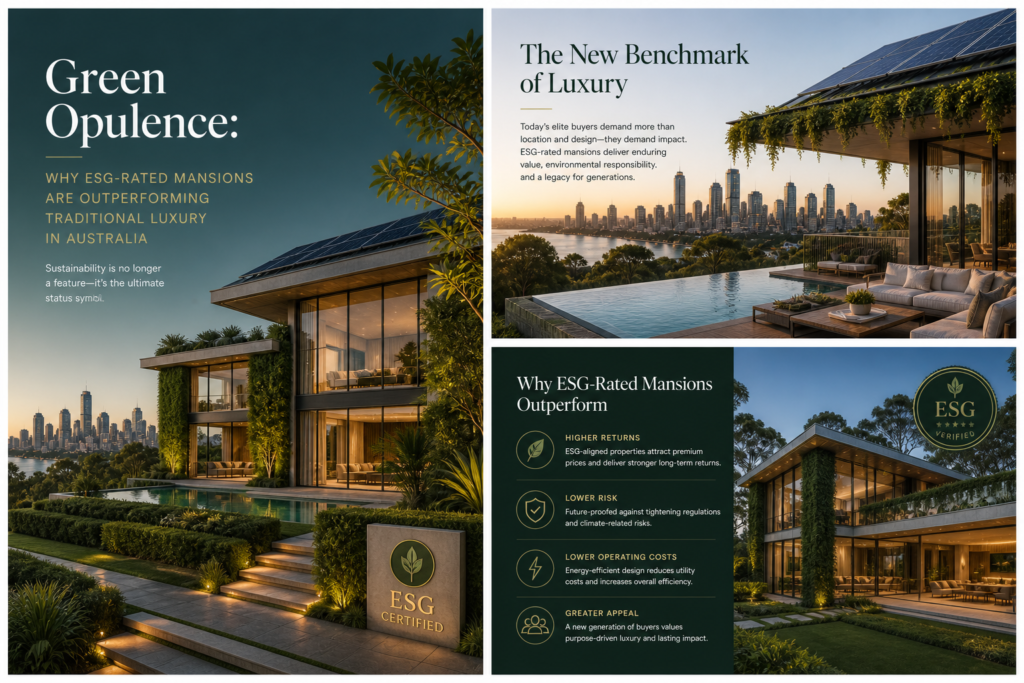
Green Opulence: Why ESG-Rated Mansions are Outperforming Traditional Luxury in Australia
The sun-drenched shores and vibrant cities of Australia have long been synonymous with an aspirational lifestyle, where luxury real estate reigns supreme.
From sprawling waterfront estates in Sydney to elegant rural retreats in Victoria, the benchmark for opulence has traditionally been defined by grandeur, bespoke finishes, and exclusive locations.
However, a significant shift is underway. A new paradigm, marrying luxury with responsibility, is redefining what it means to own a truly valuable and desirable mansion in the Australian market.
This is the era of Green Opulence, where Environmental, Social, and Governance (ESG) factors are not merely buzzwords but the foundational pillars of superior performance for high-end properties.
Once considered a niche concern, ESG has rapidly evolved into a critical determinant of value across all investment classes, and real estate is no exception.
For Australia’s luxury segment, ESG-rated mansions are not just keeping pace with their traditional counterparts; they are demonstrably outperforming them, driven by a confluence of evolving buyer preferences, heightened environmental awareness, and a clear understanding of long-term value.
This article will delve into the multifaceted reasons behind this paradigm shift, exploring why the conscious choice for sustainable luxury is proving to be the most astute investment in Australia’s high-end property market.
Understanding Green Opulence: What Does ESG Mean for Mansions?
Before we explore the outperformance, it’s crucial to understand what ESG-rated truly signifies in the context of a luxury residence.
It’s far more comprehensive than just having solar panels; it’s a holistic approach to design, construction, and operation that considers impact across multiple dimensions.
Environmental (E): Building for a Sustainable Future
The ‘E’ in ESG addresses a property’s impact on and interaction with the natural world.
For luxury mansions, this translates into tangible features and invisible systems designed to minimise ecological footprints and maximise resource efficiency.
- Energy Efficiency & Renewable Sources: This is often the most visible aspect. High-performance insulation, double-glazing, passive solar design principles (optimising natural light and ventilation), and smart home energy management systems are standard. Crucially, the integration of rooftop solar panels and battery storage, or even more advanced geothermal heating/cooling systems, significantly reduce reliance on grid electricity, leading to lower operating costs and a smaller carbon footprint.
- Water Conservation: In a continent frequently battling droughts, efficient water usage is paramount. Rainwater harvesting for irrigation and toilet flushing, greywater recycling systems for landscaping, water-efficient fixtures and appliances, and drought-resistant native landscaping are key features that minimise mains water consumption.
- Sustainable Materials & Construction: Beyond just efficiency, the materials used in construction and finishes matter. This includes sourcing recycled or rapidly renewable materials (e.g., bamboo, cork), locally sourced timber to reduce transport emissions, low Volatile Organic Compound (VOC) paints and finishes for better indoor air quality, and robust materials chosen for longevity and minimal waste.
- Biodiversity & Land Stewardship: High-end properties often sit on substantial land. ESG-conscious mansions incorporate native plant species to support local ecosystems, minimise invasive species, and design landscapes that integrate with, rather than dominate, the surrounding natural environment. This can include maintaining natural waterways or creating wildlife corridors.
- Waste Management: Beyond construction waste, these properties often feature advanced systems for household waste, including integrated composting solutions, sophisticated recycling sorting, and even on-site waste-to-energy considerations for larger estates.
Social (S): Creating Healthy, Ethical, and Community-Minded Homes
The ‘S’ factor moves beyond environmental impact to consider the well-being of occupants, workers, and the broader community.
For luxury homes, this enhances liveability and ethical appeal.
- Health and Well-being: This is a major draw for luxury buyers. Features include superior indoor air quality through advanced filtration systems and natural ventilation, abundant natural light, biophilic design (connecting occupants with nature through design elements), ergonomic design, and smart home technology that monitors air quality, sleep patterns, and promotes a healthy lifestyle. Access to green spaces and privacy are also key.
- Ethical Sourcing & Labour Practices: While harder to certify at the individual home level, discerning buyers appreciate transparency in the supply chain for materials and finishes, ensuring they come from ethical sources free from exploitation. This extends to fair labour practices during construction.
- Community Integration & Accessibility: While luxury often implies seclusion, an ESG approach ensures properties are designed to integrate respectfully within their community context. This can involve supporting local businesses during construction or designing properties with principles of universal design, making them accessible and comfortable for people of all ages and abilities.
Governance (G): Transparency, Compliance, and Long-Term Value
The ‘G’ component refers to the transparent and ethical management of the property’s design, construction, and ongoing operation.
It underpins the credibility of the ‘E’ and ‘S’ claims.
- Certifications & Compliance: Obtaining reputable certifications like Green Star, Passive House, or Living Building Challenge provides independent verification of a property’s ESG performance. This demonstrates a commitment to measurable standards and compliance with best practices.
- Transparent Documentation: Clear documentation of sustainable features, their benefits, and the materials used provides buyers with confidence and adds tangible value. This includes warranties, energy performance ratings (like NABERS for commercial, but increasingly applied to high-end residential), and operational guides.
- Long-Term Asset Management: ESG considerations extend to the long-term management strategy, ensuring regular maintenance of sustainable systems, adherence to environmental guidelines, and a commitment to continuous improvement in the property’s performance.
For further insights into smart home integration, you might find our article on Sustainable Sophistication: Can Luxury Real Estate Be Eco-Friendly? particularly useful.
The Australian Luxury Market: A Perfect Storm for ESG Adoption
Australia presents a uniquely fertile ground for the rise of ESG-rated luxury.
Several factors converge to create an environment where conscious consumption and sustainable living are not just appreciated but increasingly demanded at the top end of the market.
Australia’s Unique Environmental Imperatives
Australia is on the front lines of climate change, experiencing severe bushfires, prolonged droughts, and significant coastal erosion.
This direct exposure fosters a heightened awareness of environmental fragility among the populace, including the affluent.
Luxury buyers are increasingly seeking homes that are resilient to these challenges, designed to withstand extreme weather, conserve precious resources, and minimise their environmental footprint.
The desire for a future-proof home is no longer a niche concern but a core requirement.
Growing Environmental Awareness Among Affluent Buyers
The demographic of luxury buyers is evolving.
While traditional wealth still drives a significant portion of the market, there’s a growing segment of younger, globally aware, and socially conscious wealthy individuals.
These buyers, often leaders in industries that champion sustainability, apply the same values to their personal investments, including their homes.
For them, a mansion is not just a status symbol but a reflection of their values and a commitment to responsible living.
This demographic shift is a powerful driver of demand for ESG-rated properties.
Government Incentives and Evolving Regulations
While perhaps not as direct for individual luxury homes as for commercial developments, government policies and building codes are increasingly pushing for greater energy efficiency and sustainability.
Indirectly, this influences the design and construction landscape, making sustainable practices more commonplace and accessible.
Furthermore, various incentives for renewable energy adoption (like solar rebates) make the initial investment in ESG features more attractive.
Aspirational Lifestyle: Marrying Luxury with Responsibility
The new definition of luxury in Australia is about more than just extravagance; it’s about sophisticated living that aligns with a greater purpose.
Owning an ESG-rated mansion allows individuals to enjoy unparalleled comfort and prestige while simultaneously demonstrating a commitment to environmental stewardship and social responsibility.
It’s a statement that says, “I can afford the best, and I choose for the best to be sustainable.”
This blend of ethical considerations with high-end living is a powerful aspirational draw.
Why ESG-Rated Mansions Are Outperforming: Key Factors
The superior performance of ESG-rated luxury homes in Australia isn’t accidental; it’s a direct result of tangible benefits that resonate deeply with both current market demands and future predictions.
Enhanced Value & Investment Protection
One of the most compelling arguments for ESG properties is their robust financial performance and resilience as investments.
- Higher Resale Value and Faster Sales: Studies and market observations increasingly show that properties with strong ESG credentials command a premium. Buyers are willing to pay more for homes that offer long-term savings, superior comfort, and peace of mind regarding their environmental impact. Furthermore, these properties tend to sell faster, as they appeal to a growing segment of discerning buyers who understand and value their unique benefits. This premium for green homes is well-documented in commercial real estate and is rapidly translating to the luxury residential market.
- Lower Operating Costs: This is a clear and immediate benefit. Energy-efficient design, solar power, advanced insulation, and water-saving systems drastically reduce utility bills. For a sprawling luxury mansion, these savings can amount to tens of thousands of dollars annually, significantly improving the overall cost of ownership over the property’s lifecycle.
- Resilience and Future-Proofing: ESG-rated mansions are inherently designed to be more resilient to environmental challenges. From bushfire-resistant materials to sophisticated water management systems that mitigate drought impacts, these homes are better equipped to protect against the physical and financial risks associated with a changing climate. This future-proofs the investment against potential devaluation due to environmental vulnerabilities.
- Access to “Green” Financing: As financial institutions increasingly integrate ESG criteria into their lending practices, there’s a growing trend towards offering more favourable terms for energy-efficient or sustainable properties. This can translate into lower interest rates or more flexible loan products, further enhancing the financial attractiveness of ESG-rated mansions.
Stronger Buyer Demand & Appeal
The shift in buyer psychology is a powerful force driving the outperformance of green luxury.
- Discerning Buyers Seeking Value Alignment: Today’s luxury buyer is more informed and values alignment between their personal ethics and their investments. An ESG-rated mansion offers a tangible expression of these values, appealing to individuals who want their home to reflect their commitment to sustainability and responsible living. They are looking for authenticity, not just superficial luxury.
- Health and Wellness as a Premium Feature: The emphasis on superior indoor air quality, natural light, non-toxic materials, and connection to nature resonates strongly with the growing global focus on health and well-being. A home that actively contributes to the occupants’ physical and mental health is perceived as a higher-value asset, especially in the post-pandemic world where home has become even more central to well-being.
- Status Symbol 2.0: Wealth with Purpose: While traditional luxury screams wealth, green luxury whispers intelligence and responsibility. Owning an ESG-rated mansion is becoming the ultimate status symbol for a new generation of affluent individuals – one that signifies not just financial success, but also foresight, ethical leadership, and a commitment to a better future. It’s a statement of sophisticated self-awareness.
- Global Alignment: The trend towards sustainable luxury is not unique to Australia. It’s a global phenomenon. Properties that meet international ESG standards are more attractive to international buyers, broadening the potential market and enhancing liquidity.
For insights into what Australian buyers are currently prioritising, refer to our article on Maximizing Resale Value: What Australian Buyers Are Looking For.
Future-Proofing & Risk Mitigation
Investing in an ESG-rated mansion is a strategic move to mitigate future risks and ensure long-term relevance.
- Regulatory Compliance and Avoidance of Future Costs: As environmental regulations tighten globally and domestically, properties that are already compliant or exceed current standards are de-risked. Owners avoid the potentially significant costs and disruptions of future retrofitting mandates, ensuring their asset remains valuable and compliant without additional investment.
- Reduced Insurance Premiums: Insurers are increasingly factoring climate risk into their pricing. Properties built with resilience in mind—using fire-resistant materials, flood mitigation strategies, or enhanced structural integrity—may qualify for lower insurance premiums, representing another long-term saving and a sign of reduced risk.
- Market Differentiation: In an increasingly competitive luxury market, ESG credentials provide a clear and compelling differentiator. As the supply of truly sustainable luxury homes remains limited compared to demand, these properties stand out, attracting serious buyers and achieving premium prices.
Real-World Examples and Conceptual Case Studies in Australia
While specific sales data for ESG-rated mansions is still emerging as a distinct category, the market is rife with examples of high-end properties integrating these principles, often achieving record-breaking sales.
Consider the prestige markets in Australia:
- Sydney’s Northern Beaches & Harbour Suburbs: Imagine a stunning harbour-front mansion in Mosman or a sprawling estate on the Northern Beaches. Traditionally, the view and location define value. However, an ESG-rated equivalent now features a fully integrated solar PV system with battery storage, significantly reducing a household’s carbon footprint and electricity bills. It would incorporate advanced rainwater harvesting systems for irrigation of its native gardens, designed to be drought-tolerant and attract local birdlife. Inside, smart home technology meticulously manages energy consumption, climate control, and air quality, while sustainably sourced timber and non-toxic finishes create a healthy, serene environment. Such properties are fetching top dollar, often citing their green credentials as a key selling point.
- Melbourne’s Bayside & Rural Retreats: In areas like Brighton or Toorak, or further out in the Mornington Peninsula, luxury homes are embracing passive design principles. A Melbourne example might be a grand residence built with exceptional insulation, double-glazed windows strategically placed for optimal natural light and cross-ventilation, and underfloor hydronic heating powered by a highly efficient heat pump. Recycled brick and reclaimed timber add character while minimising environmental impact. The landscape would feature permeable surfaces to reduce stormwater runoff and an integrated composting system, appealing to discerning buyers seeking a blend of classic elegance and modern sustainability.
- Queensland’s Gold Coast Hinterland & Sunshine Coast: In these subtropical climates, ESG principles focus heavily on natural cooling and resilience. A luxury estate here might feature expansive eaves, louvered windows for maximum airflow, and strategic landscaping with large canopy trees for shade. Off-grid solar solutions with robust battery banks are common, along with large-capacity rainwater tanks to ensure water security. Materials would be chosen for their low thermal mass and resistance to extreme weather, while the property’s design respects and integrates with the lush natural surroundings, preserving biodiversity. These properties are particularly attractive to those seeking self-sufficiency and a deeper connection to nature without sacrificing luxury.
Many of these properties, particularly newly built or extensively renovated ones, are designed to meet standards set by organisations like the Green Building Council of Australia (through Green Star ratings) or achieve certifications like Passive House, further validating their ESG credentials and reinforcing their market premium.
Challenges and Considerations in the Green Luxury Market
While the benefits are clear, navigating the green luxury market isn’t without its challenges.
- Initial Upfront Investment: ESG features, especially high-quality, integrated systems, can involve a higher initial capital outlay compared to traditional construction. While the long-term returns and savings are compelling, this upfront cost can be a barrier for some.
- Finding Qualified Professionals: Designing and building a truly ESG-rated mansion requires specialist knowledge. Finding architects, builders, and consultants with genuine expertise in sustainable design, green materials, and efficient system integration can be a challenge in a rapidly evolving field.
- Avoiding “Greenwashing”: As “sustainability” becomes a marketing buzzword, there’s a risk of properties being superficially branded as green without genuine substance. Buyers must be vigilant to distinguish between authentic ESG features and mere “greenwashing” – ensuring that claims are backed by certifications, data, and verifiable construction practices.
- Educating the Traditional Market: While a growing segment of buyers is ESG-aware, some traditional luxury purchasers may still need to be convinced of the long-term value proposition beyond aesthetics and location. Education about the tangible benefits—financial savings, health benefits, and future-proofing—is crucial.
Navigating the Green Luxury Market: Advice for Buyers and Sellers
For those looking to enter or exit the green luxury market, strategic advice is key.
For Buyers of ESG-Rated Mansions:
- Look Beyond the Surface: Don’t just check for solar panels. Inquire about insulation levels, window performance, water conservation systems, material sourcing, and indoor air quality features. A truly ESG-rated home is holistic in its design.
- Seek Certifications: If available, look for properties with reputable certifications like Green Star, Passive House, or even energy performance ratings (NABERS for larger homes). These provide independent verification of sustainability claims.
- Engage Expert Advisors: Consider consulting with architects, sustainability consultants, or real estate agents who specialise in green luxury properties. Their expertise can help you identify genuine value and avoid greenwashing.
- Understand Long-Term Benefits: Factor in the long-term savings on utility bills, potential for lower insurance premiums, enhanced health and comfort, and the increased resilience of the property when evaluating the purchase price.
- Prioritise Your Values: Reflect on which ESG factors are most important to you (e.g., energy independence, water conservation, healthy indoor environment) and prioritise properties that excel in those areas.
You can learn more about making informed investment decisions in our article Investing in Australian Property: A Long-Term Perspective.
For Sellers of ESG-Rated Mansions:
- Document Everything: Keep meticulous records of all sustainable features, materials used, energy performance data, and any certifications. This tangible evidence is invaluable for demonstrating the property’s superior value.
- Highlight Benefits, Not Just Features: When marketing, focus on the benefits to the buyer. Emphasise reduced operating costs, enhanced health and comfort, the property’s resilience, and its appeal as a future-proof investment.
- Target the Right Demographic: Work with real estate agents who understand and can effectively market to the growing segment of affluent, ESG-conscious buyers.
- Consider Retrofitting for Certification: If your property has significant green features but lacks formal certification, explore whether it’s feasible and beneficial to obtain one before listing. This can add a measurable premium.
- Showcase the Lifestyle: Beyond the technical aspects, convey the lifestyle associated with green opulence – one of intelligent luxury, peace of mind, and responsible living.
For more insights into current trends affecting luxury properties, see our analysis of Understanding Luxury Real Estate Trends in Australia.
Conclusion
The landscape of Australian luxury real estate is undergoing a profound transformation.
Green Opulence, epitomised by ESG-rated mansions, is no longer a niche market but a dominant force, setting new benchmarks for value, desirability, and investment wisdom.
By integrating robust environmental performance, fostering social well-being, and adhering to transparent governance, these properties offer a compelling blend of financial prudence, ethical living, and unparalleled luxury.
The outperformance of ESG-rated mansions is a clear indicator that the discerning Australian luxury buyer prioritises long-term value, resilience, and a responsible footprint.
As climate awareness deepens and sustainable living becomes increasingly intertwined with aspirational lifestyles, the gap between traditional and green luxury will only widen.
For those looking to invest in Australian luxury, the choice is clear: Green Opulence offers not just a home, but a future-proof asset that truly performs, proving that true luxury now resides at the intersection of grandeur and green intelligence.

Bellamy West is a modern-day nomad with a Victorian soul. Bella is an international real estate contributor for Real Estate Moses, where she tracks premium trophy assets, luxury enclaves, and global capital deployment. Writing as Agent Bella, her expertise centers on high-yield safe havens and foreign investment policy across premier markets like Singapore. Bella excels at breaking down complex luxury market restrictions and wealth preservation strategies for elite global buyers.